
Last updated October 15, 2026
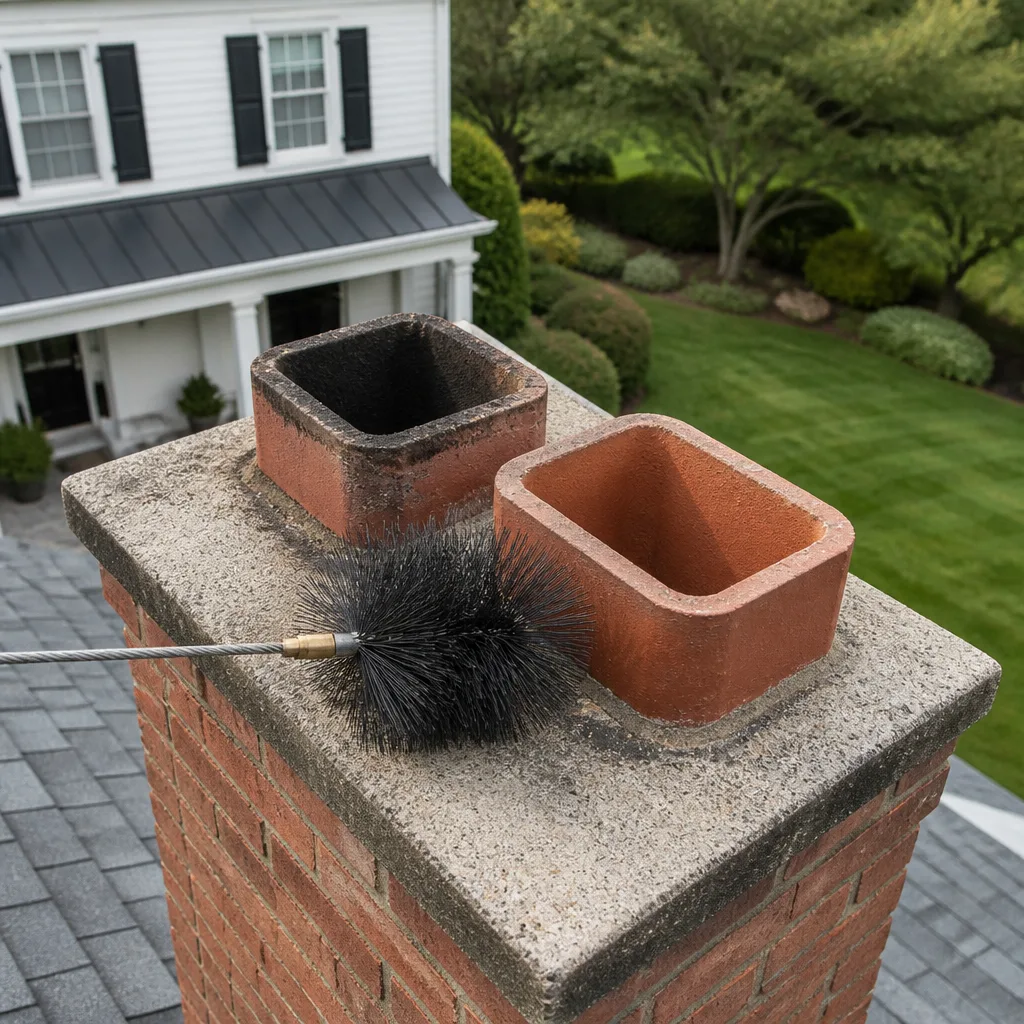 Sweep & inspection
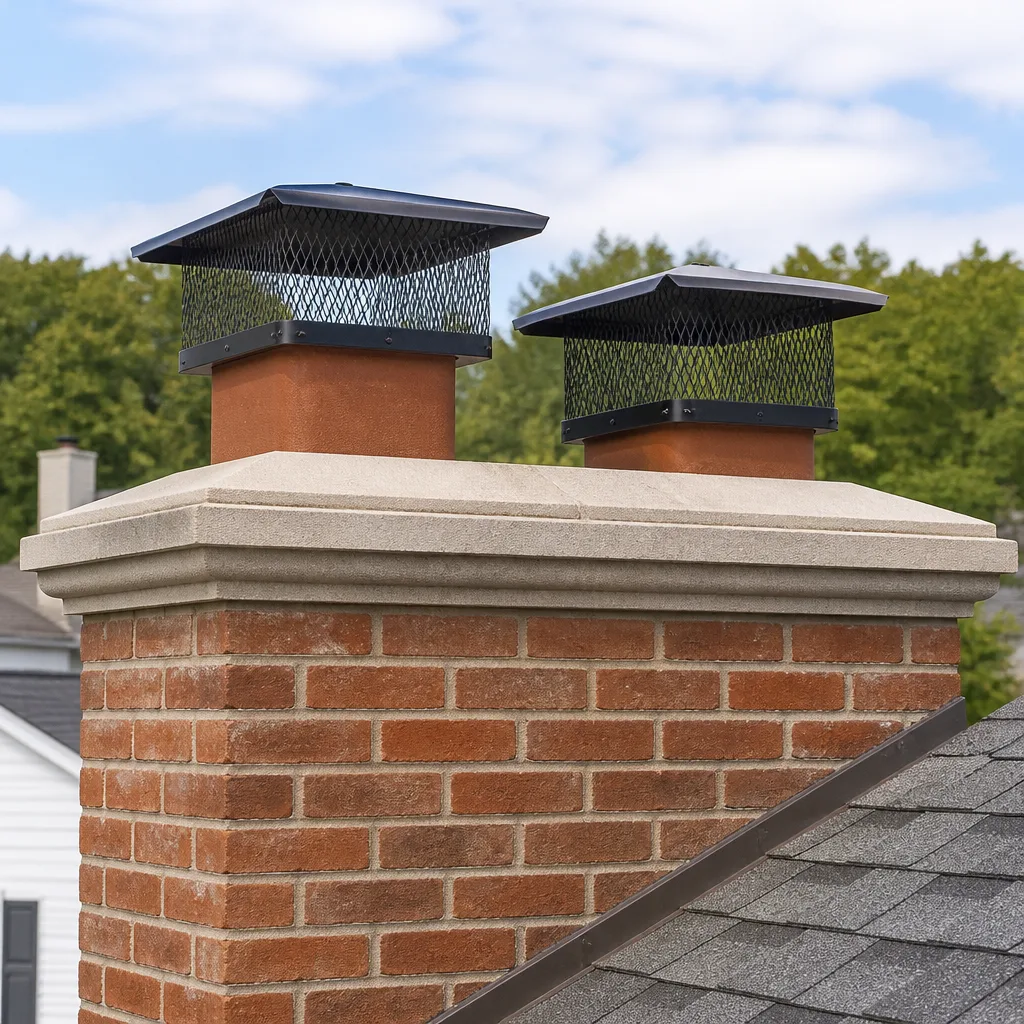 Caps & crowns
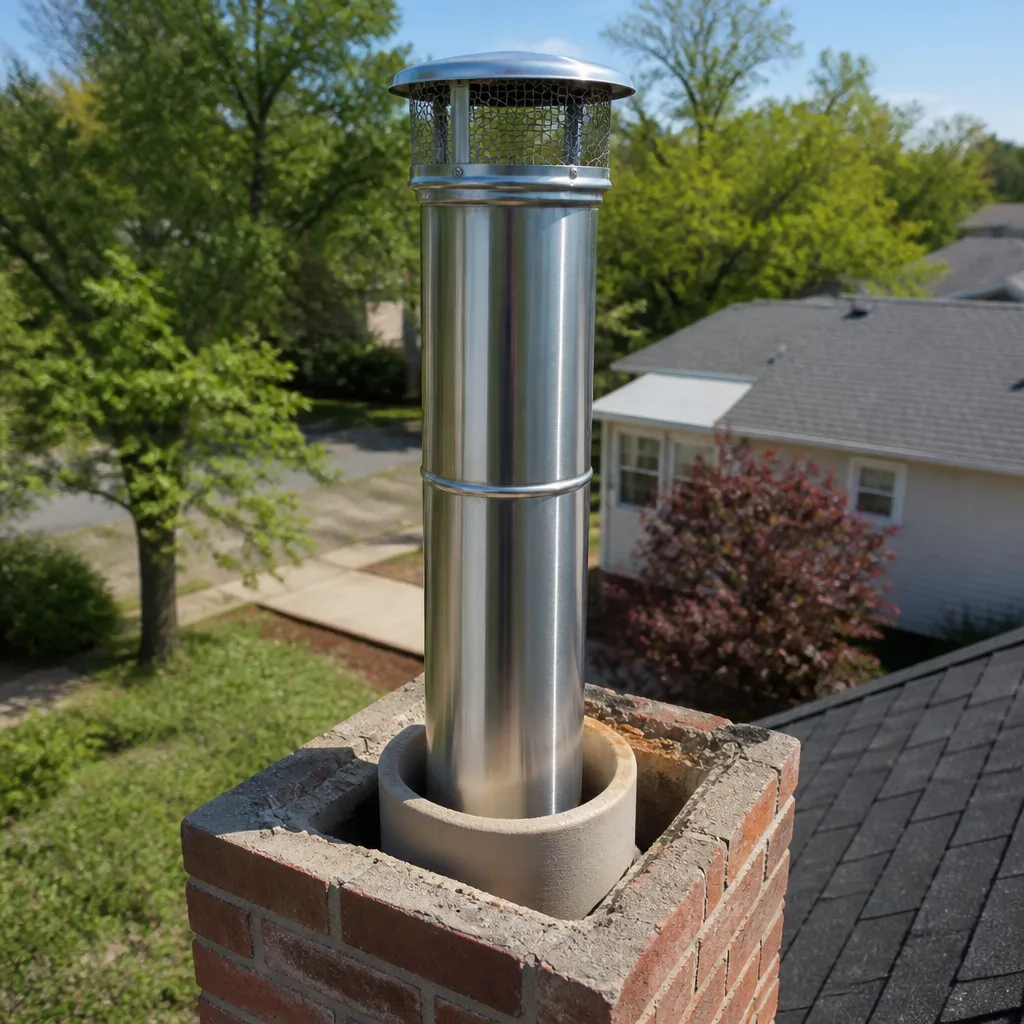 Flue relining
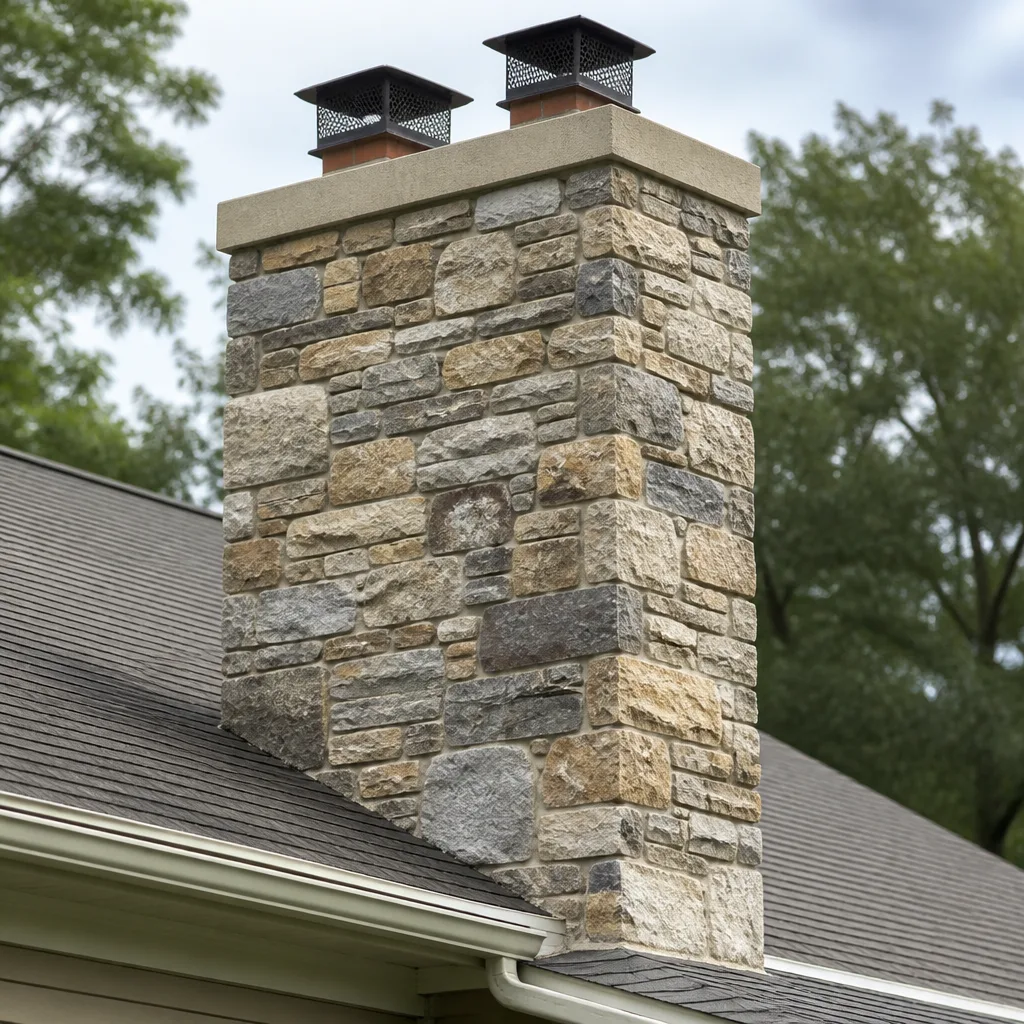 Masonry repair
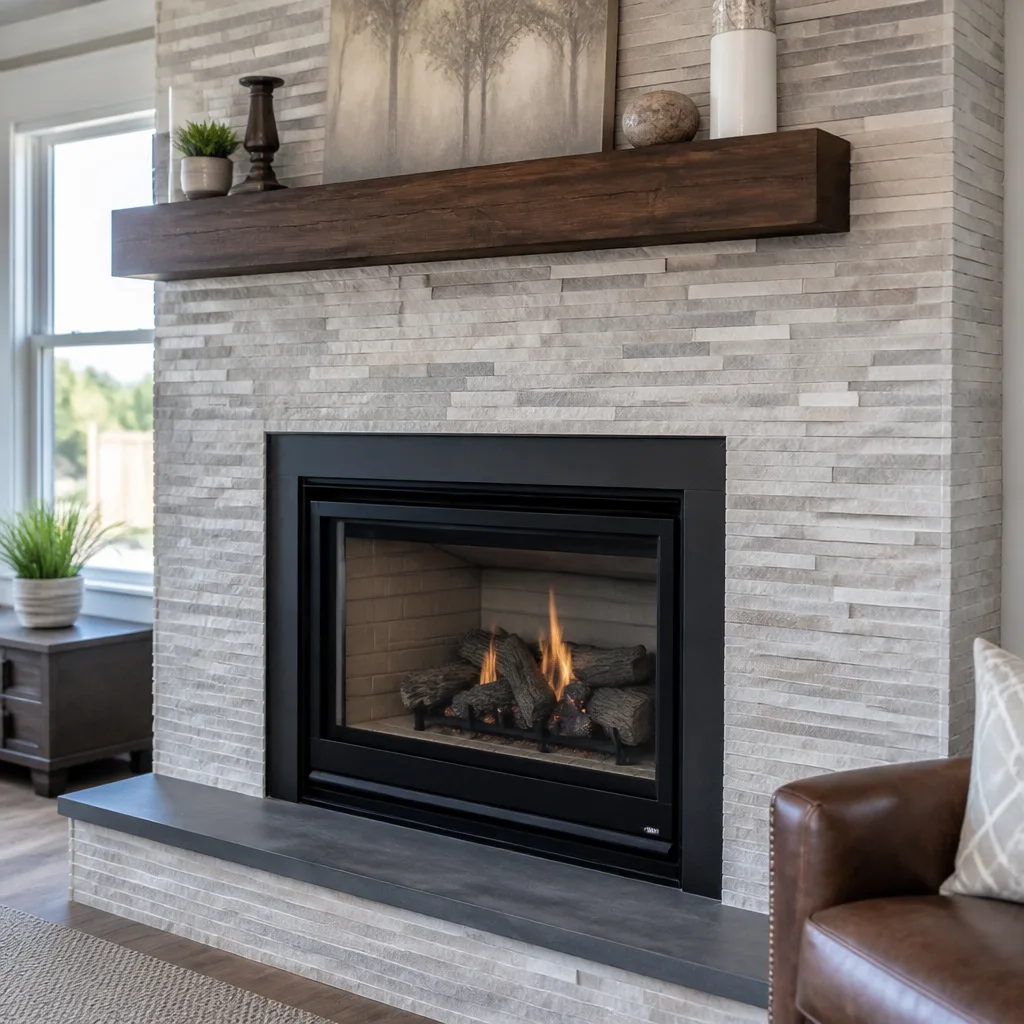 Gas fireplace service
Level 1 sweep and inspection to the NFPA 211 annual standard - flue, crown, cap, and flashing checked and photographed
Chimney sweep logs do not sweep chimneys. They loosen some creosote - which then falls where a brush and vacuum still have to collect it.
How to Hire a Chimney Cleaning Contractor in Atlanta: A Step-by-Step Guide
Georgia has no state license requirement for chimney sweeps. That single fact means the burden of vetting falls entirely on you, and “they had good reviews” is not a sufficient filter. In Atlanta, where humid summers and cold snaps push fireplaces hard from October through March, the difference between a proper sweep and a guy with a brush and a truck can be the difference between a safe winter and a chimney fire. This guide is the vetting framework nobody hands you at closing: what to ask, what to verify, what a written price should actually contain, and what proof of work looks like in 2026. We’ll show you how to make the contractor prove they’re legit, instead of hoping they are and finding out when the invoice hits.
Quick Answer
To hire a chimney cleaning contractor in Atlanta, start by confirming CSIA certification through the CSIA website, not just by what a company prints on a van. Then verify the business exists in the Georgia Secretary of State database, insist on a written line-item price before any work begins, and require before-and-after photos of the flue interior as proof the work actually happened. A legitimate Atlanta chimney company will do all four without hesitation.
Styles & brands we work with
Table of Contents
- Understand What CSIA Certification Actually Means in Georgia
- Check the Georgia Secretary of State Database First
- The Five Questions to Ask Before Booking Any Atlanta Chimney Sweep
- What a Written Price Should Actually Contain
- Why Photos From Inside the Flue Are the New Minimum Standard
- How Atlanta Weather Changes Your Chimney (And Why It Matters)
- Red Flags and Green Lights: Reading the Answers You Get
- A Vetting Checklist You Can Print
Understand What CSIA Certification Actually Means in Georgia
CSIA stands for the Chimney Safety Institute of America. It is the only nationally recognized certification body for chimney sweeps in the United States, and it is the single most reliable signal that a technician knows what they’re looking at when they peer up your flue. A CSIA Certified Chimney Sweep has passed a written exam covering fire codes, clearances, draft mechanics, creosote (the flammable tar buildup that makes chimneys a fire risk), and inspection standards. They must also recertify every three years through continuing education or re-examination.
Here’s what that means in Georgia specifically: because the state does not require any licensing for chimney work, CSIA certification is the closest thing Atlanta homeowners have to a credential with teeth. A business license from a county or city just means someone paid a fee and filed paperwork. It says nothing about whether they understand draft pressure, flue sizing, or the clearance-to-combustibles rules that prevent house fires. In our two decades working in Atlanta, we’ve walked behind more than a few uncredentialed sweeps who left creosote behind and called it clean. CSIA certification matters more in Georgia than in states with strict trade licensing, because here it’s the only independent verification that exists.
To verify certification, don’t take a website’s word for it. Go to the CSIA website’s “Find a Certified Sweep” tool and type in the company name or the individual technician’s name. A real certification will appear there. If a company claims CSIA certification but you can’t find them in the directory, treat that as a red flag, not a clerical error. Ask the company how many CSIA-certified technicians they have on staff and how many total technicians they send out. Some companies have one certified person in the office and send uncertified crews to do the actual work. The answer you want is that the person who shows up at your door holds the certification.
For gas fireplaces, which are common across Atlanta’s newer construction in areas like Brookhaven, Smyrna, and East Cobb, look for NFI (National Fireplace Institute) certification in addition to CSIA. Gas appliance service has its own set of codes and venting requirements, and a wood-burning sweep is not automatically qualified to open your gas log set.
Check the Georgia Secretary of State Database First
Before you call anyone, spend five minutes on the Georgia Secretary of State’s Corporations Division website. Search the business name in the corporate database. This tells you three things: whether the company is a legally registered entity in Georgia, how long it has been registered, and whether it is in good standing. A contractor that has been a registered Georgia business for twenty years has a paper trail. A contractor that registered six months ago under a DBA has no history you can verify.
Here’s how to run the check:
- Go to the Georgia Secretary of State Corporations Division search page.
- Search the company’s exact legal name. If you only have a trade name, search that too, then check the “trade name” field on the filing.
- Look at the entity type, the date of formation, and the current status. “Active/Compliance” or “Active/Noncompliance” tells you different things. “Admin. Dissolved” means the company lost its legal standing.
- Check the principal office address. If it’s a residential address in another county and the company claims to be a major Atlanta operation, that’s information worth having.
- If the company name you’re considering isn’t in the database at all, that’s a stop sign. A legitimate chimney business in Atlanta will be registered.
This step catches the fly-by-night operators who show up after storm season, run a few jobs, and disappear. Atlanta has a steady supply of these, particularly in older neighborhoods like Grant Park, Inman Park, and Virginia-Highland where chimneys are original to the home and often need real attention. A chimney contractor who cannot produce a registered Georgia business entity is not someone you want on your roof.
While you’re at it, check whether the company carries general liability insurance and workers’ compensation. Ask for a certificate of insurance and call the insurer to confirm the policy is active. If a worker falls off your roof and the company has no workers’ comp, you can be liable. This is not a hypothetical concern in Atlanta, where steep roof pitches on bungalows and two-story craftsman homes make chimney access genuinely dangerous for untrained people.
The Five Questions to Ask Before Booking Any Atlanta Chimney Sweep
You should be able to get through this list in under five minutes on the phone. The answers you hear will tell you more about a company than their website ever will.
Question 1: “Who exactly will be at my house, and can you tell me their name before they arrive?”
Green light: they give you a name, a time window measured in hours not half-days, and a way to track arrival. Red flag: “we’ll send someone out” with no name and a four-hour window. Background-checked, uniformed technicians who arrive in a tracked window are the standard in 2026. You have a tracker in your pocket for a pizza delivery; your chimney tech should not be harder to locate.
Question 2: “Do you provide a written price before any work starts?”
Green light: “yes, and here’s what it includes” followed by an actual list. Red flag: any hesitation, or language like “we’ll see what we find.” A chimney inspection should have a fixed price. A sweep should have a fixed price. Repairs should be quoted in writing before the tech picks up a single tool. If a company cannot put a number on paper before opening your firebox, the number they find later will be higher.
Question 3: “Will you show me photos from inside the flue before and after the work?”
Green light: yes, as standard practice on every job. Red flag: “we clean it, you trust us.” The technology to run a camera up a flue is cheap and every credible Atlanta chimney company uses it. Photos from inside the flue are the difference between proof and a handshake. We’d go further: a company that won’t show you the inside of your own flue is giving you the answer you need about what they’re hiding.
Question 4: “What happens if you find damage during the sweep?”
Green light: “we’ll show you the photos, explain what needs attention and what can wait, and give you a written quote before doing any repair work.” Red flag: pressure to approve repairs on the spot, especially liner work. A cracked flue liner is a real fire and carbon monoxide risk, but you have the right to see the crack with your own eyes before anyone asks you for thousands of dollars.
Question 5: “What does your guarantee cover, and for how long?”
Green light: a specific term in writing, such as a 365-day guarantee on repairs with a free return visit if the repair fails. Red flag: “we stand behind our work” with no document, no term, and no clear path to make it right. A verbal guarantee is a marketing slogan. A written one is an obligation.
What a Written Price Should Actually Contain
A written price is the single best protection an Atlanta homeowner has against the oldest chimney industry trick in the book: the lowball quote that becomes a surprise invoice. But not all written prices are equal. A scrap of paper with a single lump-sum number tells you nothing about what you’re actually buying. Here’s what a legitimate written price includes:
- Line items. You want to see “inspection,” “sweep,” “flue access,” “disposal” as separate numbers, not one big total. Line items let you compare quotes and spot padding.
- Scope of work in plain English. “Level 1 inspection per NFPA 211, including visible flue camera scan” is specific. “Chimney service” is not.
- What’s included and what’s not. Does the price include cleanup? Does it include the chimney cap inspection? Does it include the firebox? If it’s not listed, assume it’s not included.
- Material brands if repairs are quoted. If liner work comes up, the quote should say what material is being used. Names like DuraFlex for flexible stainless liners or HeatShield for ceramic repair compound are industry standards. “Generic liner” means you’re getting whatever is cheapest on the truck.
- A place for you to approve before work starts. A written price isn’t a price until you’ve seen it and said yes. Any company that starts work before you’ve approved a number is not working for you.
In Atlanta, a standard chimney sweep and Level 1 inspection typically runs $150 to $350 depending on the size of the flue, accessibility, and whether the fireplace is wood-burning or gas. If the flue hasn’t been cleaned in several years, or if there’s heavy creosote buildup from burning unseasoned wood, expect the higher end. A chimney with a cap and a clean burn history trends toward the lower end. What matters for this guide is not the exact dollar figure, it’s that the figure is written, itemized, and in your hand before a brush touches your chimney.
Why Photos From Inside the Flue Are the New Minimum Standard
Imagine taking your car to a mechanic and getting a bill that says “engine work completed” with no photos, no diagnostics, and no explanation of what was actually wrong. You wouldn’t pay it. Chimneys are one of the few remaining home services where a technician can work in a space you can’t see, then hand you a bill and leave. That structural opacity is exactly why before-and-after photos from inside the flue should be your non-negotiable baseline.
Here’s what those photos should show you:
- Before photos of the flue walls. You should see the creosote before the sweep. Glazed creosote (the shiny, tar-like stage) looks different from sooty creosote, and both look different from a clean stainless liner.
- After photos of the same sections. The flue walls should look visibly clean. If the after photos show residue remaining, ask why.
- Any damage the tech finds. A cracked tile, a gap in the liner, spalling brick, a rusted damper. Each one should come with a photo and an explanation, not just a verbal warning.
- The top of the chimney and the cap. You can’t easily see your chimney cap from the ground, but a photo takes you there. This is where animal nests, rusted caps, and storm damage show up clearly.
The photos also protect you in a way that has nothing to do with honesty: they create a record. If you have a chimney fire later, or a carbon monoxide alarm goes off, or water starts staining your living room ceiling, the photos document the condition the flue was in on the day someone claimed to clean it. They are the paper trail that a handshake cannot provide.
Any company doing thousands of sweeps in Atlanta should have a camera on every truck and a process for documenting every job. If a contractor tells you they don’t have time for photos, or that photos aren’t necessary, you have found the wrong contractor.
How Atlanta Weather Changes Your Chimney (And Why It Matters)
Atlanta’s climate is hard on chimneys in ways that are not obvious until you understand the physics, which is why seasonal chimney cleaning care for Atlanta matters year-round. Our summers run hot and humid from May through September, and our winters swing from mild to genuinely cold in a single week. That combination of moisture and temperature fluctuation is precisely what accelerates spalling in brick, rust in steel liners, and mortar joint failure in older chimneys.
Here’s the specific mechanism: rain saturates porous brick and mortar. Then a cold front drops Atlanta into the 20s overnight and the trapped water freezes, expanding by about nine percent. Rock is not flexible. The freeze-thaw cycle, repeated dozens of times each winter, gradually crumbles mortar joints and cracks brick faces. Chimneys in neighborhoods with older housing stock, like Kirkwood, Cabbagetown, and the near Westside, are particularly exposed because the masonry is eighty to a hundred years old and the original mortar is lime-based and soft.
Humidity creates a second problem: it accelerates the corrosion path on steel components inside the chimney. Your damper, your liner, your chase top, your cap all live in a damp environment for half the year in Atlanta. What water doesn’t get in from rain, it enters as condensation from the warm, moist air inside the flue meeting the cooler outside temperature. This is why a rusted damper is one of the most common findings on Atlanta chimney inspections, and it’s also why stainless materials from brands like Copperfield and Famco are specified so often in our repair work. They’re built to survive a humid Southern climate, not a California one.
Wood-burning fireplaces in Atlanta also face a specific creosote risk from the species of wood available locally. Southern pine is everywhere, it’s cheap, and it’s not a good idea to burn it indoors. It’s resinous, which means it produces more creosote per cord than hardwoods like oak and hickory. Homeowners who burn pine for a season can build up glazed creosote fast, and glazed creosote is the most difficult to remove and the most likely to ignite. If you have a wood-burning fireplace in Atlanta, use seasoned hardwood, not whatever pine is stacked outside the gas station.
Red Flags and Green Lights: Reading the Answers You Get
Most homeowners have good instincts but no frame of reference for what a chimney contractor should sound like. After two decades in this trade, here’s the behavior we would tell a sibling to walk away from, and the behavior we’d tell them to reward.
Red flags:
- No written price before work starts. In Atlanta, there is no legitimate reason a sweep cannot quote you a firm price for a sweep and inspection over the phone or from a photo of the chimney. Replacing a liner involves variables, but even that gets quoted in writing before the permit is pulled.
- Pressure to sign same-day for repairs. If someone tells you your liner is cracked and you must replace it today, take the quote, thank them, and call a second company. A cracked liner is urgent, but it is not a decision you need to make in the next hour. A reputable contractor will show you the photos and give you time to think.
- No CSIA certification, or a certification you can’t verify. In Georgia, where no state license exists, an unverifiable credential is the same as no credential. The CSIA directory is free to search.
- No proof of insurance when you ask. A company that cannot produce a certificate of insurance on request is betting you won’t ask. Win that bet.
- A four-hour arrival window and a nameless tech. The technology exists to give you a live arrival window and a tech’s name before they show up. Atlanta homeowners in 2026 should not settle for less.
Green lights:
- Live arrival tracking and a named technician. When a company knows exactly when their tech will arrive and tells you who it is, it signals operational competence and respect for your time.
- Before-and-after photos as standard practice. Not an upsell, not something they’ll show you if you ask. A standard part of every sweep.
- A written guarantee with a specific term. “365 days” is specific. “We stand behind our work” is not. The former is a legal obligation. The latter is a vibes-based promise.
- Disciplined scope on repairs. A good technician tells you what needs attention now, what can wait until spring, and what’s fine. They don’t turn a $250 sweep into a $4,000 repair estimate every time.
- Person-entity authority. When the owner’s name is on the business, and the business has a traceable history in Atlanta, you’re dealing with someone whose reputation is attached to your job. Founded in 2003, our owner Cory Mitchell still signs his name to the standards the company is held to.
A Vetting Checklist You Can Print
Use this before you book anyone. Every item on this list is something a legitimate Atlanta chimney company can satisfy without breaking a sweat.
- Company is a registered entity in the Georgia Secretary of State database, and the registration is in good standing.
- CSIA certification is verifiable through the CSIA directory for the specific technician who will do the work.
- Proof of general liability insurance and workers’ comp has been provided, and you’ve confirmed the policy is active.
- A written, itemized price has been given before any work starts, with line items you can actually read.
- Arrival is tracked and the technician’s name is known before they ring the bell.
- Before-and-after flue photos are included as a standard part of the job, not an add-on.
- The guarantee is written, has a clear term, and explains what happens if the work fails.
- The technician can name the materials they’d use for any repair. Products like DuraFlex liners and HeatShield ceramic repair compound are what pros use; generic answers mean generic parts.
If a company passes all eight items, book with confidence. If they balk at three or more, get another quote. In Atlanta, the chimney industry’s wild west nature means you have to be the one setting the bar, and this checklist-along with our guide to chimney cleaning permits, codes & inspections in GA-is how you do that without spending a weekend on research.
Common Mistakes to Avoid
- Going with the lowest quote without checking certification. In Atlanta, the cheapest chimney sweep is often the cheapest because they skip insurance, skip certification, and skip the work. The savings evaporate the first time you need the flue actually cleaned.
- Assuming a county business license means chimney-specific competence. Fulton, DeKalb, Cobb, and Gwinnett counties issue business licenses, not trade certifications. The license proves the business exists, not that anyone on the truck knows how to clear a blocked flue.
- Approving repair work without seeing photos of the damage. If a tech tells you the liner needs replacement, you have the right to see the cracked or corroded section with your own eyes. No photo, no approval. That’s the rule.
- Burning pine or unseasoned wood in a wood-burning fireplace in Atlanta. This creates glazed creosote fast, and glazed creosote is a known fire risk. Seasoned oak or hickory only, and if you don’t know whether your wood is seasoned, a moisture meter is a $20 purchase.
- Skipping annual inspection on a gas fireplace. Gas fireplaces are often treated as maintenance-free, but they produce carbon monoxide and their vents can clog. In Atlanta’s tightly sealed newer homes, a blocked gas vent is a serious threat. Have a gas fireplace inspected by someone with NFI certification at least once every two years.
- Not asking what happens if the repair fails. Many companies will give you a warranty period and then make the return-visit process so painful it’s not worth pursuing. Ask directly: “If this repair fails in six months, what exactly do you do?” The answer should include a return visit at no charge.
See the difference
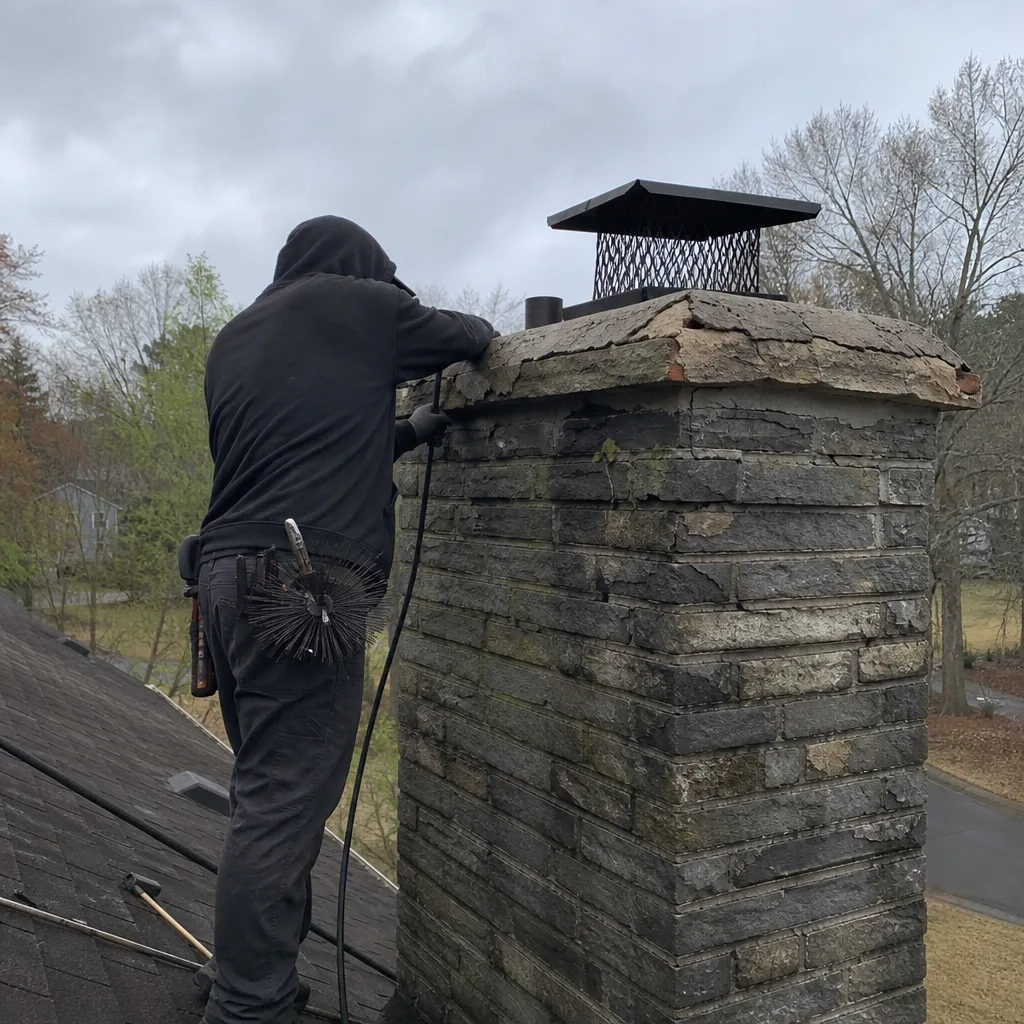 Before
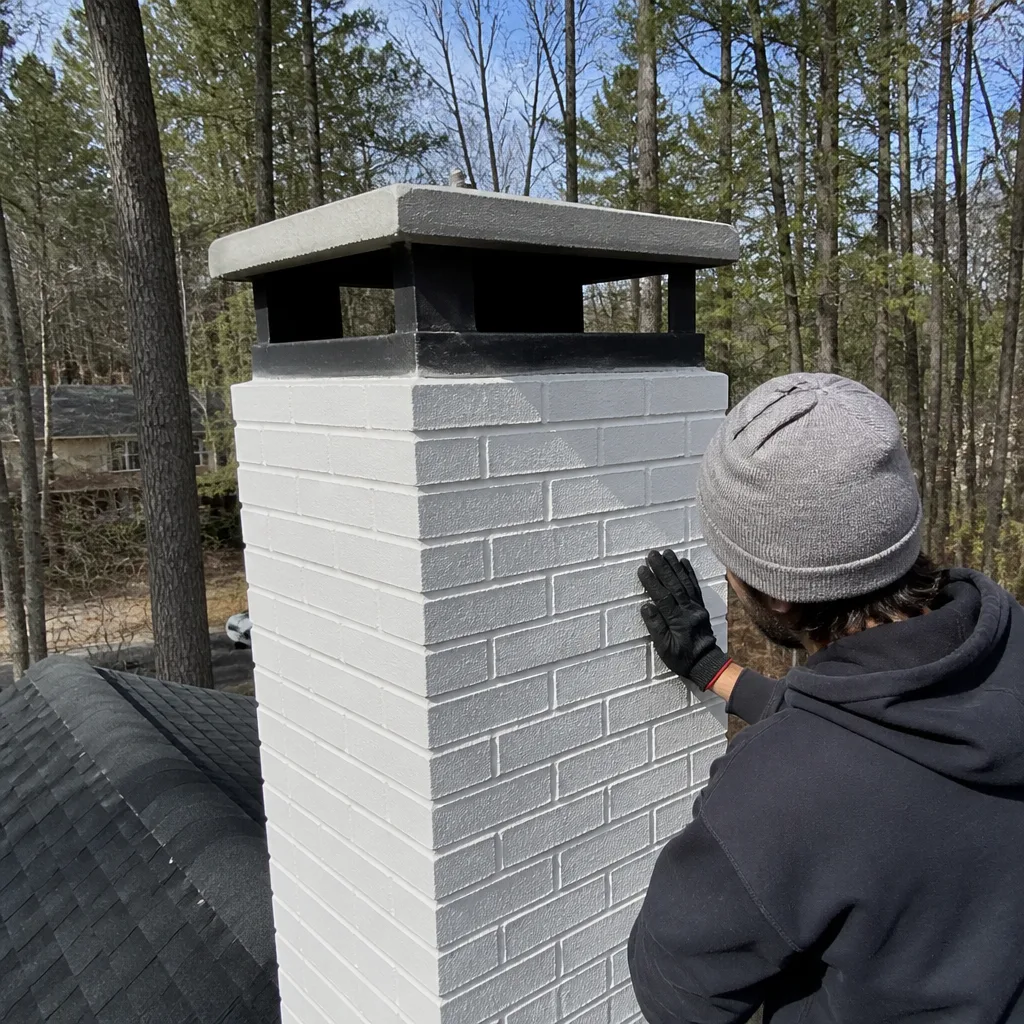 After
After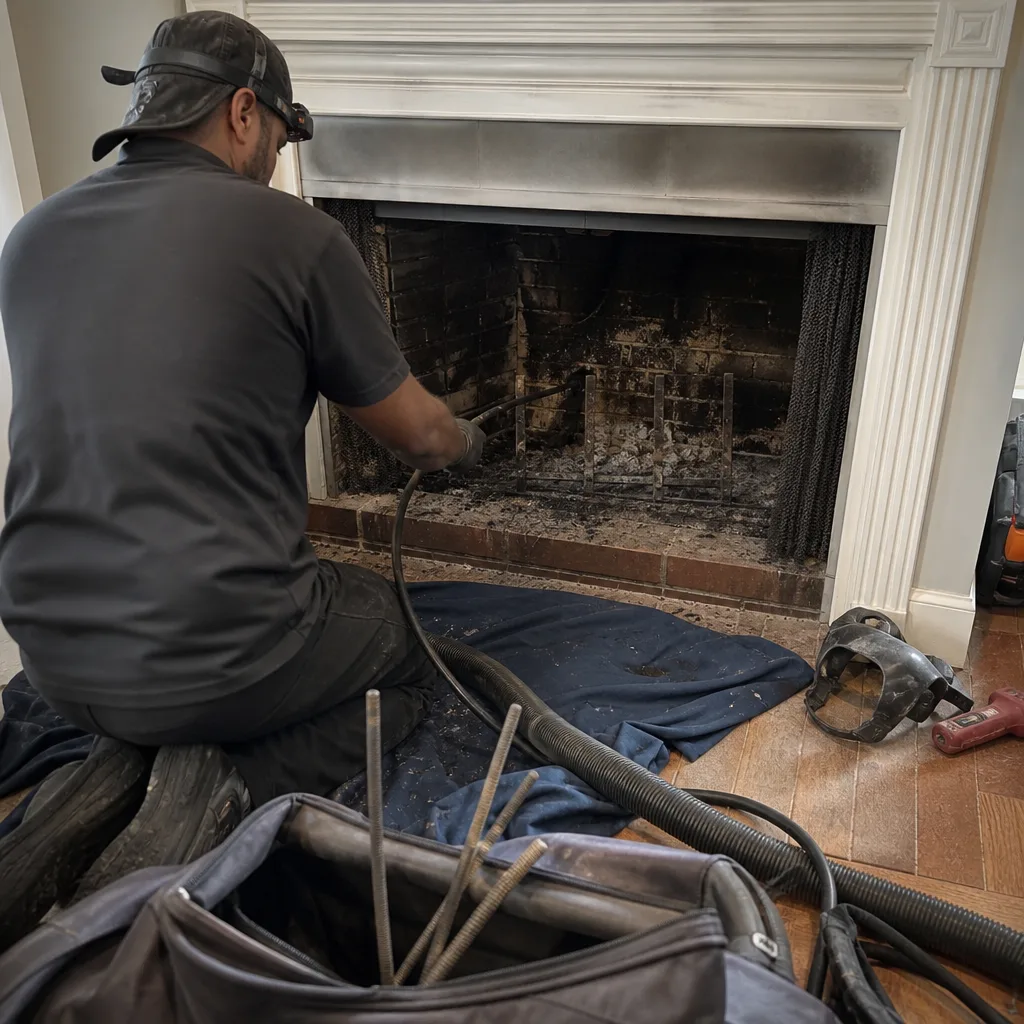 Before
 After
After Before
 After
AfterWhen to Call a Professional
Some jobs are genuinely dangerous to attempt yourself. High-tension chimney components, particularly dampers and caps installed on steep roofs, carry fall risks, and working inside a flue without proper equipment exposes you to creosote dust and potential structural hazards. If you notice any of the following, call a professional immediately: smoke backing up into the room when the fireplace is lit, a strong creosote or chemical smell even when the fireplace is cold, visible cracks in the firebox or chimney exterior, water stains on the ceiling around the chimney, or an animal nest you can hear or smell. These are not DIY projects. A trained chimney technician in Atlanta has the equipment and the access knowledge to diagnose them safely. Hadley Chimney Atlanta offers free estimates in Atlanta – call (762) 320-6525 to schedule one. We’ve been serving Atlanta since 2003, and our Chimney Sweep in Atlanta service includes the camera-documented inspection every homeowner should expect.
Frequently Asked Questions
A chimney sweep and Level 1 inspection in Atlanta typically runs $150 to $350 depending on flue size, accessibility, and creosote buildup. Heavy glazed creosote or a flue that hasn’t been cleaned in years pushes the price toward the high end. Get the number in writing before work starts, and ask what the line items cover. Call (762) 320-6525 for an exact quote – estimates are free.
Liners do genuinely fail in Atlanta because moisture and freeze-thaw cycles crack clay tiles, but “liner replacement” is also the most over-recommended repair in this trade. Before approving any liner work, ask to see photos of the damaged section inside the flue. If the photos show cracks, gaps, or corrosion, the recommendation is likely legitimate. If the company can’t produce photos, get a second opinion. A reputable Atlanta contractor will show you the damage on camera before anyone discusses price.
The National Fire Protection Association says chimneys should be inspected at least once a year and swept whenever creosote buildup reaches 1/8 inch or glazing is present. In practice, most Atlanta homeowners with wood-burning fireplaces should sweep annually, at the end of the burning season in early spring or before the first fire in fall. Gas fireplaces need less frequent sweeping but should be inspected every one to two years. Have questions about your specific fireplace? Call (762) 320-6525 and we’ll talk it through.
Creosote accumulates with every fire, and at a certain thickness it becomes a fuel source. A single hot fire can ignite glazed creosote and turn your flue into a blowtorch reaching 2,000 degrees Fahrenheit. That’s a chimney fire, and it can crack the liner, damage the masonry, and spread into the house structure. A blocked flue from animal nests or debris can also send carbon monoxide back into your living room. The sweep is not a ritual; it’s the cheapest insurance policy on your house.
A sweep removes creosote and debris from the flue. An inspection evaluates the condition of the entire chimney system: liner, damper, firebox, cap, crown, flashing, and clearances to combustible materials. In a Level 1 inspection, conducted during a routine sweep, your Atlanta technician looks at the readily accessible parts of the chimney and runs a camera up the flue. A good company does both on the same visit, and shows you the photos from the inspection when they’re done.
In Georgia, you’re taking a risk if you do. CSIA certification is the only independent verification that a technician has demonstrated baseline knowledge of fire codes, clearances, and chimney mechanics. Without state licensing, it’s the only credential that means anything. There are good uncertified sweeps in Atlanta with decades of experience, but the burden is higher: you’d need references, a documented track record, and photos of previous work. The safer path is a CSIA-certified technician whose credential you can verify in the CSIA directory in thirty seconds. If you need Chimney Repair in Atlanta or help with a Gas Fireplace Repair in Atlanta, the same credential check applies.
The Bottom Line
Hiring a chimney contractor in Atlanta requires a shift in mindset: you are the licensing authority because no state agency fills that role. Verify CSIA certification independently, check the Georgia Secretary of State database, insist on a written itemized price before work begins, and demand before-and-after photos from inside the flue. The right company will produce all four without blinking, because for them it’s not a hurdle, it’s just Tuesday. For more on what makes a chimney service worth your trust, start at the Hadley Chimney Atlanta home page.
Contact Hadley Chimney Atlanta
Ready to book a sweep or talk through your chimney questions? Call (762) 320-6525 and a live person will answer, 24/7. We’ve been serving Atlanta since 2003 with written pricing before any work starts, a 365-Day Done Right Promise on every repair, and before-and-after photos from inside your flue. No voicemail loops, no four-hour windows, no surprise invoices.
Written by Cory Mitchell, Owner at Hadley Chimney Atlanta, serving Atlanta since 2003. Explore more guides & resources from our team.