
Last updated October 15, 2026
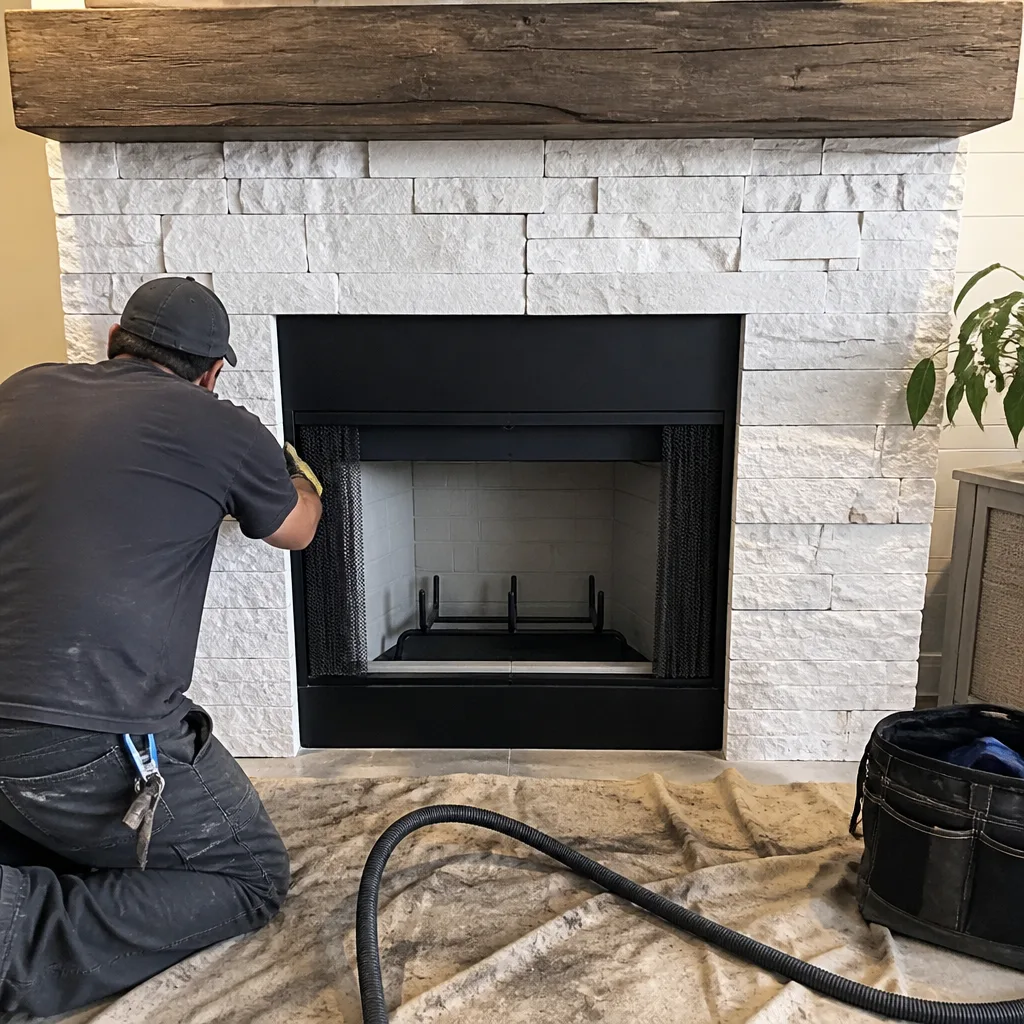
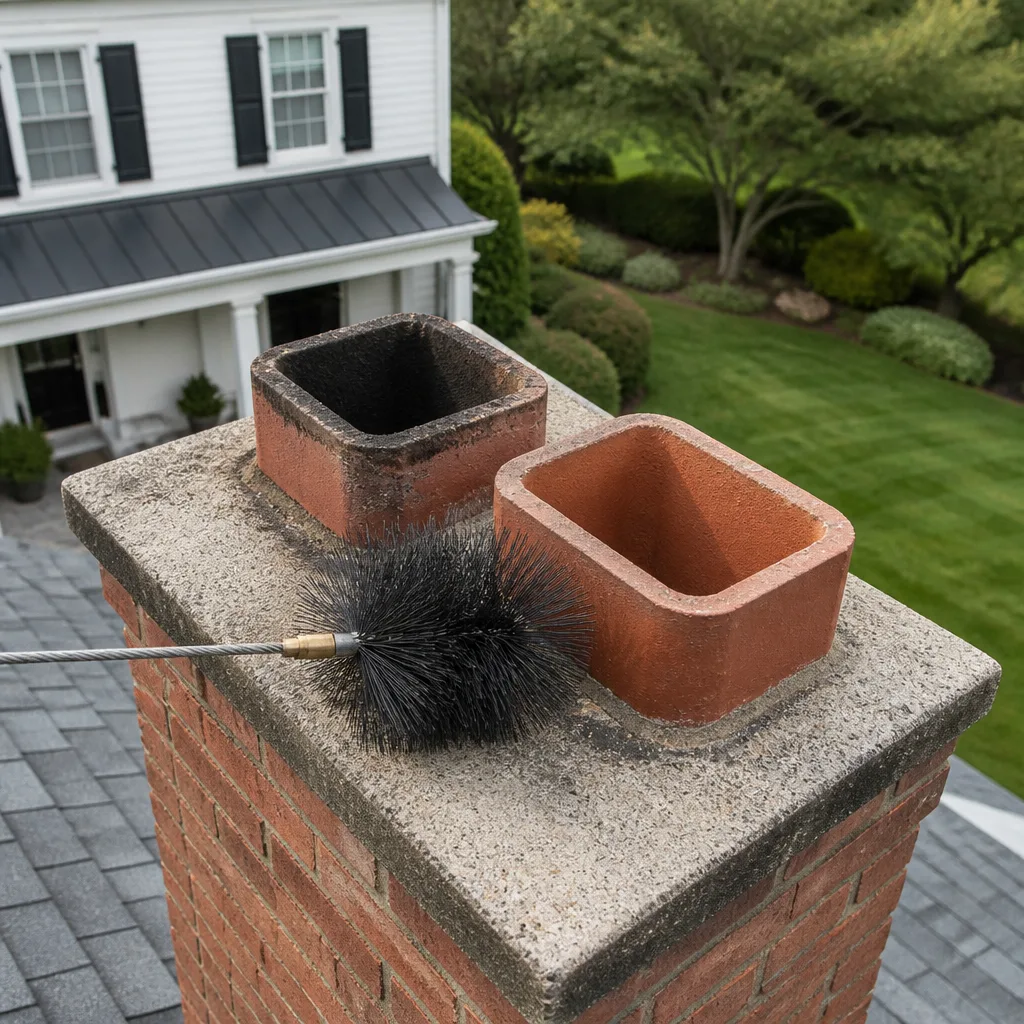 Sweep & inspection
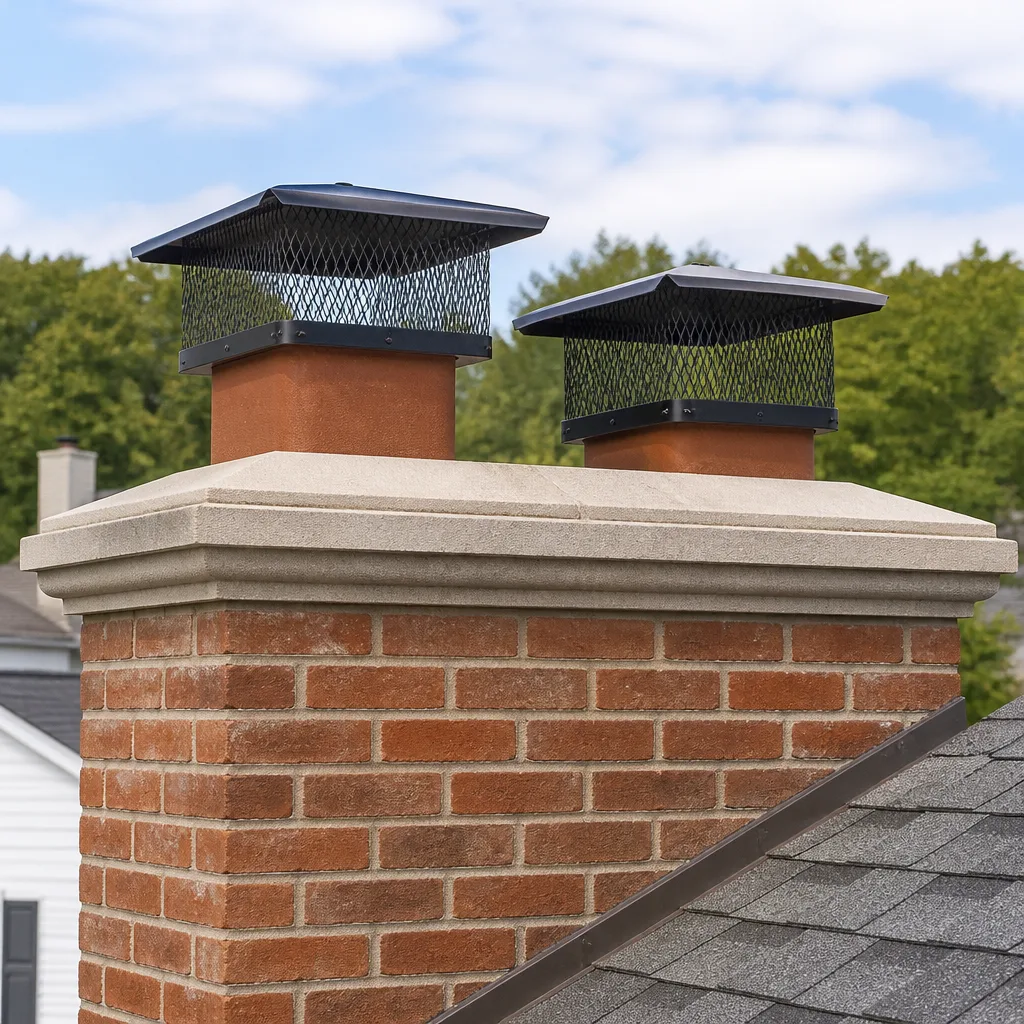 Caps & crowns
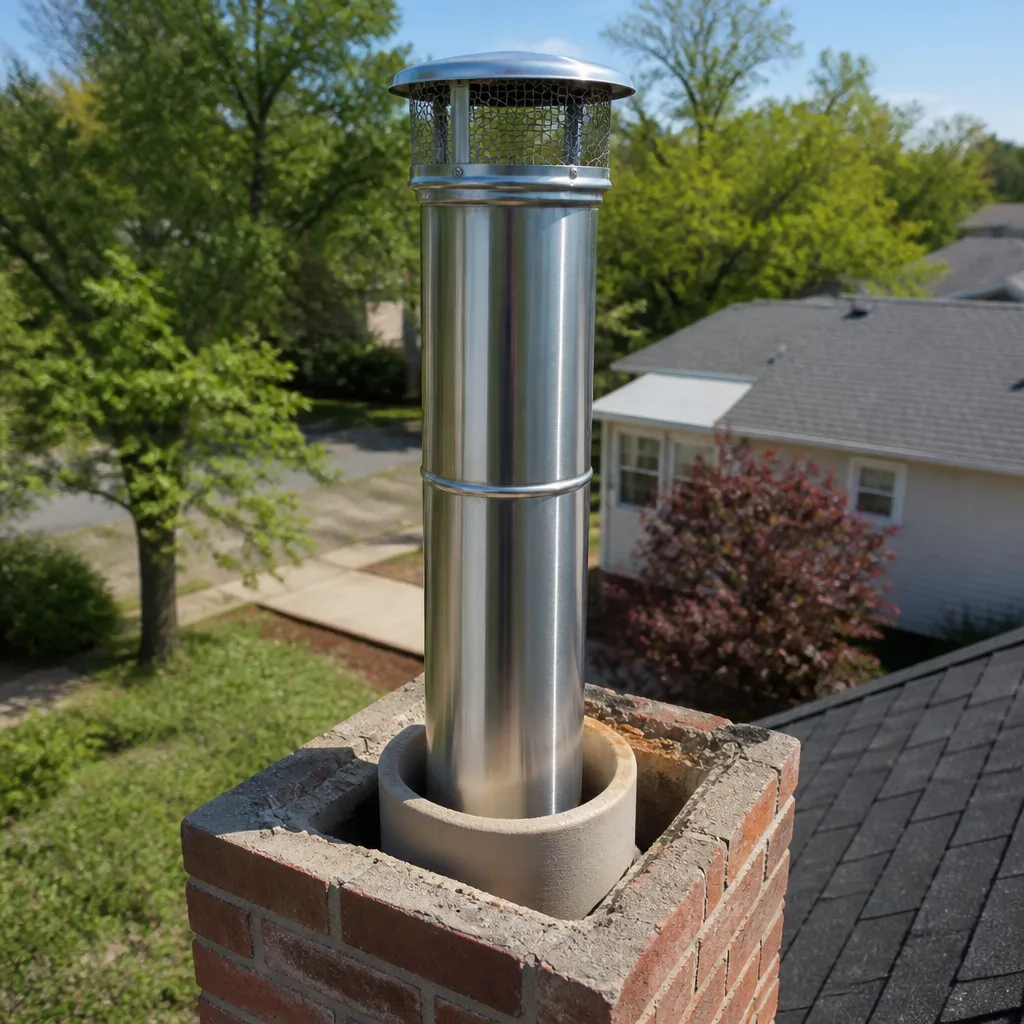 Flue relining
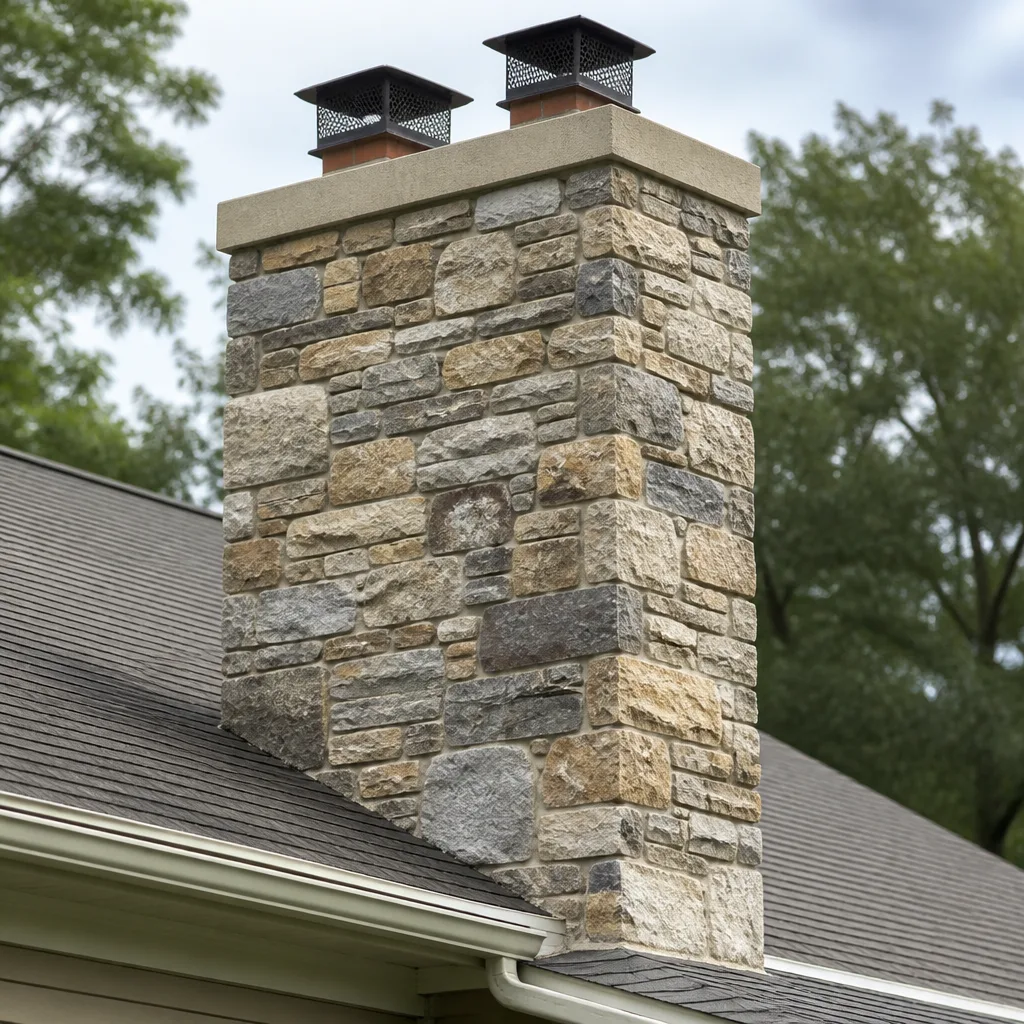 Masonry repair
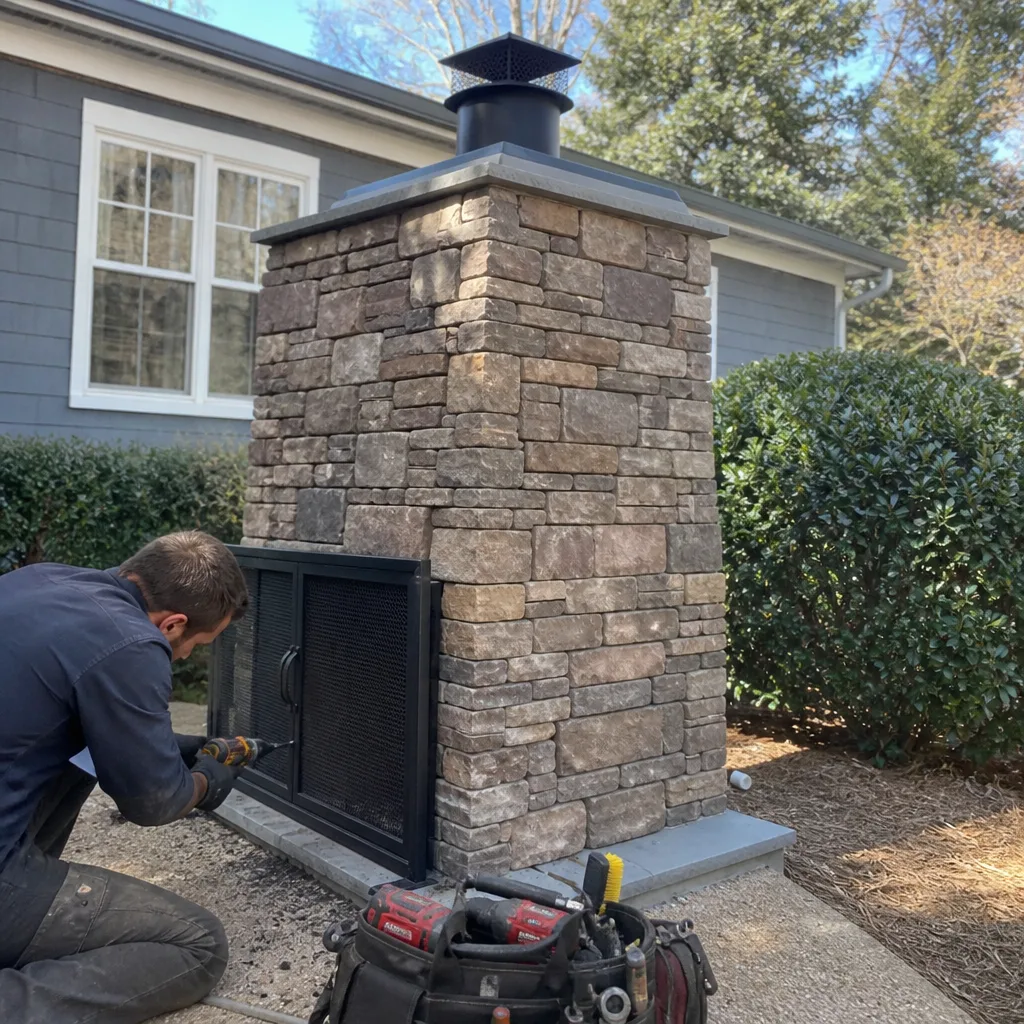
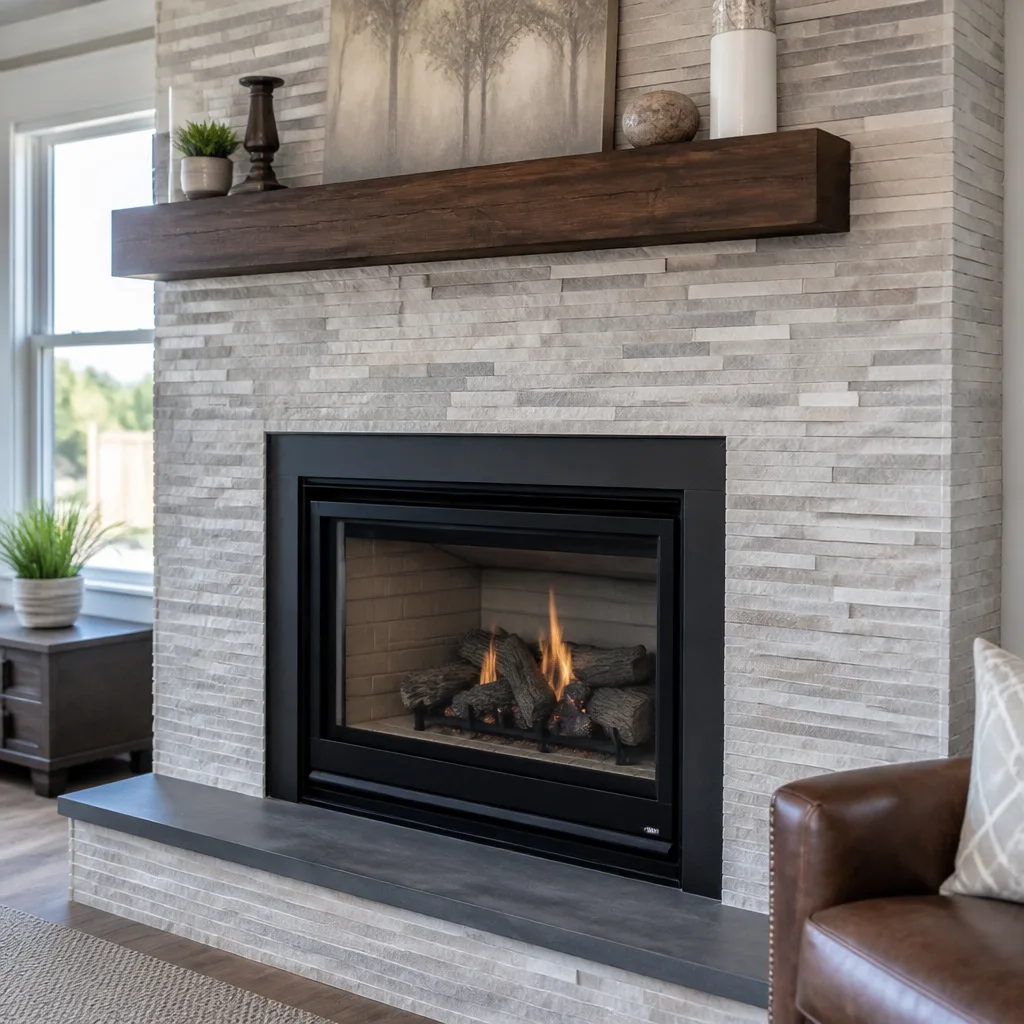 Gas fireplace service
Level 1 sweep and inspection to the NFPA 211 annual standard - flue, crown, cap, and flashing checked and photographed
Chimney sweep logs do not sweep chimneys. They loosen some creosote - which then falls where a brush and vacuum still have to collect it.
Chimney Cleaning Permits, Codes & Inspections in GA: What You Need to Know
Chimney cleaning itself doesn’t require a permit anywhere in Georgia. But the liner repair your sweep recommends afterward might, and if that work is done without one, it can surface as a material defect in your home’s next real estate transaction. In Atlanta, where homes range from 1920s bungalows in Virginia-Highland to 2010s builds in Brookhaven, the age of your chimney often determines whether a simple sweep stays simple or turns into a permitted repair project. This guide-along with our Complete Guide to Chimney Cleaning in Atlanta-walks you through exactly where Georgia draws the line between routine maintenance and regulated work, how Atlanta’s permitting process differs from neighboring counties, and what documentation you need to keep yourself protected whether you’re staying put or selling next spring.
Styles & brands we work with
Quick Answer
Chimney sweeping and visual inspections do not require a permit anywhere in Georgia. However, structural repairs like chimney liner replacement, firebox rebuilding, or masonry reconstruction often require a residential building permit under the Georgia State Minimum Standard Building Code, which adopts the International Residential Code (IRC) with state amendments. Atlanta, Fulton County, Cobb County, and DeKalb County each handle enforcement slightly differently, so what passes in one jurisdiction may trigger a stop-work order in another.
Table of Contents
- Where Georgia Draws the Line: Cleaning vs. Regulated Work
- How Georgia’s IRC Adoption Affects Chimney Repairs
- Atlanta Permitting vs. Fulton, Cobb, and DeKalb: What’s Different
- CSIA Level 2 Inspections vs. Municipal Inspections: When You Need Both
- How Unpermitted Chimney Work Shows Up on a Home Inspection
- What to Ask Your Contractor for in Writing
- Common Mistakes to Avoid
- When to Call a Professional
- Frequently Asked Questions
- The Bottom Line
Where Georgia Draws the Line: Cleaning vs. Regulated Work
A standard chimney sweep, which removes creosote (the flammable tar buildup that makes chimneys a fire risk) and soot from the flue, is classified as routine maintenance-something we cover in our Chimney Sweep Maintenance Checklist for Atlanta Homeowners. So is a visual inspection. Neither requires a permit in Atlanta or anywhere else in Georgia. The line gets crossed when the work involves changing the structure, the fire safety components, or the venting path. That means relining a chimney, rebuilding a firebox, parging (recoating) a flue with new masonry, replacing a chimney crown, or rebuilding a section of chimney above the roofline can all fall under permit requirements depending on scope and local interpretation.
Here’s a practical breakdown of common chimney jobs and where they typically land permit-wise in Georgia:
- Chimney sweep (creosote and soot removal): No permit required anywhere in Georgia. This is maintenance, like changing your HVAC filter.
- Chimney inspection (visual, Level 1 or Level 2): No permit required. Inspections are non-invasive observations.
- Chimney cap installation: No permit required in most Georgia jurisdictions. It’s an accessory that doesn’t alter the flue path.
- Flue relining with a flexible stainless steel liner (like DuraFlex): Frequently requires a permit, especially if the original clay tile liner has failed and the liner is now the primary venting surface. Check with your local building department.
- Firebox rebuild or major masonry repair: Permit required in most Georgia jurisdictions. This is structural work.
- Chimney crown replacement: Often permit-required in Atlanta and surrounding counties, particularly if the crown is integral to the chimney’s structural integrity.
- Full chimney rebuild from the roofline up: Always requires a permit. No exceptions in any Georgia jurisdiction we’re aware of.
- Gas fireplace insert installation: Typically requires a permit because it changes the venting configuration and combustion air source.
The confusion for most Atlanta homeowners comes from how the work gets framed. A contractor might call a liner replacement “part of the sweep” because it’s done in the same visit. But from a code perspective, that liner replacement is a separate scope of work with its own permit trigger. If the contractor doesn’t pull a permit and the liner later fails, or if you sell the home and the buyer’s inspector asks for documentation, you’re left holding the bag.
How Georgia’s IRC Adoption Affects Chimney Repairs
Georgia operates under the Georgia State Minimum Standard Building Code, which adopts the International Residential Code (IRC) as its base with state-specific amendments. The IRC contains detailed chimney and fireplace provisions in Chapter 10, covering everything from flue sizing to clearance from combustibles to liner material requirements. When a Georgia building department issues a chimney permit, they’re enforcing the IRC as amended by the Georgia Department of Community Affairs.
What does this mean for a homeowner in practical terms? A few things worth knowing:
- Liner requirements: The IRC requires that chimneys serving open fireplaces or appliances be lined with an approved liner material. If your original clay tile liner is cracked or spalling (flaking apart), the fireplace is no longer code-compliant. Relining with a stainless steel system like DuraFlex or a ceramic coating like HeatShield brings the chimney back into compliance, and this is exactly the kind of work a building official may want to inspect.
- Clearance to combustibles: The IRC specifies minimum distances between a chimney and any wood framing, insulation, or other combustible material. In older Atlanta homes, especially those built before modern codes, chimneys sometimes run too close to floor joists or roof decking. Repairs that touch these areas often trigger a permit because the inspector needs to verify the corrected clearances.
- Masonry chimney construction: If a chimney has to be partially or fully rebuilt, the IRC has prescriptive requirements for footing depth, mortar type, and lateral support. These are not things a contractor can just eyeball and hope for the best.
- Combustion air and venting for gas fireplaces: Gas fireplace inserts and direct-vent systems have their own IRC requirements around vent termination, clearances, and combustion air. Any time you’re changing how a gas appliance vents, you’re in code territory.
One thing that surprises Atlanta homeowners is that Georgia’s amendments to the IRC don’t add much to the chimney chapter. The state largely follows the national model code here, with local jurisdictions adding their own enforcement interpretations. That’s where the next section gets important.
Atlanta Permitting vs. Fulton, Cobb, and DeKalb: What’s Different
Atlanta operates its own building department, separate from Fulton County. If you live inside the Atlanta city limits, including neighborhoods like Grant Park, East Atlanta, Buckhead, or Virginia-Highland, you deal with the City of Atlanta Office of Buildings. If you live in unincorporated Fulton County or in a city like Sandy Springs or Roswell, you deal with a different building department with its own interpretations. Cobb and DeKalb counties have their own rules. Here’s what that means in practice for chimney work around metro Atlanta:
- City of Atlanta: Atlanta’s building department has historically taken a pragmatic view of chimney liner replacements. For a straightforward relining where the chimney structure is sound and only the liner is being replaced, permits are sometimes waived if the work doesn’t alter the firebox or crown. But this leniency has tightened in recent years. If you live in a historic district like Inman Park or Druid Hills, the local historic commission may also require a Certificate of Appropriateness for any chimney work visible from the street, on top of any building permit.
- Fulton County (unincorporated): Fulton County’s building department tends to be stricter on liner replacements, treating any change to the venting path as permit-worthy. The county also has a more formal inspection process, with inspectors who may want to see the liner before the crown is closed back up.
- Cobb County: Cobb County requires permits for most chimney relining and rebuild work. Marietta and Smyrna homeowners should expect the same rigor from their local building departments. The county also has specific rules about gas fireplace venting that differ from Atlanta’s interpretations.
- DeKalb County: DeKalb County, including Decatur and Brookhaven (which has its own building department since incorporating), generally requires permits for structural chimney work and relining. Decatur in particular has an older housing stock with frequent chimney issues, and the city’s building department is known for thorough inspections.
The takeaway: don’t assume that because a friend in one part of metro Atlanta didn’t need a permit, you won’t either. The jurisdiction boundary matters. And when in doubt, calling the local building department and asking directly is free.
CSIA Level 2 Inspections vs. Municipal Inspections: When You Need Both
Here’s a distinction that gets a lot of Atlanta homeowners tangled up. A CSIA Level 2 inspection, performed by a certified chimney professional, is a contractor-issued inspection. It uses cameras, sometimes drones, to document the condition of the flue interior, the firebox, the damper, and the chimney’s structural elements. It is not a code-compliance inspection. A municipal inspection, performed by a building department official, verifies that completed work meets the Georgia State Minimum Standard Building Code. These serve completely different purposes.
Here’s when each applies:
- CSIA Level 2 inspection: Recommended any time you buy a home with a chimney, any time your chimney has experienced a chimney fire or lightning strike, or any time you’re making a material change to the chimney system, like switching from a wood-burning fireplace to a gas insert. It’s also the standard baseline for an annual chimney check in an older Atlanta home.
- Municipal inspection: Required when you pull a permit for regulated chimney work. The building official’s job is to verify that the repair complies with code. They’re not there to clean the chimney or tell you about creosote. They’re checking measurements, materials, and clearances against the IRC.
- Third-party inspection: In some cases, you might want an independent third party, like a structural engineer, to assess a chimney that has shifted or cracked badly. This is more common in Atlanta’s older neighborhoods where foundation settling has pulled chimneys away from the house body.
For a homeowner, the practical sequence usually looks like this: a Chimney Sweep in Atlanta identifies a liner problem during a routine cleaning. The sweep recommends relining. The homeowner (or the contractor) pulls a permit with the local building department. The work is done. The municipal inspector comes out and signs off. The homeowner files that inspection record with their home paperwork. That piece of paper is gold when it’s time to sell.
How Unpermitted Chimney Work Shows Up on a Home Inspection
When you sell a home in Atlanta, the buyer’s inspector will look at the chimney. They’ll check the flue, the firebox, the damper, the crown, and sometimes the attic chase if accessible. If they see a newer stainless steel liner in a 1940s chimney, their first question is going to be: “Was this permitted?” If the seller can’t produce documentation, the inspector will typically flag it as an unverified repair, which becomes a negotiation point.
Here’s what that looks like in the real world:
- Buyer’s inspector flags the chimney repair as unpermitted or undocumented. The buyer’s agent asks the seller for permits. The seller can’t produce them because the contractor never pulled a permit.
- The repair becomes a bargaining chip. The buyer asks for a price reduction to cover the “risk” of the unpermitted work, or asks the seller to have a permitted, inspected repair done before closing. In a hot Atlanta market, buyers have more leverage on this than sellers like to admit.
- Lenders sometimes get involved. If the unpermitted work touches the structure or the fire safety system, some underwriters want documentation before they’ll fund. This is less common for chimney liners than for structural additions, but it happens.
- Remediation cost: If a seller has to retrofit a permit after the fact, they’re not just paying the permit fee. They may have to open up the chimney chase so an inspector can see the liner, then close it back up, repair drywall, repaint. In Atlanta, that could run anywhere from $1,500 to $4,000 depending on access, and it all comes out of the sale proceeds.
The irony is that the unpermitted chimney work is often done correctly. The contractor knows what they’re doing. The liner is the right size, the clearances are fine, the crown was sealed properly. But without the paper trail, none of that matters at the closing table. The documentation is the product as much as the liner is.
What to Ask Your Contractor for in Writing
This is where a little paperwork discipline saves you thousands down the road. Whether or not a permit turns out to be required for your specific job, you should ask for these documents from any chimney contractor doing work on your Atlanta home:
- Written scope of work. What exactly will be done, in what order, with what materials. If the contractor lists DuraFlex or Copperfield components, that should be in the scope. This protects you from “scope creep” and gives you a baseline for what the final invoice should match.
- Written price before work starts. Not an estimate, a firm price. This is standard practice at Hadley Chimney Atlanta home, where a written price is provided before any work begins. If a contractor can’t give you a written price, that’s a signal.
- Material documentation. For liner relining, ask for the manufacturer’s spec sheet and a record of the liner’s length, diameter, and material grade. For repairs using HeatShield ceramic compound, ask for the product data sheet. These documents matter if you ever need to verify the work was done to manufacturer standards.
- Before-and-after photos. Any contractor who does chimney work should be able to show you the camera feed from before the repair and after. This is part of The Relay Visibility Guarantee that Hadley operates under: live arrival tracking, before-and-after photo documentation, and a written price before work begins on every job.
- Permit documentation (if applicable). If a permit was pulled, get a copy of the permit and, once the inspection happens, a copy of the inspection sign-off. File these with your home records. You’ll want them at closing.
- Written warranty or guarantee. In Georgia, chimney repairs should come with a written guarantee specifying what’s covered and for how long. A “verbal guarantee” is not a guarantee.
The contractors who happily provide all of this are the ones who stand behind their work. The ones who push back are telling you something about how they’ll handle a problem six months from now.
Common Mistakes to Avoid
- Assuming every chimney job is permit-free because the chimney sweep didn’t mention permits. Sweeps are maintenance contractors, not code officials. They’re not required to flag permit issues, and many don’t. Ask the question yourself.
- Paying cash with no written receipt or documentation. In Atlanta, a cash-price chimney repair with no paperwork is a recipe for pain at resale. If you can’t document it, it didn’t happen as far as a buyer’s inspector is concerned.
- Believing that a CSIA inspection satisfies local building code requirements. A CSIA Level 2 inspection from a certified professional is valuable, but it’s not a substitute for a municipal inspection where one is required. They check different things.
- Letting the contractor choose the liner material without asking why. Some liners are built for wood-burning fireplaces, others for gas appliances. The wrong liner, even if permitted, creates a venting problem that a code inspector might catch, but a homeowner won’t. Ask which brand and model is going in and why.
- Repairing visible masonry cracks without investigating the underlying cause. In Atlanta’s freeze-thaw climate, cracks often reappear because the crown is compromised or the footing is shifting. A surface patch without addressing the cause is a recurring expense.
- Ignoring the historic district rules in neighborhoods like Inman Park, Grant Park, or Druid Hills. If your chimney work is visible from the street in a historic district, you may need a Certificate of Appropriateness on top of any building permit. Skipping it can result in a stop-work order and a compliance headache.
- Throwing away your chimney documentation after the repair is done. Ten years later, when you’re selling, the buyer’s inspector will ask. Keep the paper.
When to Call a Professional
If you’ve spotted white staining on your chimney’s exterior (efflorescence from water intrusion), seen pieces of tile or mortar in the fireplace, noticed a smokey smell even when the fireplace isn’t in use, or your last sweep was more than two years ago, it’s time to have a professional look. More urgent signs-which we detail in Chimney Cleaning Warning Signs: A Atlanta Homeowner’s Reference Guide-include visible cracks in the firebox, a rusted damper that won’t open or close, or any sign of water streaks on interior walls near the chimney. These are not DIY fixes. Chimney liners and high-reach repairs carry real risk, and a trained professional with the right equipment can document what’s actually happening inside your flue. Hadley Chimney Atlanta offers free estimates in Atlanta, and you can call (762) 320-6525 directly to talk through what you’re seeing. A real person answers, 24/7.
Frequently Asked Questions
No. Chimney sweeping is classified as routine maintenance in every Georgia jurisdiction, including Atlanta, Fulton County, Cobb County, and DeKalb County. No permit is required for creosote removal, soot cleaning, or a standard visual inspection. If your sweep finds damage that requires structural repair, that repair may trigger a separate permit requirement. Call (762) 320-6525 to book a sweep in the Atlanta area with a written price before work starts.
Chimney sweeps in Atlanta typically run $180 to $340 for a standard open fireplace cleaning, depending on accessibility, the amount of creosote buildup, and whether the chimney has been swept recently. Scope usually includes the flue, smoke chamber, damper, and firebox. If a camera inspection is needed, expect an additional $100 to $200, though many companies bundle that into the sweep. Call (762) 320-6525 for a specific price on your fireplace.
The National Fire Protection Association (NFPA 211) recommends annual chimney inspections, with sweeping scheduled when creosote buildup reaches 1/8 inch or more. For Atlanta homes that burn wood regularly from October through March, that usually translates to one sweep per year. If you use your fireplace only occasionally, every 18 to 24 months may be sufficient. Homes with gas fireplaces still benefit from an annual inspection, though gas logs don’t produce the same creosote load that wood fires do. Call (762) 320-6525 if you’re not sure when your last sweep was.
Creosote builds up on the flue walls and becomes a fuel source. If it ignites, a chimney fire can reach temperatures over 2,000 degrees Fahrenheit, hot enough to crack flue tiles, warp the damper, and spread to the home’s framing through compromised mortar joints. In Atlanta’s older housing stock, where chimneys often run through attic spaces and alongside wooden framing, the risk is real. The signs that you’ve had a chimney fire can be subtle, so annual inspection is the safer play than waiting for visible damage. Call (762) 320-6525 to have your chimney checked.
A sweep is a cleaning service that removes creosote and soot from the flue, smoke chamber, damper, and firebox. An inspection is a condition assessment that documents the chimney’s structural and functional state, often using a camera to show the flue interior. A Level 1 inspection is a visual check done during a routine sweep. A Level 2 inspection adds camera documentation and is recommended when buying a home, after a chimney fire, or before changing to a gas insert. Hadley Chimney Atlanta includes photographic documentation on every job, so you see exactly what the tech sees. Call (762) 320-6525 to schedule either.
In most Georgia jurisdictions, relining a chimney is considered regulated work that requires a permit, particularly if the original liner has failed and the new liner becomes the primary venting path. Some local building departments, including the City of Atlanta in certain circumstances, allow a liner replacement under a repair permit rather than a full building permit, but the permitting trigger still exists. If you’re unsure, call your local building department and describe the scope in plain terms. For a Chimney Repair in Atlanta that includes the proper documentation, call (762) 320-6525.
The Bottom Line
Chimney cleaning and inspection don’t require permits in Georgia. Chimney repairs often do, and the line between those two things is exactly where Atlanta homeowners get caught. Know which side of the line your project falls on, ask your contractor for written documentation of everything, and file that paperwork somewhere you’ll actually find it in ten years. If a contractor tells you permits aren’t needed for structural work, verify with your local building department before you sign anything. A little due diligence now prevents a closing-table surprise later. For more guides & resources, explore our blog, and if you need a chimney professional in Atlanta who documents everything, answers the phone, and stands behind the work with a written 365-Day Done Right Promise, call (762) 320-6525.
Written by Cory Mitchell, Owner at Hadley Chimney Atlanta, serving Atlanta since 2003.
See the difference
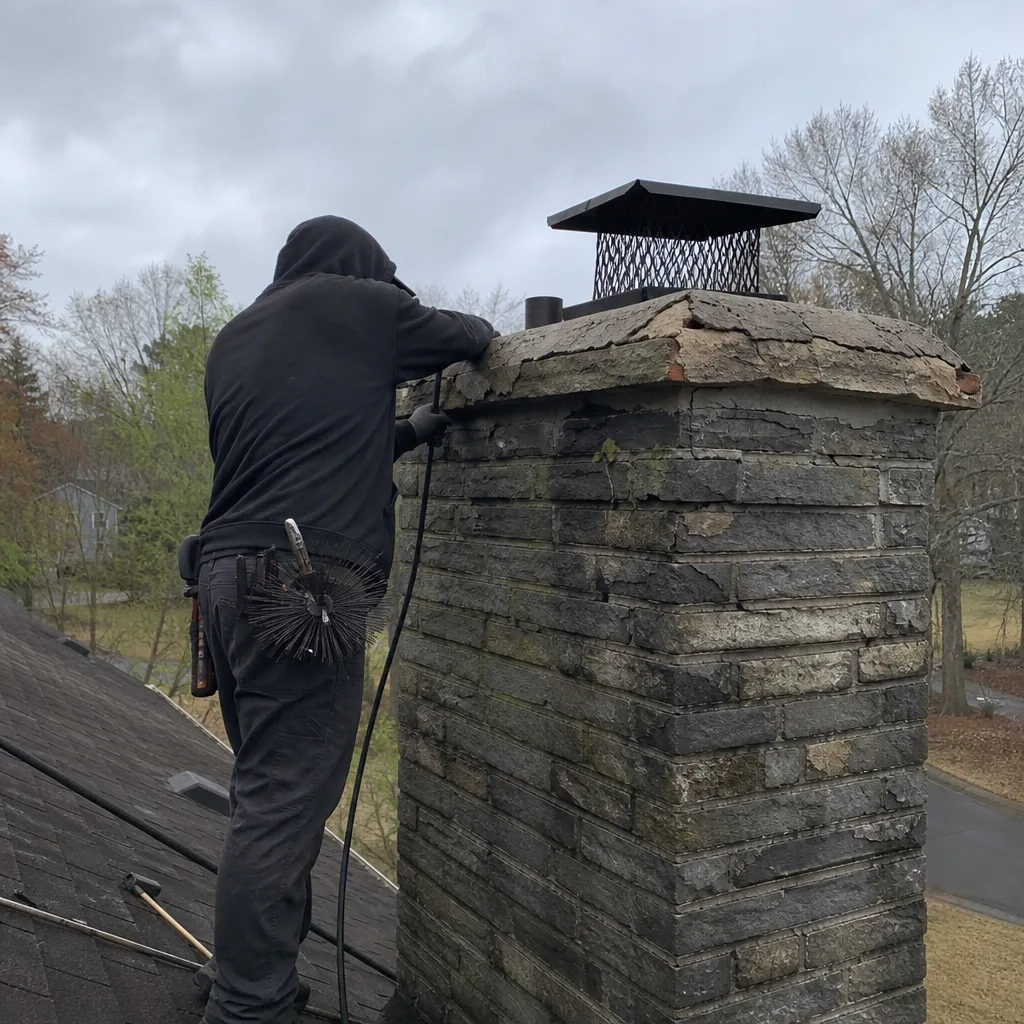 Before
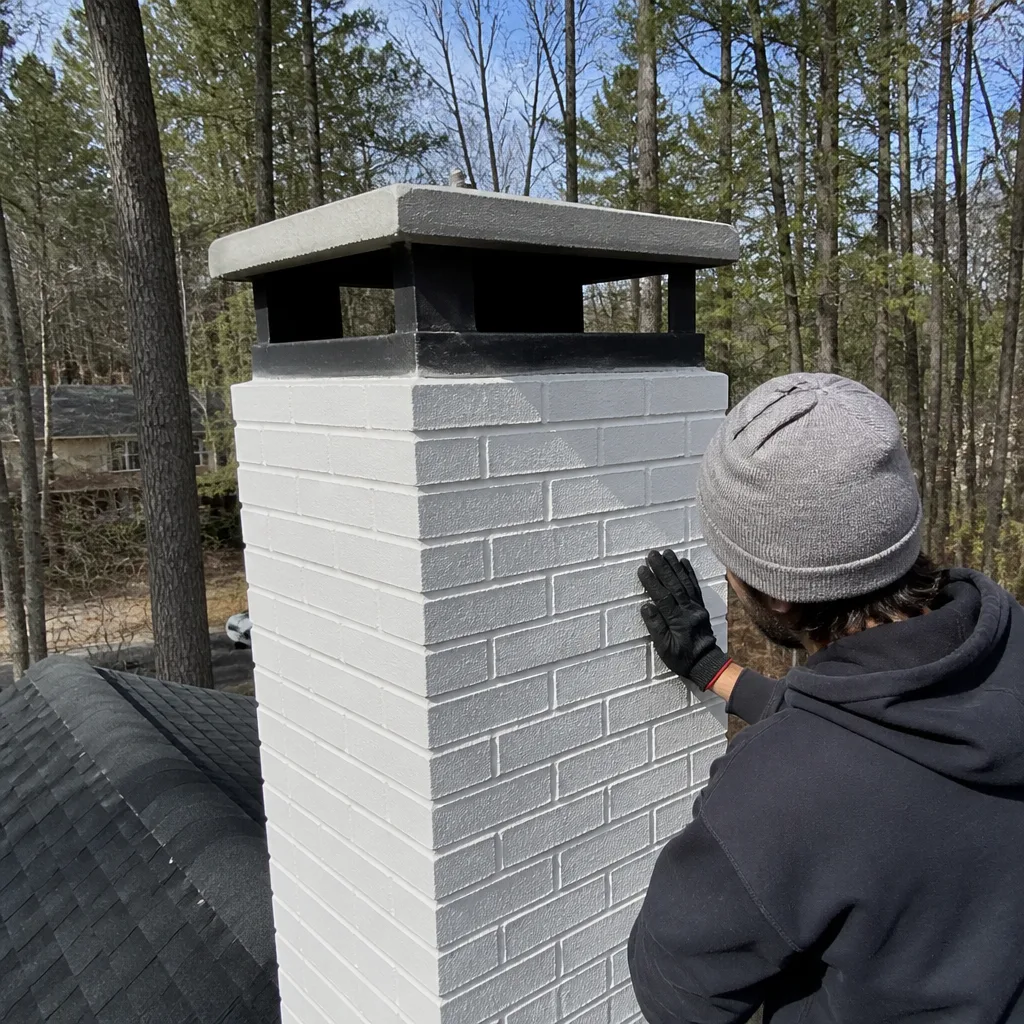 After
After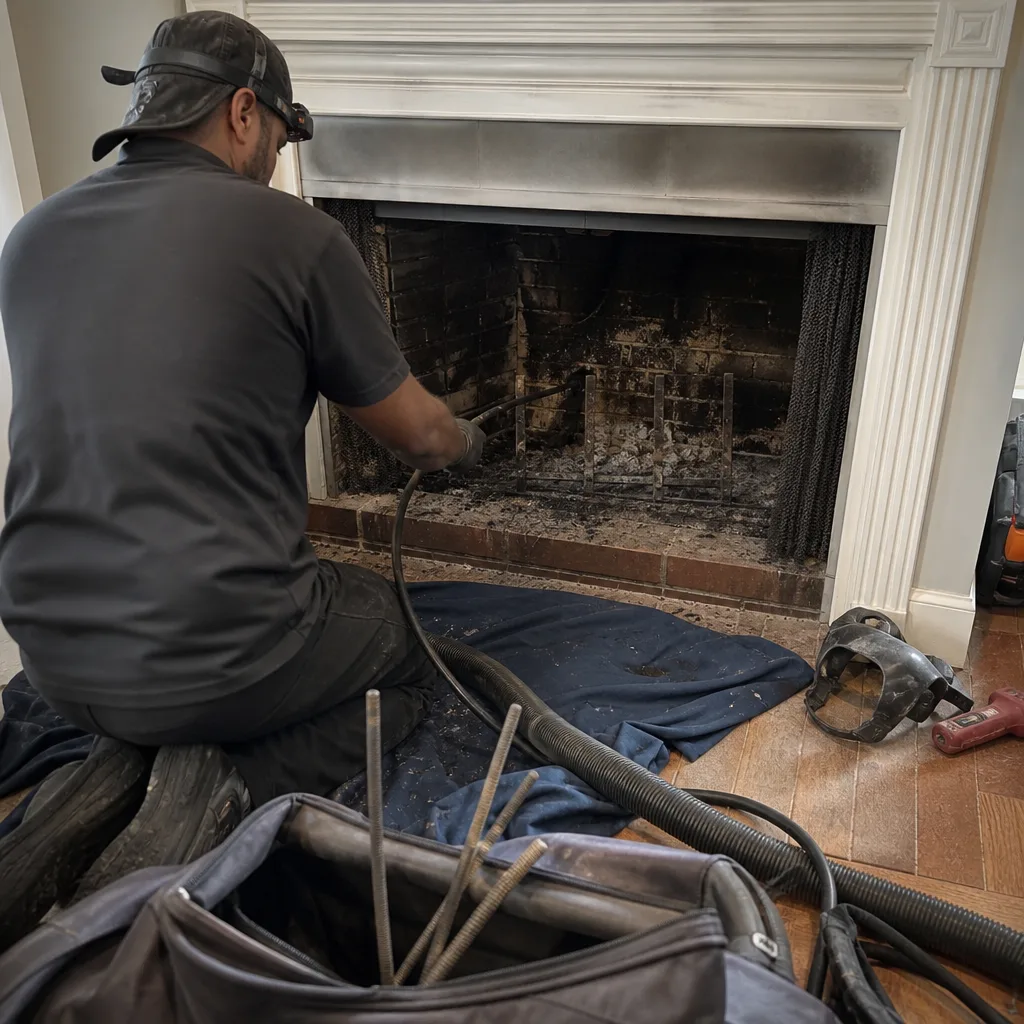 Before
 After
After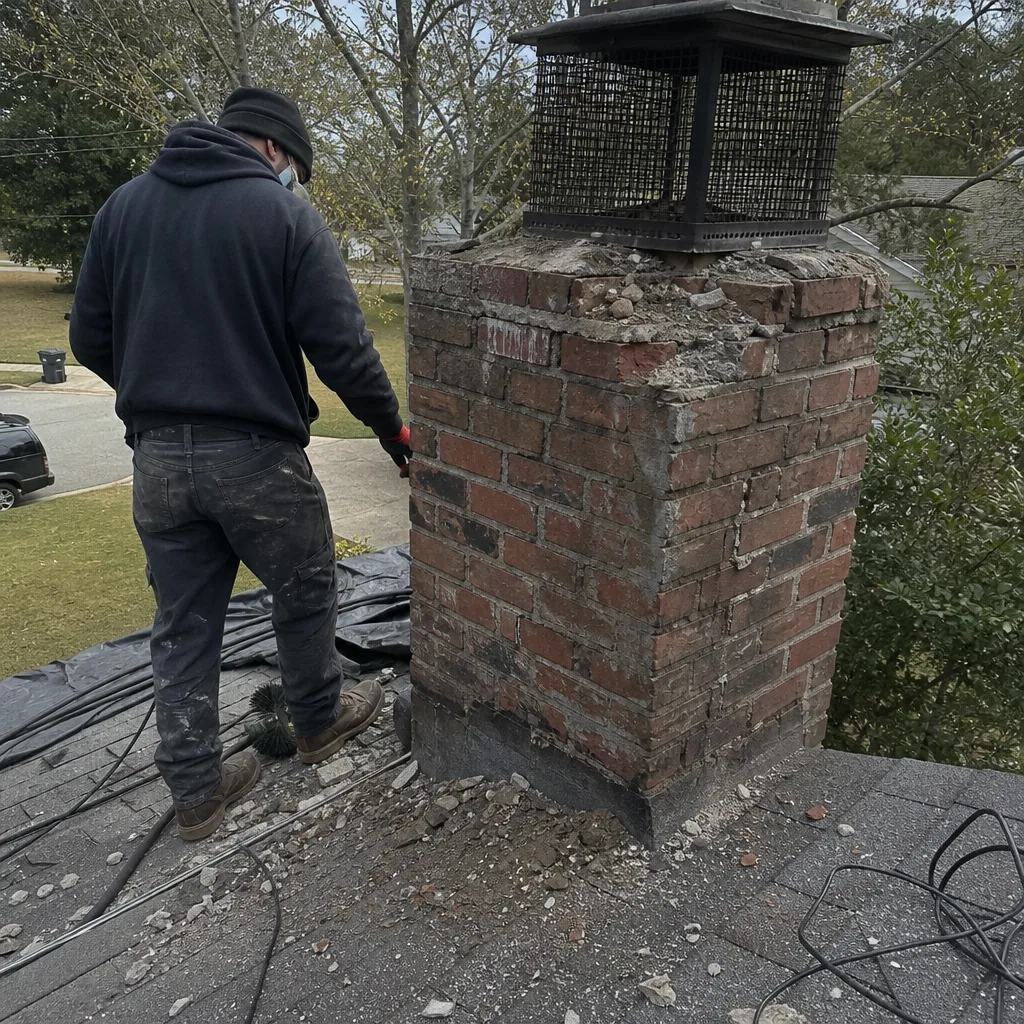 Before
 After
After