
Last updated October 15, 2026
 Sweep & inspection
 Caps & crowns
 Flue relining
 Masonry repair
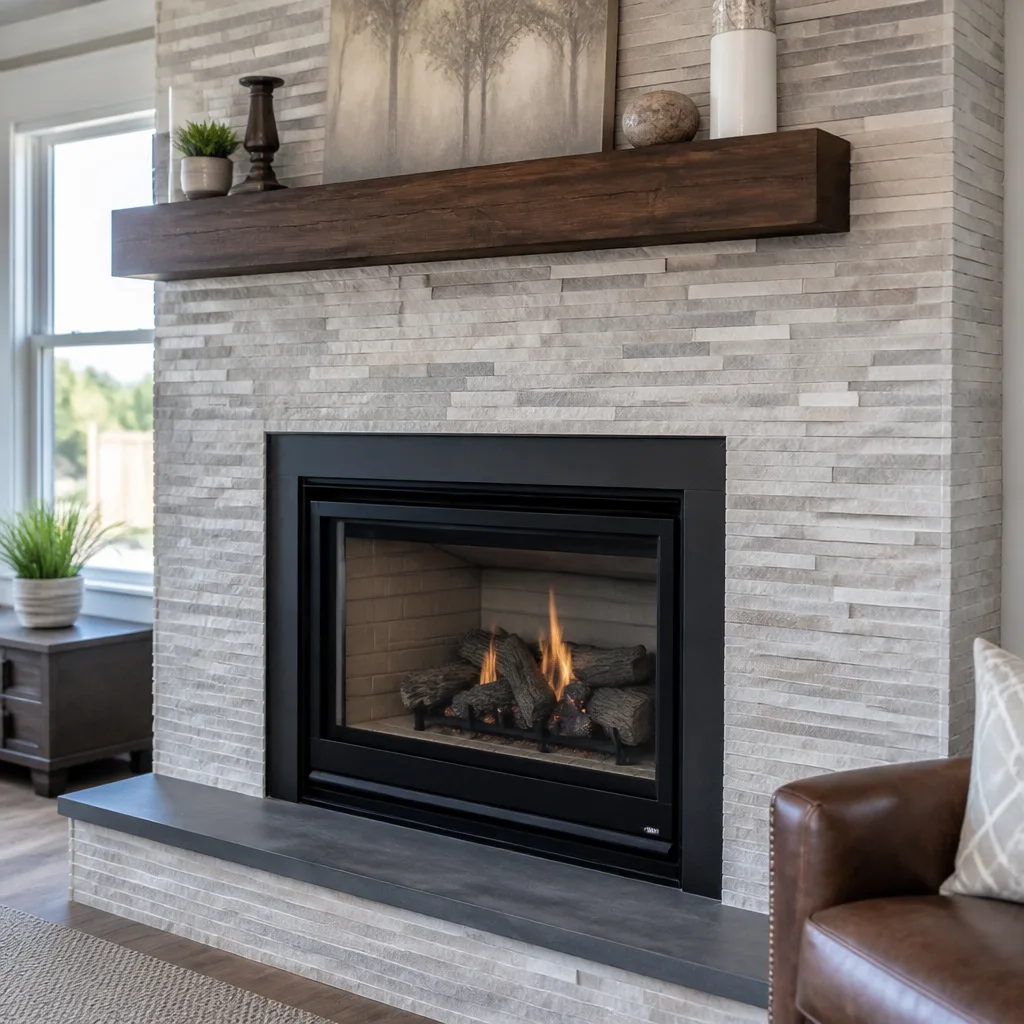 Gas fireplace service
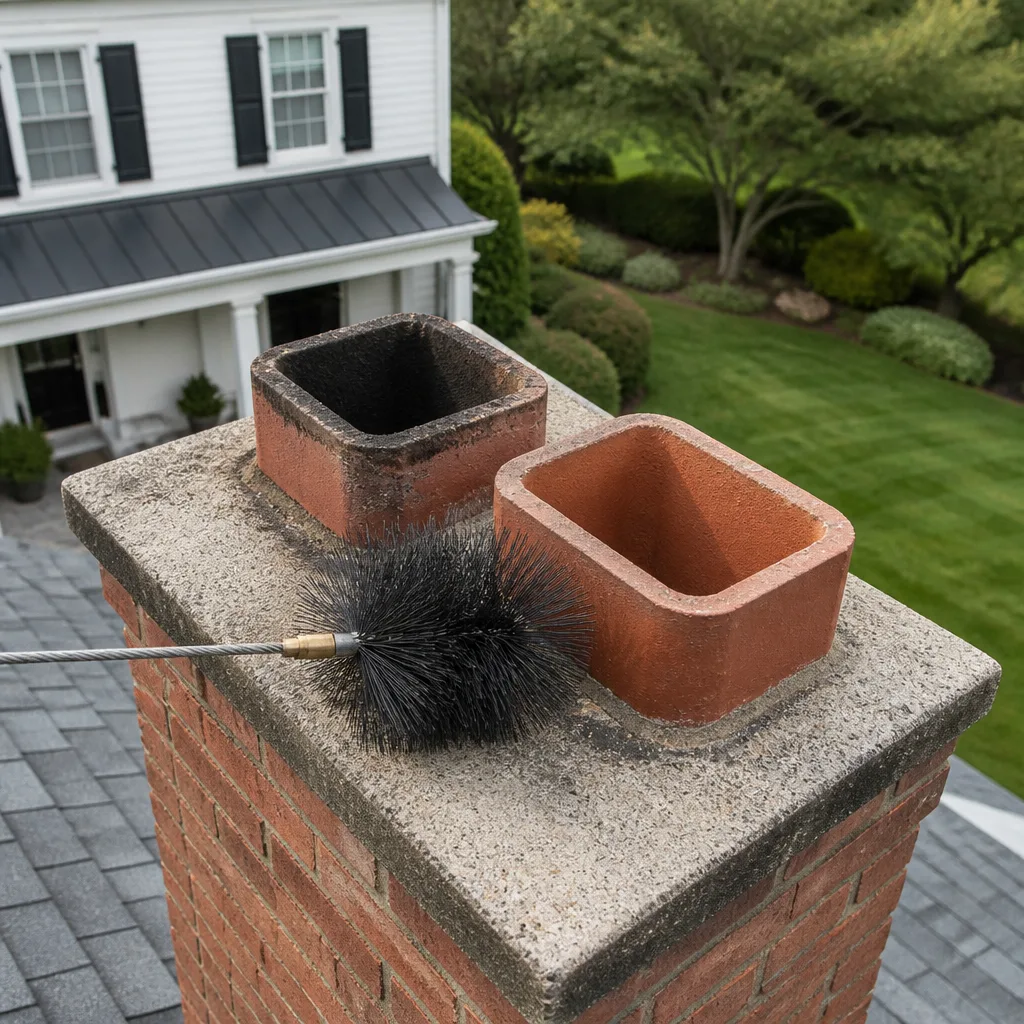
Level 1 sweep and inspection to the NFPA 211 annual standard - flue, crown, cap, and flashing checked and photographed
Chimney sweep logs do not sweep chimneys. They loosen some creosote - which then falls where a brush and vacuum still have to collect it.
Chimney Sweep Maintenance Checklist for Atlanta Homeowners
Here’s a number most Atlanta homeowners don’t expect: roughly one in four chimney fires we respond to starts with a maintenance issue the homeowner could have spotted from the living room floor. Not from a ladder. Not from a camera. From the firebox, looking up with a flashlight. The problem isn’t lack of effort. It’s that most checklists on the internet say “inspect annually” and leave it there, which is about as useful as a weather forecast that says “expect weather.” Atlanta’s climate creates three specific damage windows: February freeze-thaw cycles, March-April nesting season, and October-November rain storms that test flashing before the first fire. This guide walks through what to check, when to check it, what requires a camera, and what documentation you should be getting from any contractor who works on your chimney.
Styles & brands we work with
Quick Answer
A chimney maintenance checklist for Atlanta homeowners means checking the firebox and damper monthly during burn season (November through February), doing an exterior visual check of the cap and flashing in March after nesting season ends, scheduling a professional chimney sweep with a camera inspection every 40 to 60 fires or once per year, and getting written before-and-after documentation every time a contractor touches your chimney. Atlanta’s spring pollen and summer storms make an August pre-season inspection more valuable than the generic “inspect in fall” advice you’ll see elsewhere.
Table of Contents
- The Atlanta Chimney Calendar: What the Generic Checklists Miss
- The Five Components Every Atlanta Chimney Has (and Their Separate Maintenance Cycles)
- What You Can Safely Self-Check at the Firebox Level
- What Requires a Camera or a Ladder (and Why Not to DIY These)
- How to Document Your Chimney’s Condition Year After Year
- How Much Does a Chimney Sweep Cost in Atlanta?
- What “Maintenance Complete” Should Look Like in Writing
- Common Mistakes to Avoid
- When to Call a Professional
- Frequently Asked Questions
- The Bottom Line
The Atlanta Chimney Calendar: What the Generic Checklists Miss
If your chimney maintenance checklist just says “inspect annually,” it was written for no city in particular. Atlanta’s weather and wildlife create three specific windows where damage starts, and missing them means paying for repairs that could have been prevented. Here’s the month-by-month rhythm we follow when advising homeowners across the city, from Buckhead to Kirkwood to East Atlanta Village.
March: The Nesting Season Check
Atlanta’s birds don’t take winter off the way they do up north. Chimney swifts are protected under federal law, but more common in this area are squirrels, raccoons, and even smaller birds that treat uncapped flues as prime real estate. March is when nesting season kicks into gear, and a chimney without a proper cap becomes a serious problem. Check for twigs and debris piling up around the top of the flue from ground level, and listen for scratching or chirping from inside the chimney cavity during quiet hours. If a bird or animal has already built a nest inside the flue, you need a professional to remove it before the next burn. Blocked flues don’t just smoke you out; they force carbon monoxide back into the house. If you’re not sure whether your cap is intact, call Chimney Sweep in Atlanta to schedule an inspection before nesting season ends.
August: The Pre-Season Camera Inspection
August is the most ignored month in chimney maintenance. It’s hot, no one is thinking about fires, and contractors who book out through fall can usually fit you in within days. That timing matters because Atlanta’s fall chimney sweep calendar fills up fast. By mid-September, most reputable sweeps are booking one to three weeks out. If you wait until the first cold snap, you’ll be competing with everyone else in the city who just realized their fireplace hasn’t been inspected since the previous winter. Getting a professional cleaning and camera inspection in August means you walk into fire season knowing the liner is intact, the flue is clear, and the damper opens fully. It also gives you time to address any findings before you actually need the fireplace. In our experience, the homeowners who schedule in August save money, because the repair isn’t urgent yet, and they have time to compare options without pressure.
October: The Flashing Check Before Rain Season
Atlanta’s rain pattern means early fall is the last good window for exterior chimney work before consistent precipitation begins. The flashing, which is the metal that seals the seam where the chimney meets the roof, is the single most common source of chimney-related roof leaks in this city. Years of Atlanta sun and rain break down the sealant around it, and once water starts getting behind the flashing, it travels. You’ll see staining on the ceiling near the chimney, peeling paint on interior walls below, or mineral discoloration on brickwork. October is the month to have this checked before the heavier fall and winter rain. If the flashing is failing, a repair done in October costs less than the same repair done as an emergency in February, when the roofer is also dealing with active leaks. And because the Chimney Repair in Atlanta process often involves a camera inspection as part of the diagnostic, you’ll get a clear picture of what’s actually happening before any work begins. We provide a written price before any work starts, so you know the cost before anyone picks up a ladder.
November: First Burn Check
Atlanta’s first real cold snap usually arrives in November, and that first fire of the season is the moment you find out what happened to your chimney over the summer. Here’s a simple habit that saves a lot of trouble: before the first fire, open the damper, shine a flashlight up the flue, and look for animals, debris, or heavy black buildup. If you see what looks like shiny, tar-like material, that’s creosote (the flammable tar buildup that makes chimneys a fire risk), and it needs professional attention. Burn a small test fire and watch what happens. Smoke coming into the room? That’s a flow issue, often a blocked flue or a damper that isn’t fully open. A strong, localized smell that lingers after the fire? That could indicate creosote accumulation or a damaged liner. If any of those signs appear, get a professional in before burning again.
February: Post-Season Damage Assessment
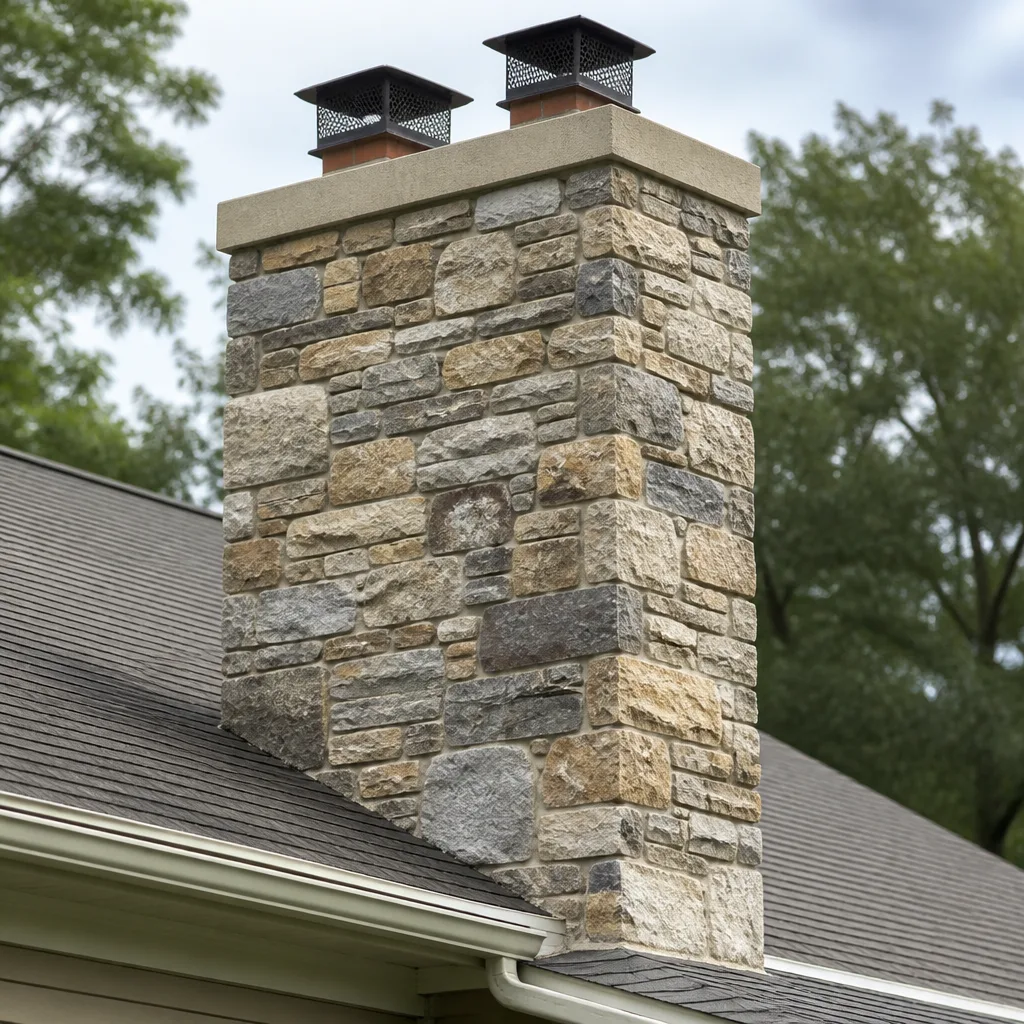
After a season of freeze-thaw cycles, which Atlanta gets plenty of even when the winters are mild, the mortar and brick face a lot of stress. Water expands when it freezes, and that expansion cracks brick and mortar over time. By late February, the heaviest cold usually passes, and you can assess the damage from the ground level. Look for spalling brick, which is when the brick faces have begun to flake off, or any visible cracks in the crown, which is the cement cap on top of the chimney. The crown’s entire job is to shed water, and when it cracks, water goes into the masonry, making subsequent freeze-thaw damage worse. Catching this in February means you can repair it before the spring storms hit.
The Five Components Every Atlanta Chimney Has (and Their Separate Maintenance Cycles)
Most folks think of the chimney as one thing, but it’s actually five separate components, each with its own failure rate and maintenance schedule. If you don’t know these, you can’t tell whether a contractor’s recommendation is reasonable.
1. The Cap
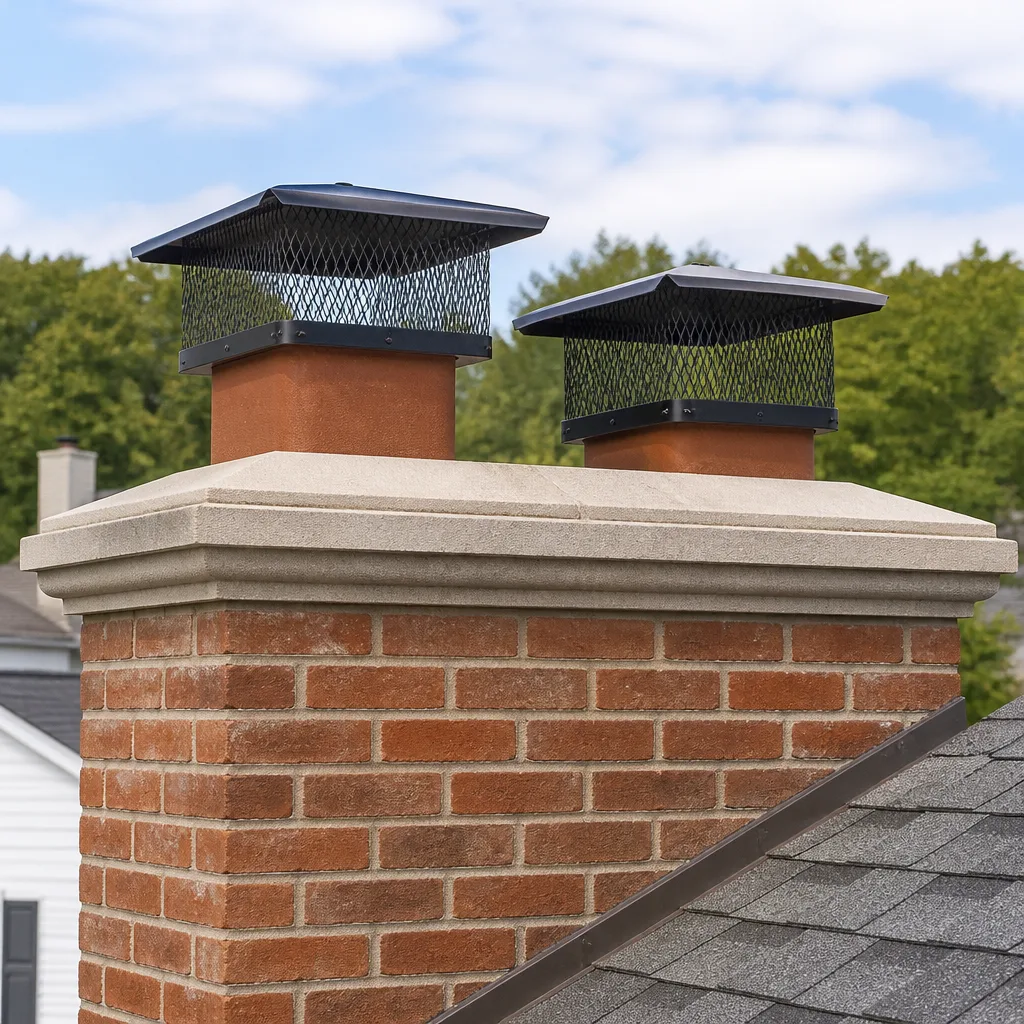
This is the metal covering at the very top of the chimney, and its job is to keep rain out, animals out, and sparks from escaping onto the roof. Atlanta has a lot of animals looking for chimneys without caps. Chimney swifts, squirrels, raccoons, and very brave opossums all see an open flue as a warm place to live. A missing or damaged cap should be replaced, and the standard material most reputable contractors use is either stainless steel or copper. We work with Copperfield chimney accessories, which is a brand chimney pros rely on, but the specific brand matters less than the material. A cheap galvanized cap will rust through in a couple of Atlanta winters. Stainless steel or copper lasts. Inspection cycle: every 6 months from ground level, and at every professional visit. Replacement cycle: 10 to 20 years with a good brand.
2. The Crown
The crown is the cement slab that covers the top of the chimney structure around the flue opening. Most crowns fail because they’re poured too thin or without proper rebar reinforcement, and Atlanta’s freeze-thaw cycles accelerate the cracking once it starts. A cracked crown is a slow leak that every subsequent winter makes worse. Repair can be a patch or a full recast, depending on severity. Inspector cycle: once per year, preferably in February after the cold has done its work. Full recast cycle: 20 to 30 years, but earlier if damage is caught too late.
3. The Flashing
Flashing is the metal that seals the joint where the chimney passes through the roof, and as mentioned above, it’s the number one cause of chimney-related roof leaks in Atlanta. Flashing can fail in a few ways: the sealant around it dries out and cracks, the metal itself corrodes, or installation was done wrong in the first place. Poor flashing installation is also one of the most common things we see in older Atlanta homes, especially those built before current roofing code requirements. Inspection cycle: once per year in October, before the rainy season. Replacement cycle: 20 to 30 years, depending on material and installation quality.
4. The Liner
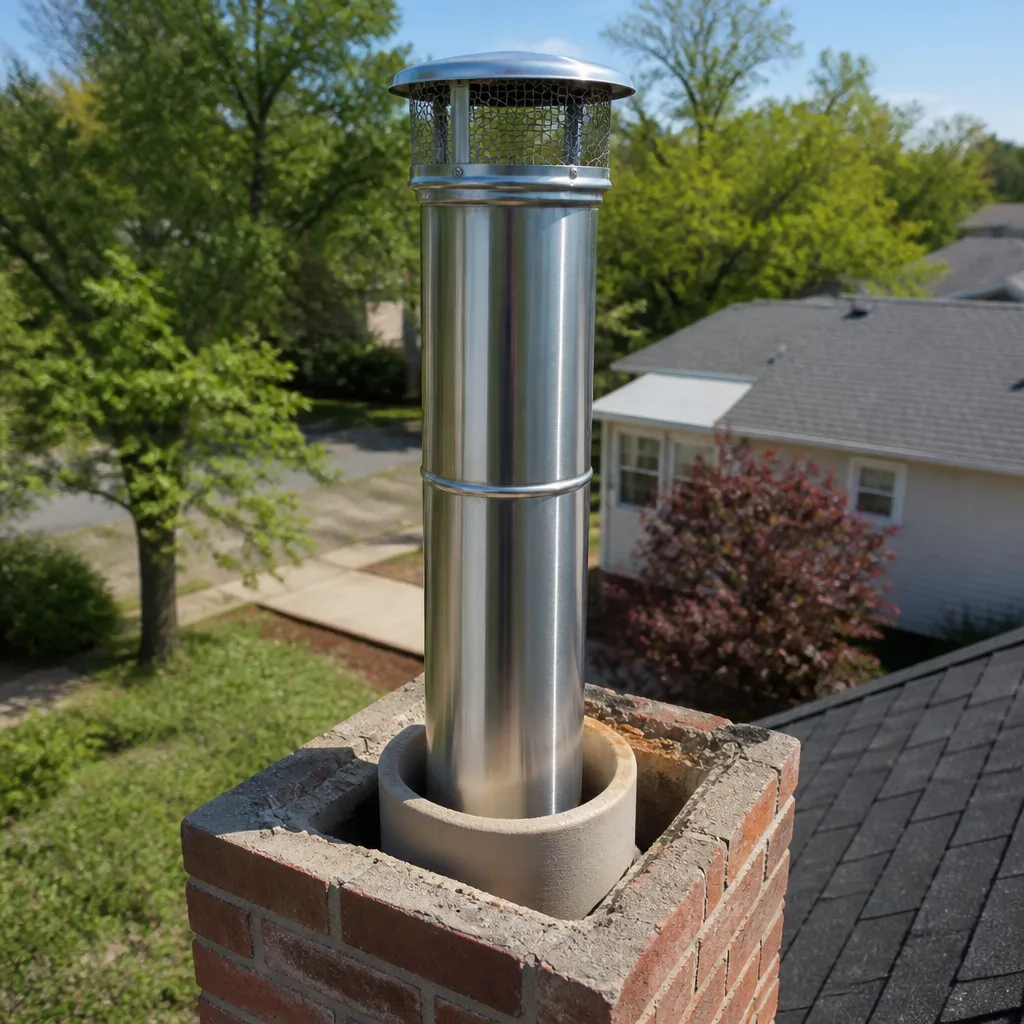
The liner is the protective barrier inside the flue, and its job is to keep heat and gases from seeping into the surrounding masonry. This is the most critical component for fire safety, because a cracked liner allows heat to reach the framing of your house. Atlanta homes built before the 1940s sometimes have no liner at all, and many homes from the 1950s and 1960s have clay tile liners that have cracked from years of thermal expansion and contraction. When we do Chimney Sweep in Atlanta, the camera inspection specifically looks for liner cracks. If we see a crack, we’ll show you the footage. Repair options include resurfacing with a material like HeatShield, which is a ceramic repair compound that effectively re-lines the flue from the inside, or installing a stainless steel liner. The right option depends on the damage, and we walk through that process with photos so you can see what we’re seeing. Inspection cycle: once per year with a camera. Liner lifespan: variable, but any crack means immediate attention.
5. The Damper
The damper is the metal plate inside the firebox that opens and closes to control airflow. It’s also the component most likely to rust, warp, or seize up after a humid Atlanta summer. A damper that won’t open fully causes smoke to back up into the room, and a damper that won’t close fully means heat escapes up the chimney year-round. Dampers also fail silently: you may not notice until you try to light a fire and the room fills with smoke, which is a horrible time to discover the problem. A quick maintenance check is to open and close the damper fully before burn season, listening for grinding or seeing visible rust. Inspection cycle: once per month during burn season. Replacement cycle: 10 to 20 years, but often earlier if not maintained.
What You Can Safely Self-Check at the Firebox Level
You don’t need a ladder or a camera to spot early warning signs in most chimneys. What you need is a flashlight, a few minutes, and the willingness to actually look. Here’s a monthly self-check for the burn season months, October through March.
- Look up the flue with a flashlight before the first fire of the month. What you’re looking for: shiny, tar-like black buildup (creosote), animal nesting materials, or any obstruction. Creosote is the flammable tar buildup that makes chimneys a fire risk, and it’s the single most important thing to spot before it becomes a problem.
- Open and close the damper fully. Listen for grinding, feel for resistance. If it won’t open or close smoothly, make a note and check again next month. If it gets noticeably worse, get it looked at before you need it.
- Look at the firebox walls. Cracks in the firebrick or gaps in the mortar between them are normal signs of wear, but they worsen over time. Wide cracks (more than a quarter inch) mean the firebox needs repair. This is something to monitor month to month, not panic about the first time you see hairline cracking.
- Check for water staining on the ceiling or walls adjacent to the chimney. Indoor plumbing leaks aren’t the only source of ceiling stains. If the stain is near or below the chimney, especially after a hard rain, the flashing or crown is the likely culprit.
- Note any chemical smell around the fireplace, especially after rain. A strong, sharp smell that appears after a storm can mean water is getting into the flue and mixing with creosote, which releases an odor. It’s another sign that the cap or crown is failing.
None of these checks require special tools, and they take about five minutes total. Do them on the first day of every burn season month, ideally on a consistent day like the first Saturday, and you’ll catch most problems before they become expensive.
What Requires a Camera or a Ladder (and Why Not to DIY These)
Some components of a chimney system cannot be safely diagnosed from the ground. Here’s what requires a professional visit, and why trying to do these yourself is a bad idea.
Cracked Liner Detection
A cracked liner is invisible from the firebox unless the crack has advanced dramatically. The only way to see it is by running a camera up the flue, which requires professional equipment and training. If a contractor tells you the liner is cracked without showing you camera footage, ask for the video. No reputable chimney company will recommend a liner repair without providing photographic evidence of the problem. We use camera inspections on every single visit as part of our Hadley Chimney Atlanta home service standard, and the photos become part of your written record.
Cap and Crown Assessment
To properly inspect the cap and crown, someone has to be on the roof or on a ladder at roof height. Working from a ladder at chimney height requires fall protection training and proper equipment. The danger is real. A fall from a two-story roof is a life-changing injury, and the risk isn’t worth saving an inspection fee. Professionals do this work with proper safety gear and insurance, which matters if anything goes wrong.
Gas Fireplace Venting
Gas fireplaces have a different venting system than wood-burning fireplaces, and the clearances and termination points are specific to the manufacturer’s specifications. If you’ve got a gas fireplace, the same annual inspection principle applies, but the specifics are different. We do Gas Fireplace Repair in Atlanta, and the camera inspection looks for vent blockage, bird nests in the termination cap, and check the gas log set to make sure the burner is clean and burning the proper color flame.
The takeaway: the firebox-level checks are safe for any homeowner to do. Anything above the roof line or inside the flue should involve a professional with a camera and from-ground documentation of what they find.
How to Document Your Chimney’s Condition Year After Year
Most homeowners have no record of their chimney’s condition from one year to the next. That’s a problem for two reasons. First, you can’t tell whether a crack is new or whether it’s been there for three years and you just forgot. Second, if you ever file an insurance claim for chimney-related water damage, the adjuster is going to ask when the problem started, and your memory is not documentation. Here’s a simple documentation system that requires almost no effort.
- Take photos from the same two angles every time. One photo from inside the firebox looking up, and one from the ground outside looking at the roof and chimney. Same spot, same time of day if possible. Store them in a folder on your phone labeled “Chimney” with the date in the filename.
- Keep a simple log. A note on your phone with the date, what you observed, and any action taken. Example: “Aug 12, 2026. Professional sweep and camera inspection. Liner looks good. Cap had minor rust. Replaced cap with Copperfield stainless steel. Total $480.” Five sentences a year is all it takes.
- Ask for the camera footage from professional inspections. Any reputable contractor will provide before-and-after photos or video. Our visits include photography as part of The Relay Visibility Guarantee, which means live arrival tracking, before-and-after photo documentation, and a written price before work begins on every job. If a contractor can’t show you what they did, that’s a red flag.
- Keep invoices in one place. Digital invoices are easiest; you can pay from a link and you have the record automatically. A shoebox of paper receipts is better than nothing but harder to use when you actually need it.
This record takes maybe ten minutes per year and is worth every minute if you ever need to prove a problem was pre-existing or that you’ve been maintaining the system.
How Much Does a Chimney Sweep Cost in Atlanta?
Chimney sweeps in Atlanta typically run $180 to $350 for a standard cleaning and visual inspection, with camera inspections adding another $50 to $100. Liners, when they need replacement, run $2,500 to $7,000 depending on whether it’s a DuraFlex stainless steel system or a HeatShield ceramic repair, and cap replacement is $250 to $600 installed. These are the numbers we see across the city, from Sandy Springs to Decatur, though the final price depends on chimney height, roof pitch, and the amount of creosote buildup.
Here’s a breakdown of typical Atlanta market ranges:
| Service | Typical Atlanta Range | Notes |
|---|---|---|
| Basic sweep | $180 – $350 | Includes visual inspection and cleanup |
| Sweep with camera inspection | $280 – $450 | Full flue video documentation |
| Cap replacement | $250 – $600 | Stainless or copper, varies by brand |
| Crown repair | $350 – $1,200 | Patch vs. full recast |
| Flashing repair | $300 – $900 | Depends on roof pitch and extent |
| Liner installation | $2,500 – $7,000 | DuraFlex steel or HeatShield ceramic |
| Gas fireplace service | $150 – $300 | Cleaning, testing, safety check |
We always give a written price before work begins, every single time. No surprise charges at the door. If a contractor won’t put the price in writing before starting, that’s a sign to find someone else. Call (762) 320-6525 for an exact quote for your chimney, and we’ll walk you through what’s needed and what it costs before anyone touches a brush.
What “Maintenance Complete” Should Look Like in Writing
Here’s something most contractors don’t want you to know: “Swept and inspected” written on a receipt is not documentation. It’s a sentence. A complete maintenance record should include specific deliverables, and if you’re paying for the service, you’re entitled to them. Here’s the minimum you should expect from any chimney maintenance visit in Atlanta.
- A written report of what was found. Not verbal. Written. It should list the condition of each of the five components: cap, crown, flashing, liner, and damper. If one of those is missing from the report, ask why.
- Photographic before-and-after proof of the work. This is non-negotiable in our view. Our visits include photo documentation as part of The Relay Visibility Guarantee, and the photos become part of the record you keep in your file. If the contractor claims they cleaned the flue, the before photo should show the creosote and the after photo should show it gone.
- A written guarantee on any repair work. Every repair we do comes with a written guarantee and a free second visit if the repair fails. That’s the 365-Day Done Right Promise, and it’s standing policy, not a promotional offer. If a contractor won’t stand behind their work in writing, you as the homeowner are carrying all the risk.
- A clear explanation of anything found, with options. Not a sales pitch. If the liner is cracked, we’ll show you the camera footage and tell you what’s urgent, what can wait, and what the options are. The decision is yours, and the prices are written before you decide.
Common Mistakes to Avoid
- Skipping the August inspection because “it’s not fire season yet.” This is the most expensive mistake Atlanta homeowners make. August is when you have time to address problems before demand spikes in October. Waiting means paying emergency rates or waiting three weeks with a fireplace you can’t use.
- Burning unseasoned wood. Wood that hasn’t dried for at least six months creates more creosote per fire than seasoned wood. In Atlanta’s humid climate, even “seasoned” wood from a supplier can be wetter than advertised. If the wood hisses or steam comes out of the ends, it’s not ready to burn.
- Ignoring a damper that doesn’t close fully. A partially open damper means conditioned air escapes up the flue year-round. Over the course of an Atlanta summer, that adds up on your power bill. Fixing a damper is usually one of the cheapest repairs on the chimney.
- Assuming a chimney cap is decorative. It’s not. Without a cap, rain water goes directly into the flue, animals move in, and embers can escape onto the roof. In Atlanta’s wet climate, an uncapped chimney means water damage is not a question of if, but when.
- Taking a contractor’s word for a liner problem without seeing camera footage. Liner replacement is a $2,500-plus job. You deserve to see the crack before you pay for the fix. Any reputable contractor will show you the video. If they won’t, walk away.
- Waiting until smoke enters the room to call about a flow problem. By the time smoke is backing up into your living room, the blockage has been accumulating for a while. A monthly firebox check catches these things early, and the five minutes it takes is the cheapest maintenance you’ll ever do.
When to Call a Professional
Some problems are obvious, and some are not. Call a professional if you see any of these: smoke entering the room during a fire, a strong chemical or musty smell around the fireplace that persists after rain, visible water stains on the ceiling or walls near the chimney, animals living in the flue, heavy black buildup you can see from the firebox, or any crack in the brickwork wider than a quarter inch. If you’re seeing any of these and you’re in the Atlanta area, Chimney Repair in Atlanta is what we do, and we do it with the transparency this trade has historically lacked. Hadley Chimney Atlanta offers free estimates in Atlanta, and calls are answered by a live person 24/7. Call (762) 320-6525 if you want a written price and a camera inspection that shows you exactly what’s going on.
Frequently Asked Questions
Most Atlanta homeowners should have their chimney swept once per year, or every 40 to 60 fires, whichever comes first. If you burn wet or unseasoned wood, you’ll need it more often because creosote builds up faster. Homes that burn only a few fires per season can sometimes go 18 months, but we don’t recommend stretching beyond that, because the inspection is also catching liner cracks, animal entry, and water damage that have nothing to do with how often you burn.
You can maintain the firebox level, but a full chimney cleaning requires tools and access to the roof, and the safety risk isn’t worth it. Proper chimney cleaning removes creosote from the upper flue where you can’t reach from below. If you miss a section of creosote, you’ve created a fire hazard without knowing it. Professional sweeps use equipment designed for the job and inspect the flue with a camera during the same visit. The cost of a professional sweep is far less than the cost of a chimney fire.
The clearest sign is shiny, tar-like black material visible when you look up the flue with a flashlight. Other signs include a strong odor around the fireplace, especially in humid weather, smoke backing up into the room, or a fire that burns less efficiently than it used to. Any of those mean the flue needs professional attention before the next burn. Call (762) 320-6525 and we’ll put a camera up there to show you exactly what’s happening.
It depends on the crack size and location, and you shouldn’t take anyone’s word for it without seeing the camera footage. A small crack in a clay tile liner might be resurfaced with HeatShield ceramic repair compound rather than replaced entirely. A larger crack or a fully deteriorated liner usually means installing a stainless steel liner, often a DuraFlex system. What matters is that the recommendation comes with photographic evidence and a written explanation of why the repair is urgent versus something that can be scheduled. We never recommend a liner replacement without showing you the video first.
A chimney sweep in Atlanta typically costs $180 to $350 for the basic service, with a camera inspection adding $50 to $100. The total cost varies based on chimney height, roof pitch, and the amount of creosote buildup. We give a written price before any work starts, every single time, so you know the cost before anyone picks up a brush. Call (762) 320-6525 for an exact quote, and the estimate is free.
The most common consequences in Atlanta are water damage and creosote fire risk. Water enters through a cracked crown or failing flashing and soaks into the masonry, causing spalling brick and expensive structural repair. Creosote buildup ignites and causes a chimney fire that can reach temperatures hot enough to crack the liner and spread into the house framing. The good news is both are preventable with the kind of maintenance described above, which costs a fraction of a single emergency repair. Get on an annual schedule and the system works.
The Bottom Line
Atlanta’s chimney maintenance needs don’t follow a generic national calendar. They follow pollen season, nesting months, and the fall rain pattern that tests your flashing every year. Check the firebox monthly during burn season, do an external check in March and again in February, and get a professional camera inspection in August before the fall rush. Document what you find with photos and a simple log, and demand written documentation from any contractor who works on your chimney. The entire system costs a few hundred dollars a year to maintain and thousands to neglect. If you want a chimney company in Atlanta that shows you the camera footage, gives you a written price before work starts, and stands behind the work with a written guarantee and free second visit if it fails, call Hadley Chimney Atlanta at (762) 320-6525. We answer the phone, we show up in a tracked window, and you’ll see the before-and-after photos to prove the work was done.
Written by Cory Mitchell, Owner at Hadley Chimney Atlanta, serving Atlanta since 2003.
See the difference
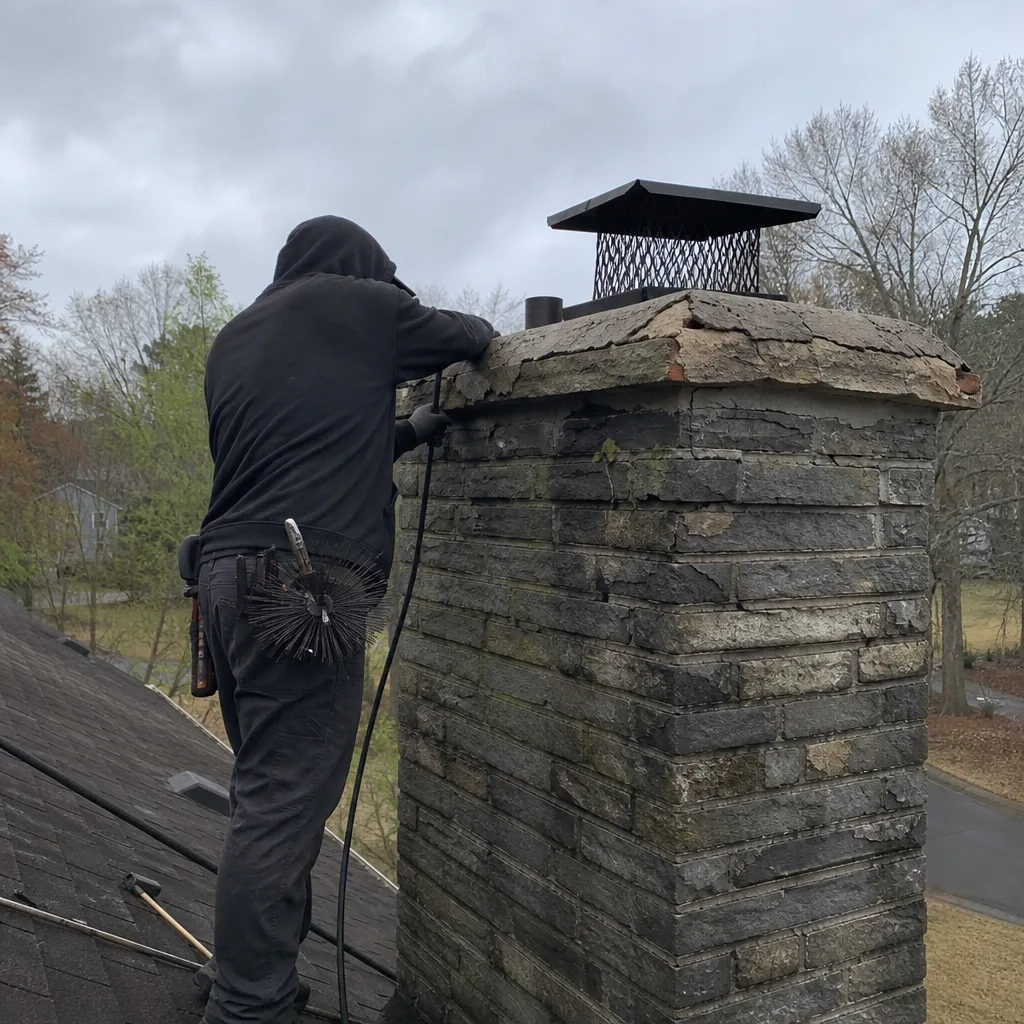 Before
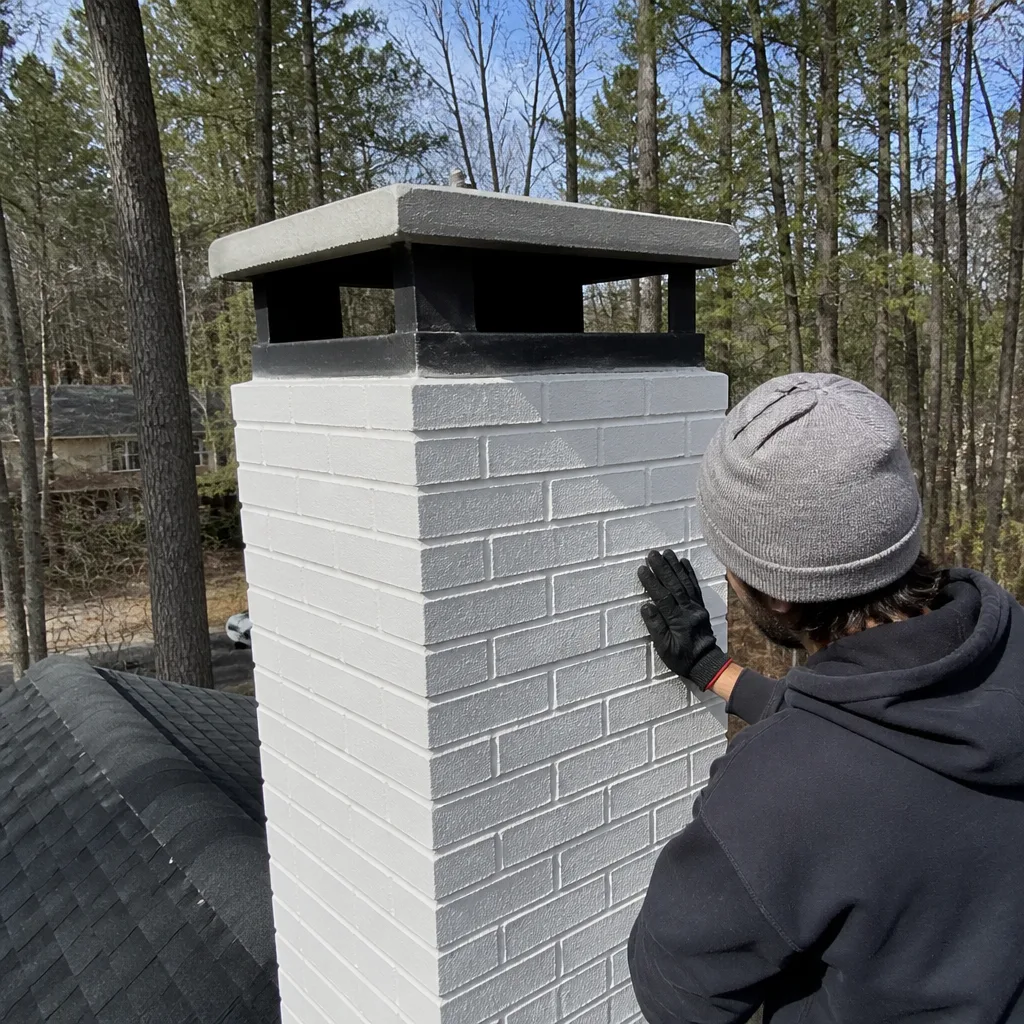 After
After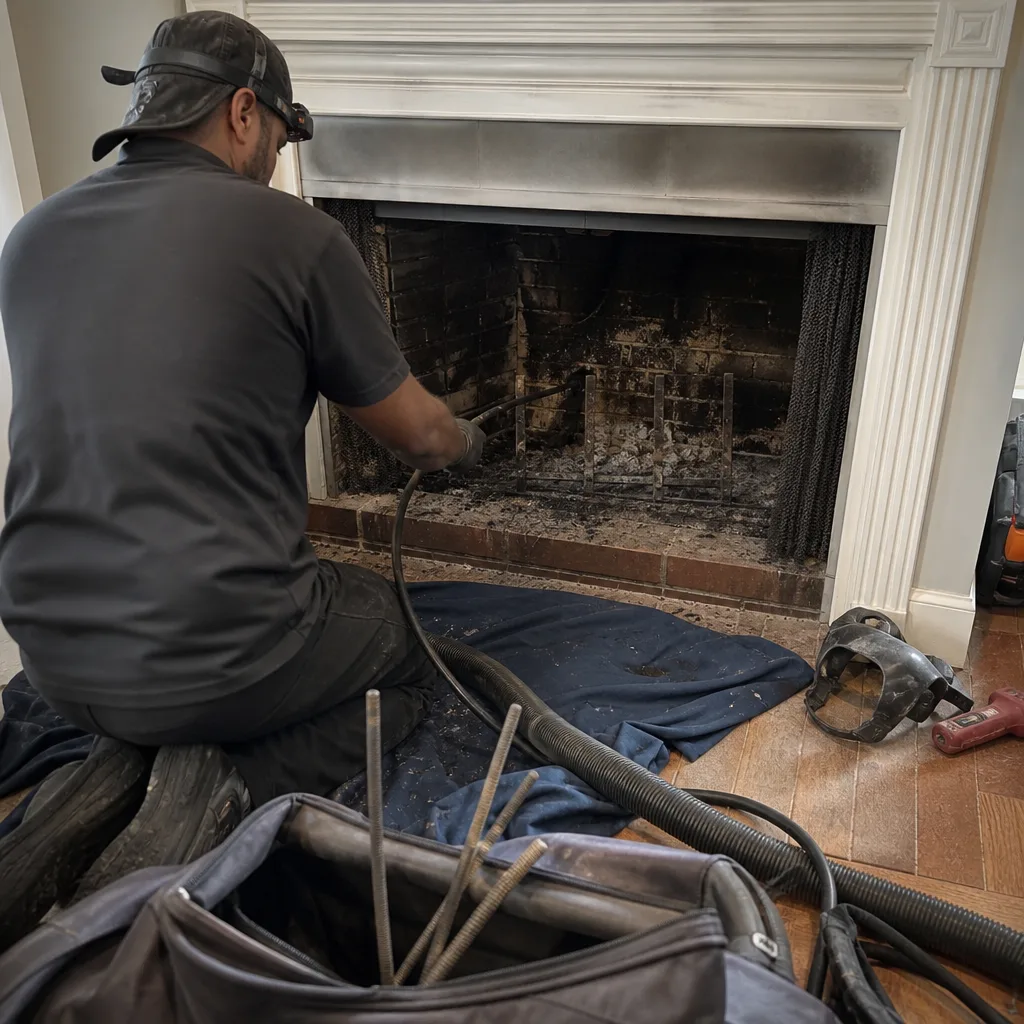 Before
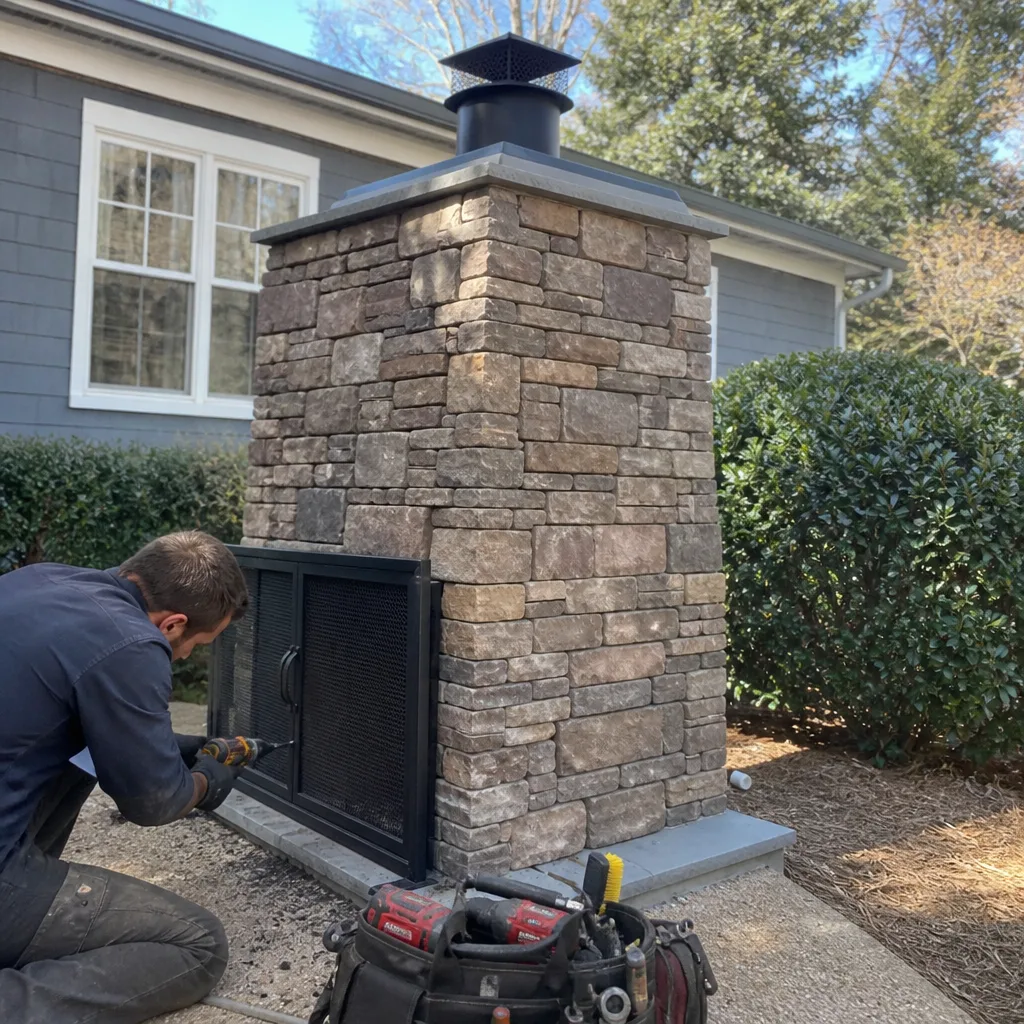 After
After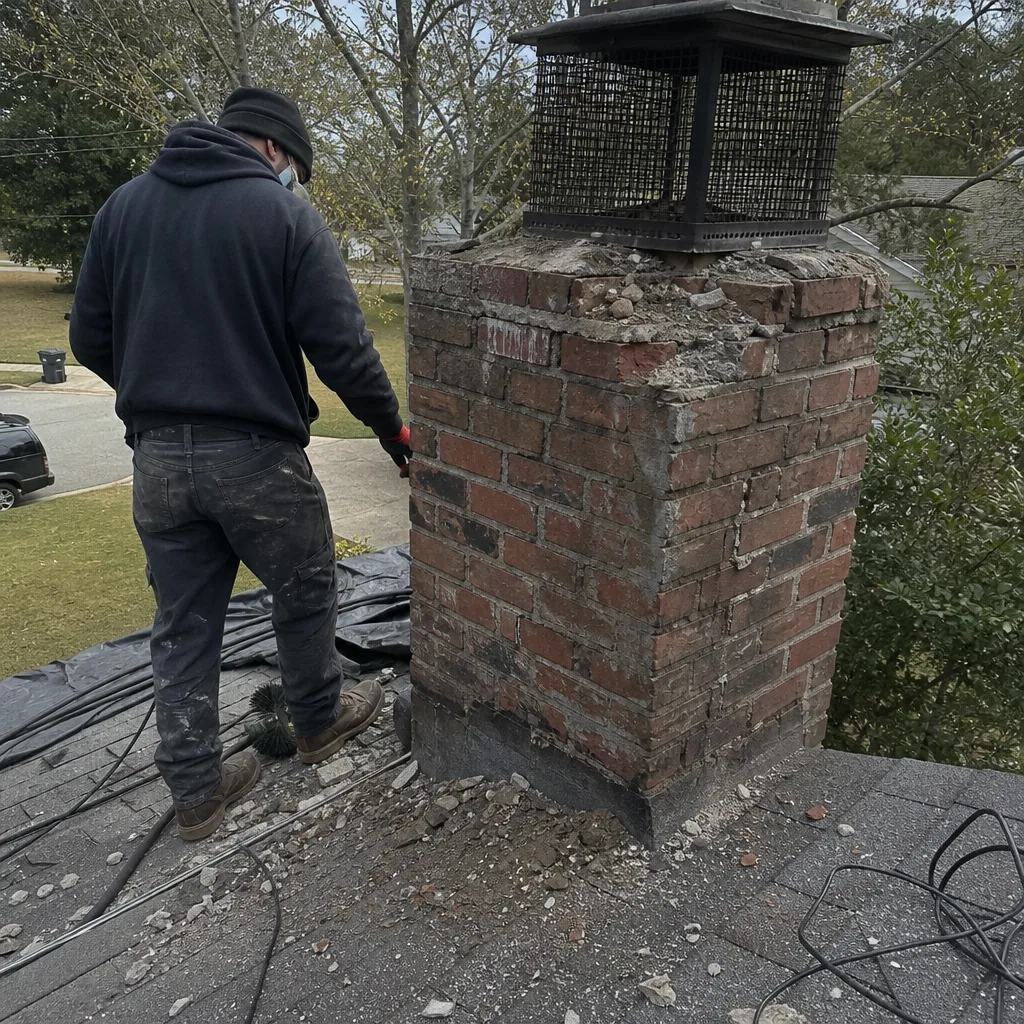 Before
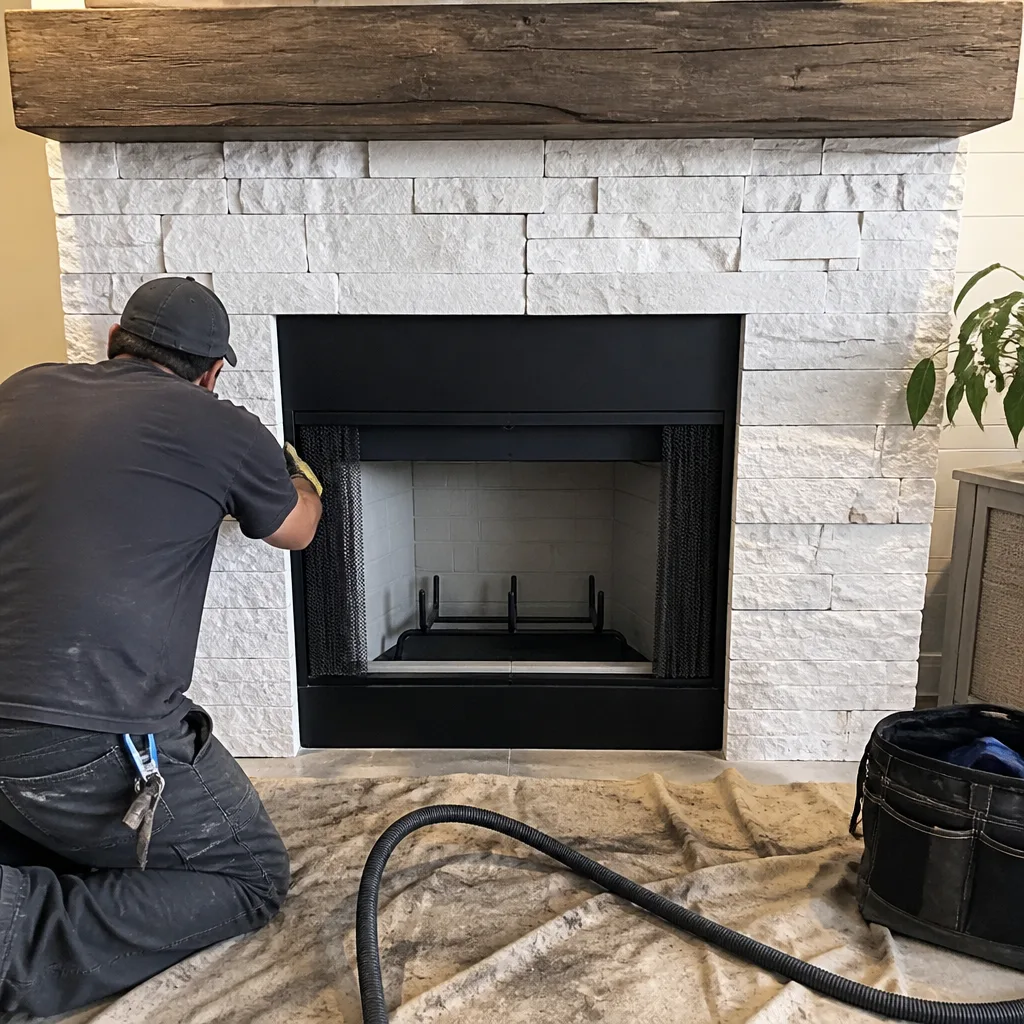 After
After