
Last updated October 15, 2026
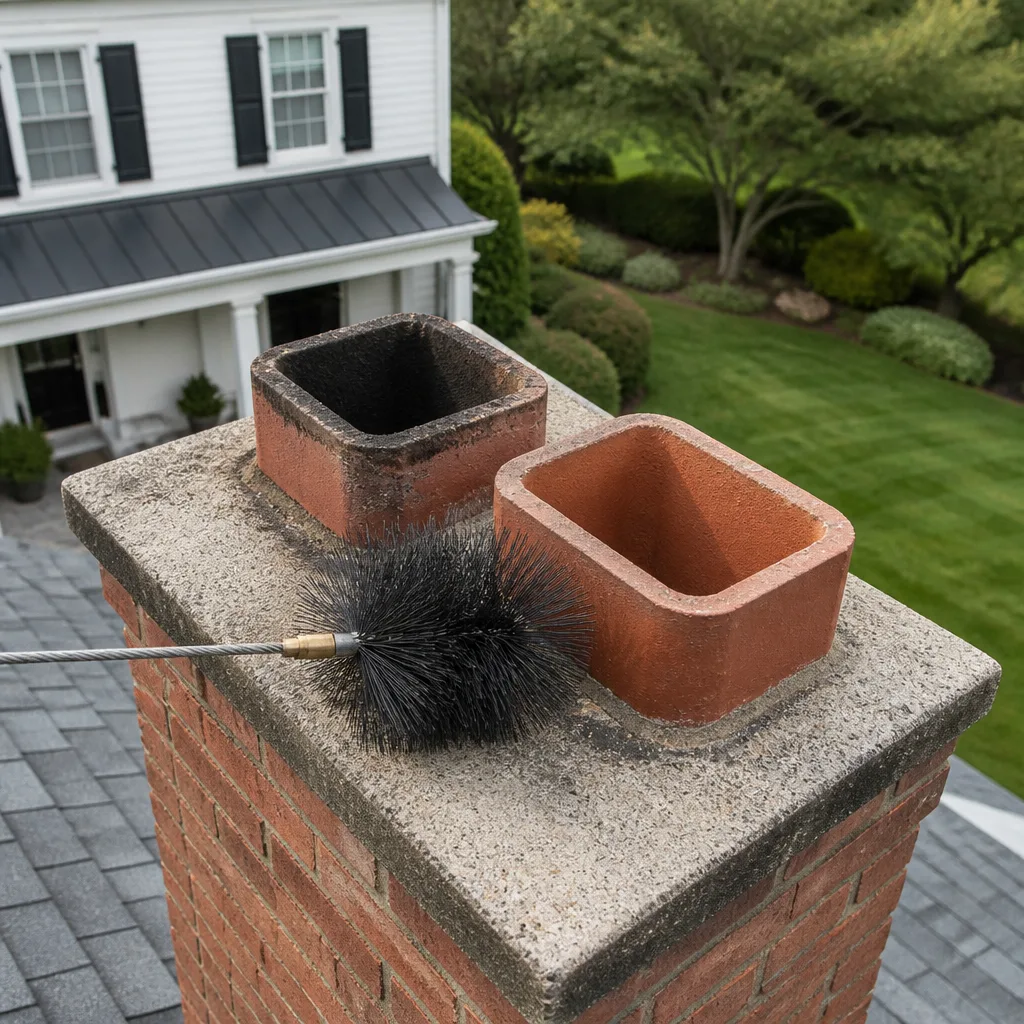 Sweep & inspection
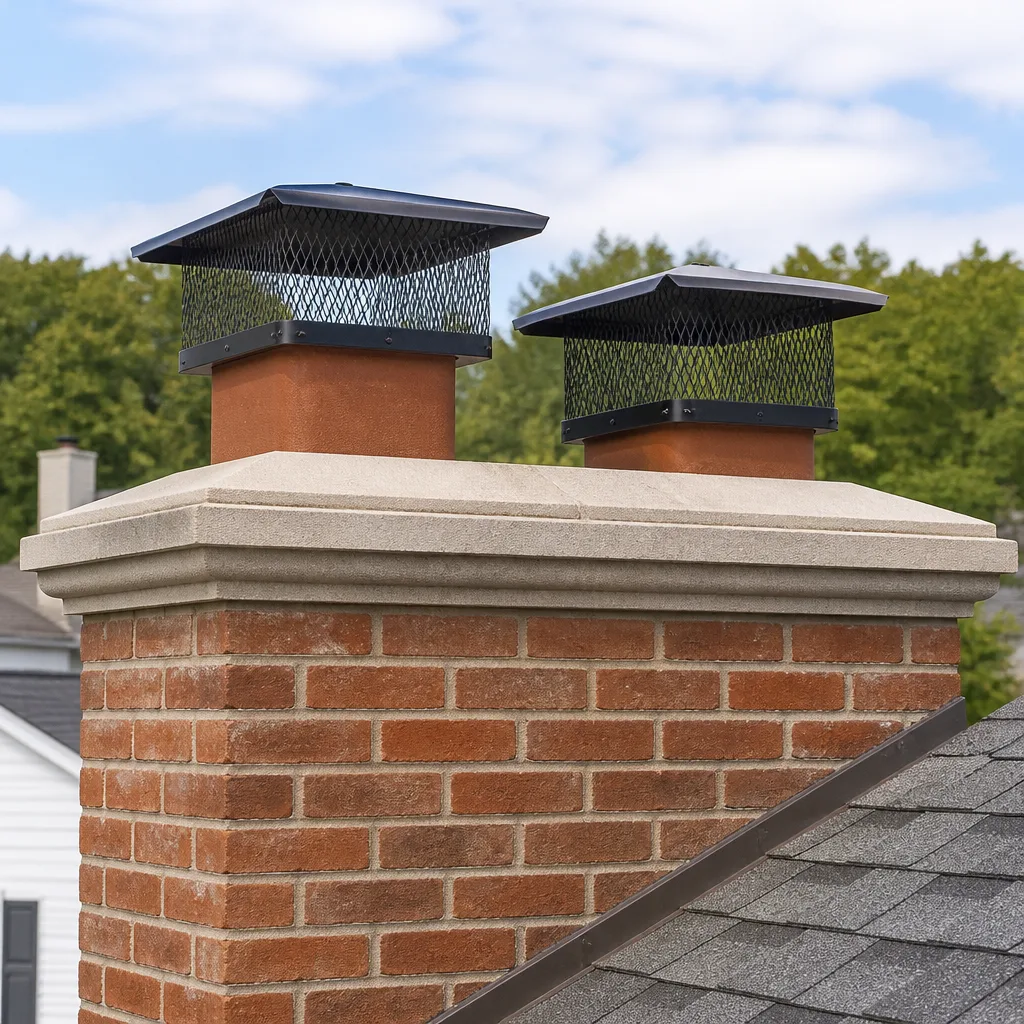 Caps & crowns
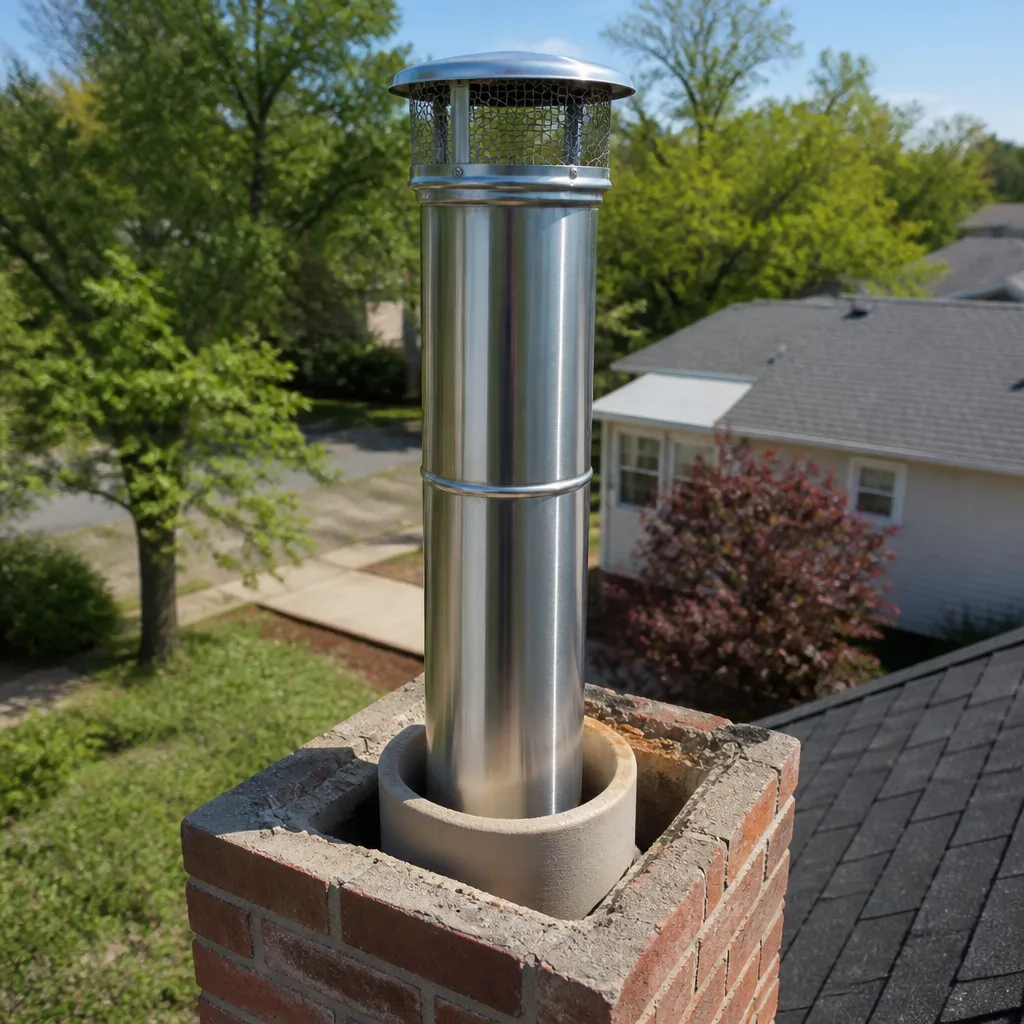 Flue relining
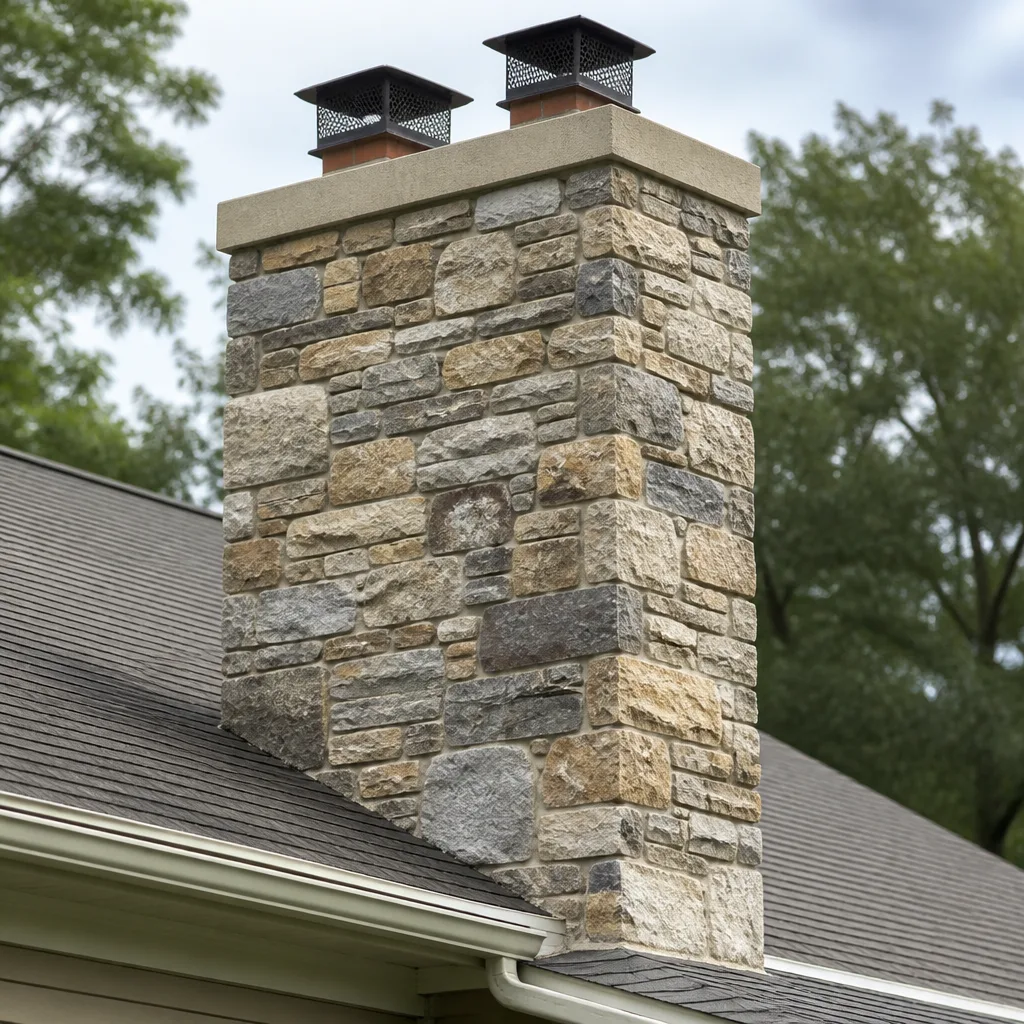 Masonry repair
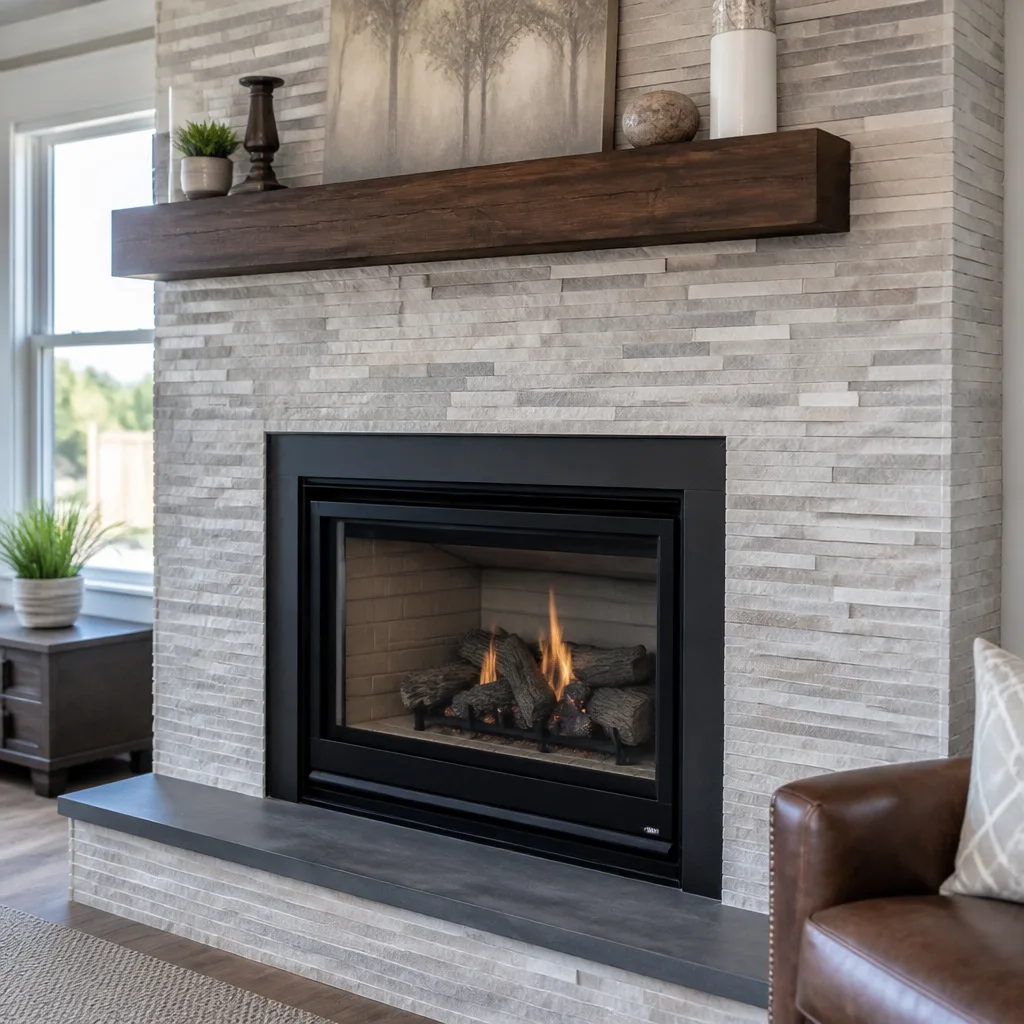 Gas fireplace service
Level 1 sweep and inspection to the NFPA 211 annual standard - flue, crown, cap, and flashing checked and photographed
Chimney sweep logs do not sweep chimneys. They loosen some creosote - which then falls where a brush and vacuum still have to collect it.
DIY vs Professional Chimney Cleaning: The Atlanta Homeowner’s Decision Guide
Here’s something most chimney cleaning guides won’t tell you upfront: the part of your chimney you can see from the fireplace is not the part that burns your house down. The firebox, the damper, the smoke shelf, the first few feet of flue tile you can reach with a flashlight and a mirror. Those are real and they get dirty, but the actual risk zone is the 20 to 35 feet of liner above them, the section that runs through your walls, your attic, and out the roofline. In Atlanta, where thousands of homes still run original clay tile liners from the 1960s and 70s, the gap between what a homeowner can clean and what a homeowner can see is wider than in almost any Sunbelt market. This guide walks through exactly what DIY chimney cleaning can and cannot accomplish, what professional equipment actually costs, and how to decide which path makes sense for your house, your schedule, and your risk tolerance.
Styles & brands we work with
Quick Answer
You can absolutely clean your own firebox, damper, and the lower few feet of your smoke chamber, and doing so between professional sweeps saves real money. But you cannot clean or inspect the full liner run without a chimney camera and roofline access, and in Atlanta’s older housing stock, that unverified section is where cracked tiles, separated mortar joints, and creosote (the flammable tar buildup that makes chimneys a fire risk) actually hide. The honest answer: DIY the cosmetic cleaning, hire a professional for the structural and fire-safety verification.
Table of Contents
- What a Homeowner Can Actually DIY (and Do Well)
- What Requires Professional Equipment and Why
- Why Atlanta’s Clay Tile Liners Change the Math
- The Real Cost of a Genuine DIY Attempt
- The Cost of DIY Done Wrong: Fire, Carbon Monoxide, and Insurance
- A Decision Framework for Atlanta Homeowners
- What a Professional Chimney Cleaning in Atlanta Actually Includes
- Common Mistakes to Avoid
- When to Call a Professional
- Frequently Asked Questions
- The Bottom Line
What a Homeowner Can Actually DIY (and Do Well)
The DIY chimney cleaning conversation usually starts from the wrong premise. It’s framed as a binary: either you hire someone or you don’t touch it. The reality is gradations. There are parts of chimney maintenance that a careful homeowner can handle competently with basic tools, and pretending otherwise insults your intelligence. Here is what we tell Atlanta homeowners they can genuinely do themselves between professional visits, and for seasonal chimney cleaning care in Atlanta throughout the year.
First, the firebox. This is the brick or stone box where the fire actually burns. Ash removal with a metal ash shovel and a steel bucket is straightforward, provided the ashes are fully cold, which in our experience takes 3 to 4 days minimum after the last fire. Scrub the firebox walls with a stiff wire brush to knock off loose soot. Wear a dust mask or N95. The soot is not hazardous in the same way creosote is, but it is still fine particulate you do not want in your lungs.
Second, the damper. This is the metal plate just above the firebox that opens and closes the flue. You can reach it from below with a wire brush and a shop vacuum. Clean off the surface rust and soot buildup, and check that it opens and closes fully. A sticky damper is usually a 20-minute fix involving wire brushing and a small amount of high-temperature lubricant on the hinge points, not the seal. We have watched homeowners in Buckhead, Decatur, and Smyrna handle this themselves without issue.
Third, the smoke shelf. This is the flat or concave area just above the damper, where the flue widens into the smoke chamber. You can reach it from inside the firebox with a long-handled brush and a mirror to see what you’re doing. It collects a surprising amount of debris, dead leaves, and fine soot. A 5-gallon bucket and a cheap telescoping brush handle get it done. This is the least glamorous part of chimney maintenance and the one homeowners most often skip, but it matters for draft flow.
The important qualifier: all of this is the bottom 12 to 18 inches of your system. Atlanta’s humid summers and occasional hard freezes do not damage the firebox the way they damage the upper flue, because the firebox is heated and dried by every fire. The risk lives higher up, and we will get to that next.
What Requires Professional Equipment and Why
Above the smoke shelf, the game changes entirely. The flue liner, which is the protective inner wall of the chimney, runs 20 to 35 feet vertically through your house. In most Atlanta homes, it is either a clay tile liner or a metal liner. Cleaning it properly requires access from the roofline, not from the fireplace opening. A brush pushed up from below can dislodge loose creosote, but it cannot be pulled back down through the narrow damper throat effectively, and it cannot verify anything.
Here’s what a professional chimney sweep uses on a standard Atlanta chimney:
- Rotary cleaning system with polymer rods and brush heads sized to the flue diameter. These spin against the liner walls from the top down, dislodging stage 2 and stage 3 creosote that a push-brush cannot.
- Chimney inspection camera, a waterproof, high-resolution inspection camera run down the entire flue after brushing, frame by frame, to verify the liner is intact. This is the part homeowners cannot replicate. You cannot see a hairline crack in a clay tile liner from below, no matter how good your flashlight is.
- HEPA-rated collection vacuum with a chimney-specific filter cartridge. The fine creosote dust generated during a sweep is not something a household shop vacuum handles; it will blow the dust back into the room through the exhaust port.
- Roof ladder, harness, and drop cloths. Atlanta roofs run steep pitches in many neighborhoods, from Morningside bungalows to Vinings colonials, and working from a ladder on a 6/12 or 8/12 roof is how professional sweeps access the flue opening. Ladder falls from DIY roof work injure homeowners every year.
- Creosote removal chemicals for stage 3 glaze. Glazed creosote, the shiny, tarlike buildup that forms from burning unseasoned wood or low-temperature fires, cannot be brushed off mechanically. It requires chemical treatment or, in severe cases, a specialized tool called a rotary chain whip. This is a professional hazard and a professional skill set.
The camera matters more than the brush. Brushing a chimney without camera verification is maintenance theater. It looks done from the outside, but the actual risk zone inside the liner is completely untouched and unexamined.
Why Atlanta’s Clay Tile Liners Change the Math
Atlanta is not Phoenix. We have four distinct seasons, regular freeze-thaw cycles in January and February, and the kind of humidity that works its way into masonry over decades. Older Atlanta homes, the bungalows in Grant Park, the mid-century brick ranches in Chamblee and Tucker, the post-war colonials in East Cobb, were built overwhelmingly with clay tile liners. These are ceramic sections, about 2 feet long each, stacked and mortared together inside the chimney chase.
Here is what we know from two decades of camera inspections across the metro area: clay tile liners crack. The freeze-thaw cycle in Atlanta winters, where temperatures oscillate above and below 32 degrees multiple times per season, causes moisture in the mortar joints to expand when frozen. Over 40 or 50 years, those joints separate. Tiles shift. Hairline cracks form at the tile edges. A 1965 ranch in Brookhaven with its original flue may look fine from the rooftop, and the camera reveals three separate cracks, one of which is wide enough to expose combustible framing to flue gases.
When a clay liner is compromised, the chimney is no longer containing heat and combustion byproducts. Flue gases leak through the cracks into the chase, the enclosed space around the liner. Creosote can accumulate in the chase as well. This is how chimney fires that start inside the flue spread into the house framing, and it is also how carbon monoxide from a gas fireplace or water heater, which often vents through the same chimney, finds its way into living spaces.
Newer construction, particularly homes built after about 1990, typically uses stainless steel liners or pre-fabricated metal chimney systems. These have their own lifespan and inspection requirements, but they fail differently, usually at the welds or the flue cap. The point: in Atlanta, the age of your home is the single biggest variable in determining how much that camera inspection matters. And no homeowner has a camera that can do this inspection. A smartphone on a selfie stick is not a substitute.
The Real Cost of a Genuine DIY Attempt
Let us talk numbers honestly, because most DIY chimney cleaning advice on the internet implies you need a $30 brush kit from a hardware store, and that is just not the case for a meaningful clean; see our Chimney Cleaning Cost Breakdown for Atlanta homeowners for the full picture. If you want to do more than wave a brush around the firebox, here is what a realistic equipment loadout costs in the Atlanta area as of the current season:
| Item | What It Does | Typical Cost Range |
|---|---|---|
| Chimney brush kit (poly or wire, with rods) | Mechanical brushing of accessible flue sections | $45 – $120 |
| Chimney inspection camera (boroscope) | Visual inspection of liner interior | $150 – $400 for a basic unit; $500 – $900 for a decent one |
| HEPA shop vacuum with fine-dust filter | Containment of creosote dust during cleaning | $180 – $350 |
| Roof ladder (12 – 20 ft) and fall protection harness | Safe roofline access | $200 – $450 |
| Drop cloths, tarps, gloves, N95 masks, safety glasses | Site protection and personal protection | $40 – $80 |
| Creosote treatment chemicals (for stage 3 glaze) | Softens glazed creosote for removal | $35 – $75 per application |
That is a realistic total of $650 to $1,475 for a genuine DIY attempt that includes visual verification. Most Atlanta homeowners already own some of these items, and if you are a tool person, you may already have the vacuum, the ladder, and the safety gear. But the camera is the dividing line. A $150 boroscope from an online retailer is not waterproof, does not have a light bright enough to illuminate a dark flue, and will not give you a stable image 25 feet up a chimney with soot on the lens. At the point you are buying a proper inspection camera, you are spending nearly the cost of one professional sweep.
A Chimney Sweep in Atlanta typically runs $150 to $300 for a standard open-hearth fireplace, depending on the liner condition and the amount of creosote buildup. The camera inspection is included in that price when you work with a company that documents everything, including before-and-after photos. So the DIY math only makes sense if you are doing the firebox-level cleaning between professional visits, not instead of them.
The Cost of DIY Done Wrong: Fire, Carbon Monoxide, and Insurance
The stakes are not theoretical. The National Fire Protection Association identifies creosote buildup as the leading cause of chimney fires in the United States, and a chimney fire is not a contained event. It burns inside the flue at temperatures that can exceed 2,000 degrees Fahrenheit. Clay tile liners crack under that heat. When they crack, the fire escapes into the framing. Homeowners in Atlanta have lost entire houses to chimney fires that started as a slow accumulation of stage 2 creosote in a corner of the flue that no one ever brushed because no one ever looked.
Then there is carbon monoxide. In Atlanta, thousands of gas furnaces and gas water heaters still vent through masonry chimneys, often sharing the flue with a fireplace. When a chimney is partially blocked, or when a clay liner has separated and flue gases are escaping into the chase, carbon monoxide can backdraft into the home. It is colorless, odorless, and fatal at high concentrations, and the earliest symptoms, headache, nausea, fatigue, read like a cold or the flu. This is the section of chimney risk that does not care how carefully you cleaned your firebox.
The insurance angle is one of the least discussed and most financially consequential parts of this decision. Homeowner insurance policies in Georgia typically exclude coverage for damage caused by neglect or lack of maintenance. If a fire originates in your chimney and the insurer’s investigation determines the chimney had not been professionally serviced in years, that is a coverage denial. Not a higher deductible. A denial. We have spoken with Atlanta homeowners who learned this after the fact, and it is a brutal conversation. A $200 professional sweep with a documented camera inspection is, among other things, a paper trail. It proves the chimney was maintained to a reasonable standard. A DIY cleaning with no documentation, no camera images, and no proof of what was done, leaves you exposed.
This is the honest framing. The risk of DIY chimney work is not that you will do a slightly worse job brushing out the soot. It is that you will leave the actual risk zone untouched, unexamined, and undocumented, while believing the problem is handled.
A Decision Framework for Atlanta Homeowners
Here is the practical way we suggest Atlanta homeowners think through this decision. Not as a rule, but as a framework. Answer these questions honestly, and the choice makes itself:
- When was your chimney last inspected with a camera? If the answer is more than 3 years ago, or never, schedule a professional inspection before you spend a dollar on DIY equipment. The camera tells you the condition of the liner, and that dictates everything else. A Chimney Repair in Atlanta starts with exactly this kind of inspection.
- What year was your home built? Pre-1985 construction in Atlanta very likely has original clay tile. These liners fail on a schedule, not on a warning light. If your home is 40-plus years old and the liner is original, the probability of cracks or separated mortar joints is high enough that every cleaning should include a camera inspection.
- Have you noticed any draft issues? Smoke rolling into the room when you open the fireplace doors, a cold downdraft when the fireplace is not in use, or a smell of soot inside the house on humid days. These are not minor annoyances. They are pressure signals from a flue that is partially obstructed or a liner that has failed. The cause is rarely something you can see from the firebox.
- How often do you actually use the fireplace? If it is a decorative fireplace that gets lit twice a year, the creosote accumulation is slow, and a professional sweep every 2 to 3 years with light DIY firebox maintenance in between is reasonable. If you burn wood every weekend from November through March, creosote builds faster than most homeowners expect, and annual professional cleaning is the safer schedule.
- Are you using the chimney to vent gas appliances? Many Atlanta homes run their gas furnace and water heater through the same flue as the fireplace. Gas exhaust deposits a fine, corrosive residue that can degrade mortar joints over time. A house with gas appliances sharing the flue needs a different maintenance schedule than a wood-only fireplace, because the carbon monoxide risk layer applies year-round, not just during burning season.
If you answered: camera inspection more than 3 years ago, home built before 1985, draft issues present, or gas appliances sharing the flue, the math changes, and our guide on How to Hire a Chimney Cleaning Contractor in Atlanta can help you navigate the next steps. The professional chimney sweep is not a luxury line item in those cases. It is the baseline for making sure your house is not carrying a fire or CO risk in the one place no one can see from the ground.
What a Professional Chimney Cleaning in Atlanta Actually Includes
If you have only ever hired a chimney sweep through a vague phone call and a three-hour arrival window, the idea of paying $150 to $300 for something you might be able to approximate yourself makes sense as a complaint. But the professional service in Atlanta, at least the way we do it at Hadley Chimney Atlanta, is not a $30 brush kit and a guy on a roof. Here is what the process looks like when it is done with transparency:
- You book on the phone with a live person. No online form that disappears into a queue. You get a conversation with a real human who can answer your questions, which matters when you are deciding between a sweep, an inspection, or a Gas Fireplace Repair in Atlanta.
- You get a written price before any work starts. Not a verbal estimate that might balloon once the tech is on your roof. This is the part of the trade that has historically been vague, and we fixed it. Written price, before the brush comes out, every single time.
- The technician arrives in a tracked window. You get live arrival times, like a rideshare driver. Not a four-hour guess. Uniformed, background-checked, and carrying a HEPA vacuum and a camera as standard equipment, because both are required for the job.
- The sweep itself covers the full liner run from the roofline down. Rotary brushing, not a push-pole from below, sized to your flue diameter. Creosote is captured by the HEPA vacuum, not blown into your living room.
- Camera verification, every time. The tech runs the inspection camera down the full liner after brushing, and you see the images. Before-and-after photos are part of the service, because you should not have to trust a verbal claim that the flue is clean and the liner is intact. The camera proves it.
- You get a digital invoice you can pay from a link. No paper carbon copy, no “just leave a check on the counter.” The work is documented, the photos are included, and the invoice is in your email before the tech leaves the driveway.
The guarantee runs 365 days. If a repair we do fails within that window, we make it right, with a written guarantee on every repair and a free second visit. That is specific, and it is the kind of thing that separates a professional chimney company from a guy with a ladder and a brush.
We work with materials from Copperfield, a chimney accessory brand that pros actually rely on, and the tools we use, from the rotary brush systems to the inspection cameras, are trade-grade, not homeowner-grade. That matters because the results are different, and in a field where you cannot see the work with your own eyes from the ground, the equipment is the proof.
Common Mistakes to Avoid
- Trusting a visual inspection from the firebox. Standing in front of the fireplace with a flashlight tells you almost nothing about the upper 25 feet of the flue. In our experience, Atlanta homeowners regularly report their chimney “looks fine from here” while a camera reveals stage 3 creosote glaze or a cracked liner.
- Using a general hardware store brush kit as if it is a full sweep. These kits can knock loose surface creosote near the top, but they cannot remove glazed creosote, they cannot verify liner condition, and they often leave the mess worse. The brush gets stuck or the rods separate, and now you have a bigger problem.
- Cleaning a chimney from a steep roof without fall protection. Atlanta rooflines in neighborhoods like Virginia-Highland and Old Fourth Ward run 8/12 and steeper on some craftsman bungalows. Falls from ladders are one of the most common homeowner injuries in the metro area, and the risk spikes when you are carrying a brush and rods with both hands.
- Burning unseasoned wood to save money. Atlanta firewood dealers sell green oak and hickory every fall. Burning unseasoned wood produces cooler fires and dramatically more creosote. This is the single best way to turn a routine cleaning into a stage 3 glaze problem, and it is entirely avoidable by buying wood that has been split and stacked for at least a year. Order it in the spring.
- Ignoring draft issues as a “winter thing.” Smoke blowback, cold downdrafts, and interior soot smell are not seasonal quirks. They are pressure changes caused by a flue blockage or a liner failure, and they persist year-round. Atlanta’s humidity makes the soot smell worse in summer, which is how we often get called in August for a chimney that had problems all winter.
- Assuming gas fireplaces do not need cleaning. Gas fireplaces produce less visible debris, but they still require service. Burners clog, venting corrodes, and gas logs can develop soot problems. A Gas Fireplace Repair in Atlanta is a different service from a wood chimney sweep, and the maintenance schedule matters just as much.
- Skipping the camera inspection to save $50. Some chimney companies in the Atlanta market offer a “basic sweep” that omits the camera to keep the price low. This is a false economy. The camera is the only part of the service that tells you whether the chimney is safe to use at all. A sweep alone with no inspection is a cleaning, not a verification.
When to Call a Professional
Call a professional when the fireplace has not been camera-inspected in 3 or more years, when the home was built before 1985 with original clay tile, when you notice smoke rollback, persistent downdrafts, or soot smell inside the house, when gas appliances share the flue, or when you find creosote that is shiny and glassy rather than flaky. If you see any of these conditions, the chimney is not in a state where a firebox-level DIY cleaning addresses the actual risk, and continuing to burn before a professional inspection is playing odds you cannot calculate from the ground. Hadley Chimney Atlanta offers free estimates in Atlanta – call (762) 320-6525 and we will walk you through what a professional sweep includes, what the camera will show you, and what it costs, before you commit to anything.
Frequently Asked Questions
A professional chimney sweep in Atlanta typically runs $150 to $300 for a standard wood-burning fireplace, with cost variations based on creosote buildup level, liner condition, and roof access difficulty. Camera inspection is included in that price when you work with a company that documents everything. Call (762) 320-6525 for an exact quote on your specific chimney, free estimates are standard practice.
A new liner is only necessary when a camera inspection shows cracks, separated mortar joints, or damage that exposes combustible material to flue gases, which is common in Atlanta homes built before 1985 with original clay tile. The honest answer: we will show you the camera images and tell you plainly if the liner can wait, because no one should be sold a $3,000 to $6,000 repair on a verbal claim. Call (762) 320-6525 if you want a straight answer with visual proof.
Wood-burning fireplaces in Atlanta should be swept annually if used regularly through the burning season, and every 2 to 3 years if used occasionally, with the frequency determined by how much creosote actually accumulates in your flue. Gas fireplaces and gas-vented chimneys have their own service schedule, typically every 2 to 3 years. Book a sweep when you are thinking about it, not after a chimney fire makes the decision for you.
Creosote accumulates in the flue, and eventually either ignites as a chimney fire or blocks the flue enough to backdraft carbon monoxide into your living space, and neither outcome announces itself in advance. In Atlanta’s freeze-thaw climate, the added moisture in unmaintained flues accelerates clay tile liner deterioration, which compounds both risks. A $200 sweep is the cheapest insurance you will ever buy on your house.
You can, but the question is whether you should, and in most cases the answer is no: Atlanta’s steep roof pitches, the lack of fall protection on most residential ladders, and the need for a proper inspection camera all push this past the point where DIY savings outweigh personal risk. We have seen homeowners in Vinings and Brookhaven fall from roofs attempting chimney work, and the hospital bill erases a decade of sweep savings. Let a professional with a harness and proper equipment handle the roofline portion.
A chimney sweep removes creosote and debris from the flue, while a chimney inspection uses a camera to verify the liner is intact, the flue is properly sized, and there are no hidden structural problems, and the two should always happen together. A sweep without an inspection is incomplete, because brushing removes the evidence of liner cracks and makes problems harder to spot. When you hire Hadley Chimney Atlanta, both are included on every job, and you see the camera footage yourself.
The Bottom Line
DIY chimney cleaning is not a scam and it is not a shortcut. It is a partial solution to a partial problem, and the parts it cannot address are exactly the parts that matter most in Atlanta’s older housing stock. Clean your firebox, your damper, and your smoke shelf between professional visits. That is real maintenance and it saves wear on the system. But the flue liner above those accessible spots is the risk zone, and in a pre-1985 Atlanta home with original clay tile, that risk zone requires a camera to assess. The math is simple: $650 to $1,475 for a genuine DIY equipment loadout that still cannot inspect the liner, versus $150 to $300 for a professional sweep with camera verification, written pricing, and a 365-day guarantee. For more guides & resources on keeping your chimney safe, visit our blog. When it comes to the part of your house that contains fire, visibility beats blindness every time.
Written by Cory Mitchell, Owner at Hadley Chimney Atlanta, serving Atlanta since 2003.
See the difference
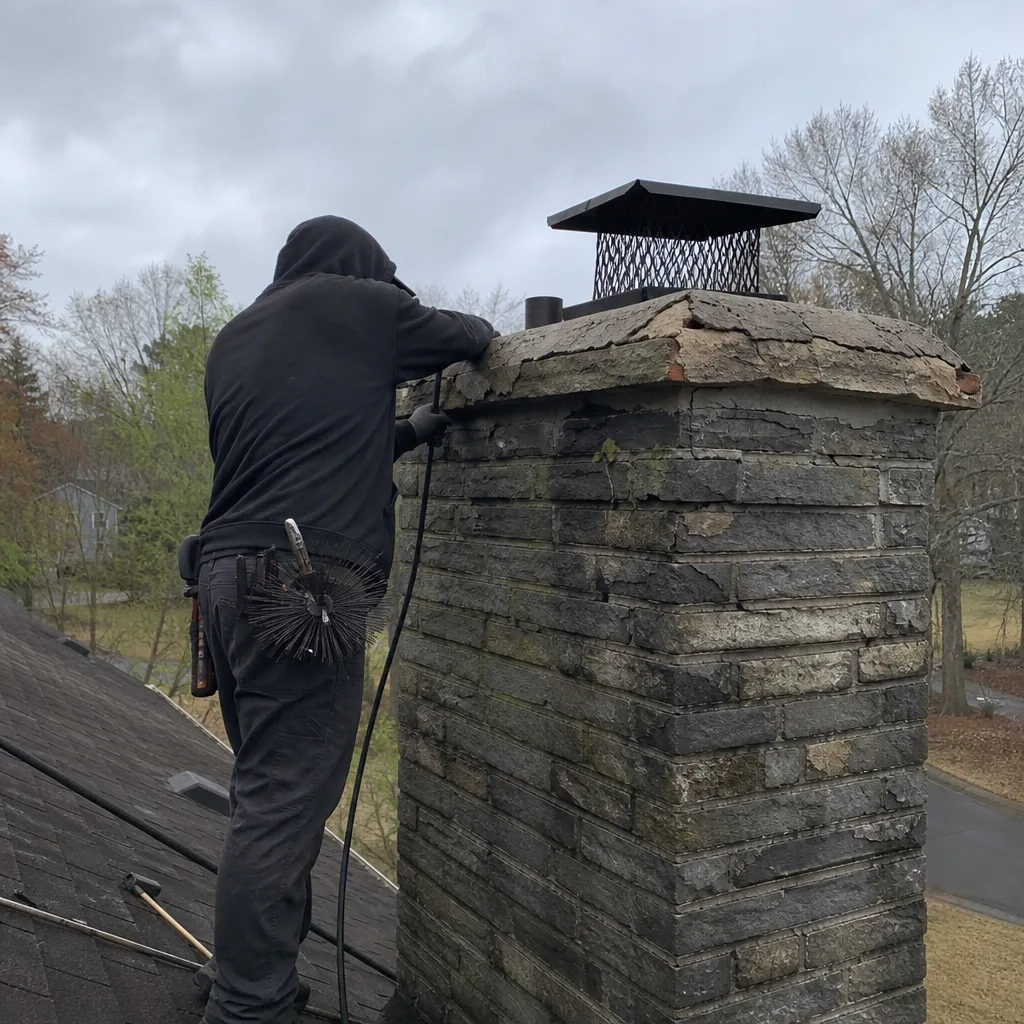 Before
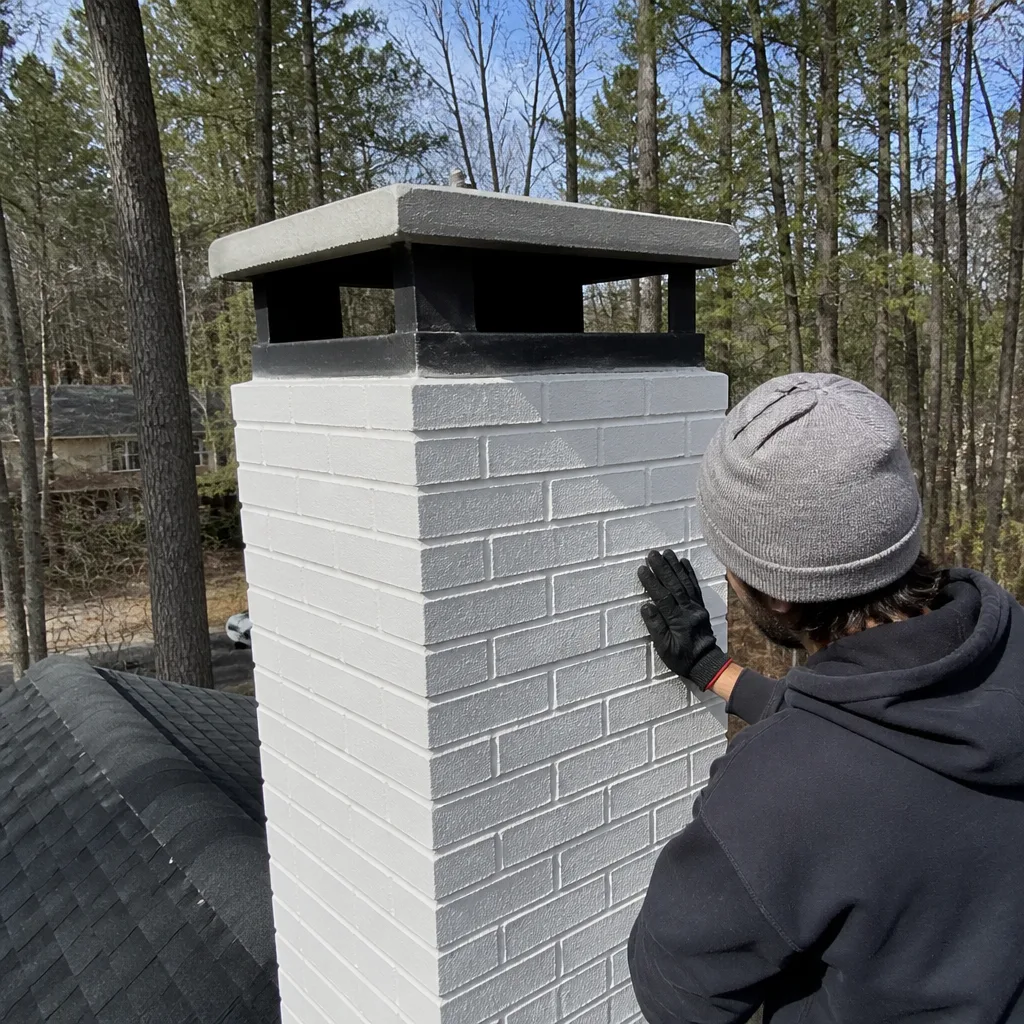 After
After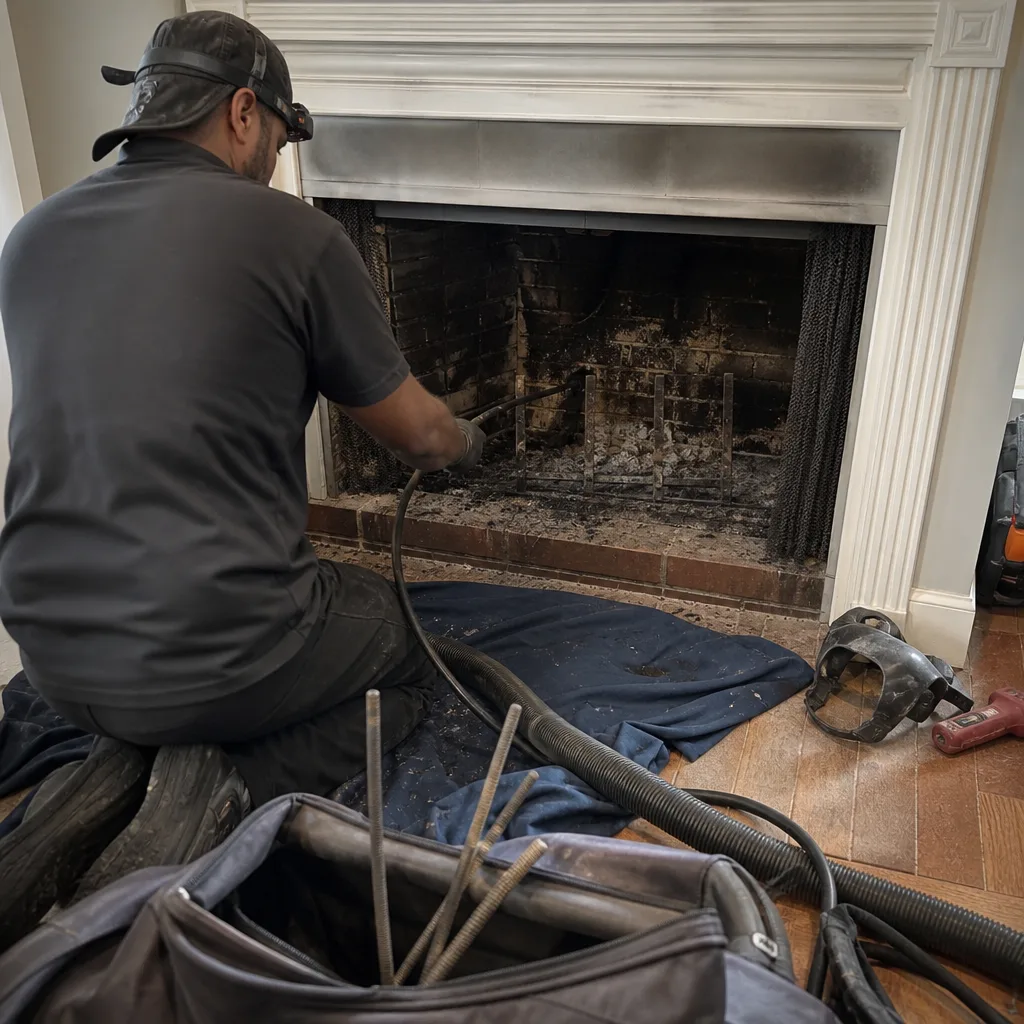 Before
 After
After Before
 After
After