
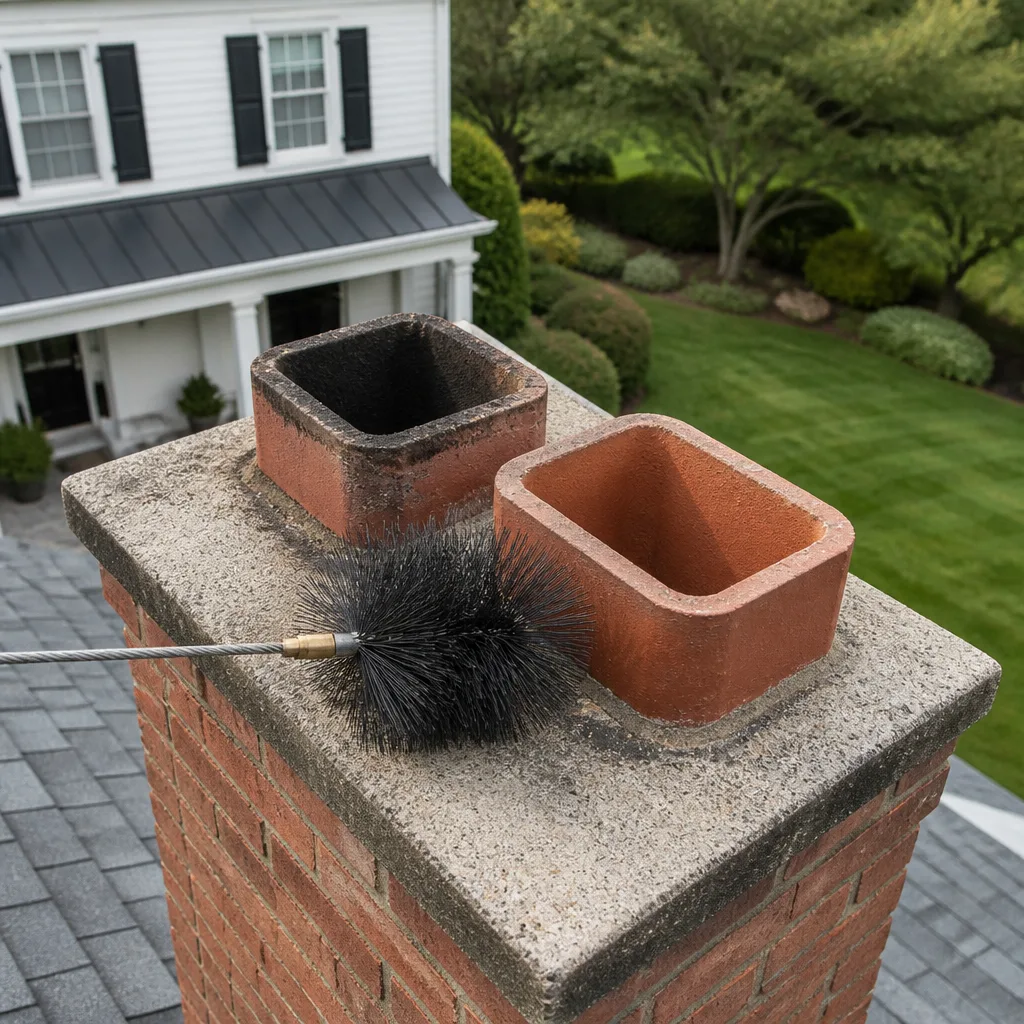
 Sweep & inspection
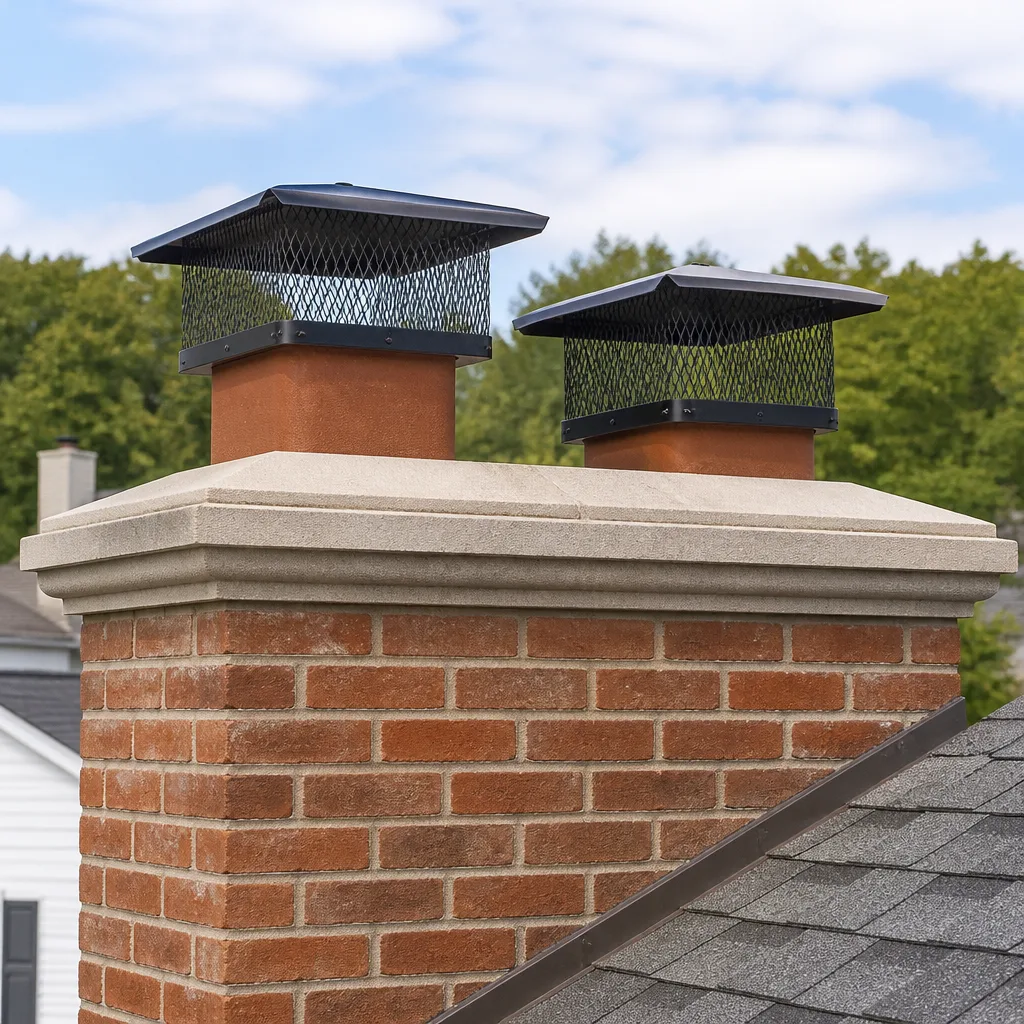 Caps & crowns
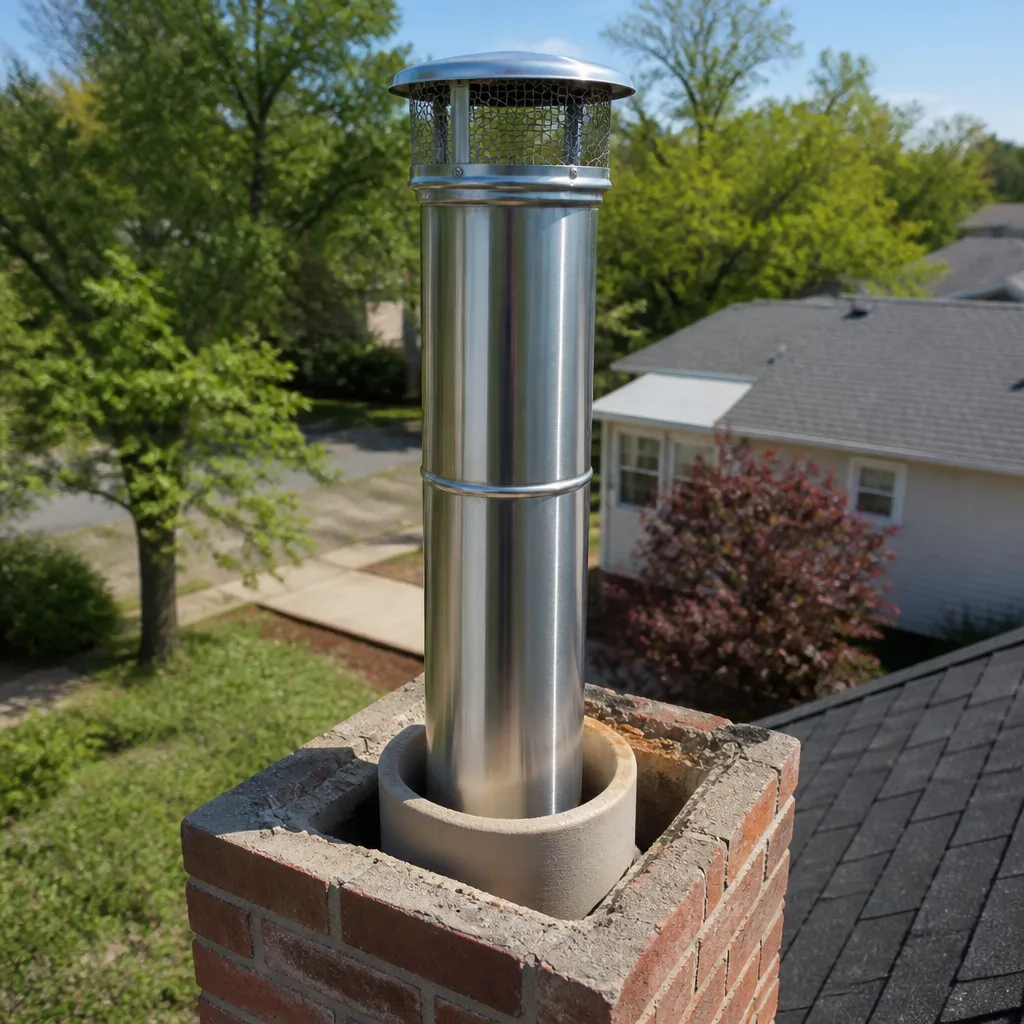 Flue relining
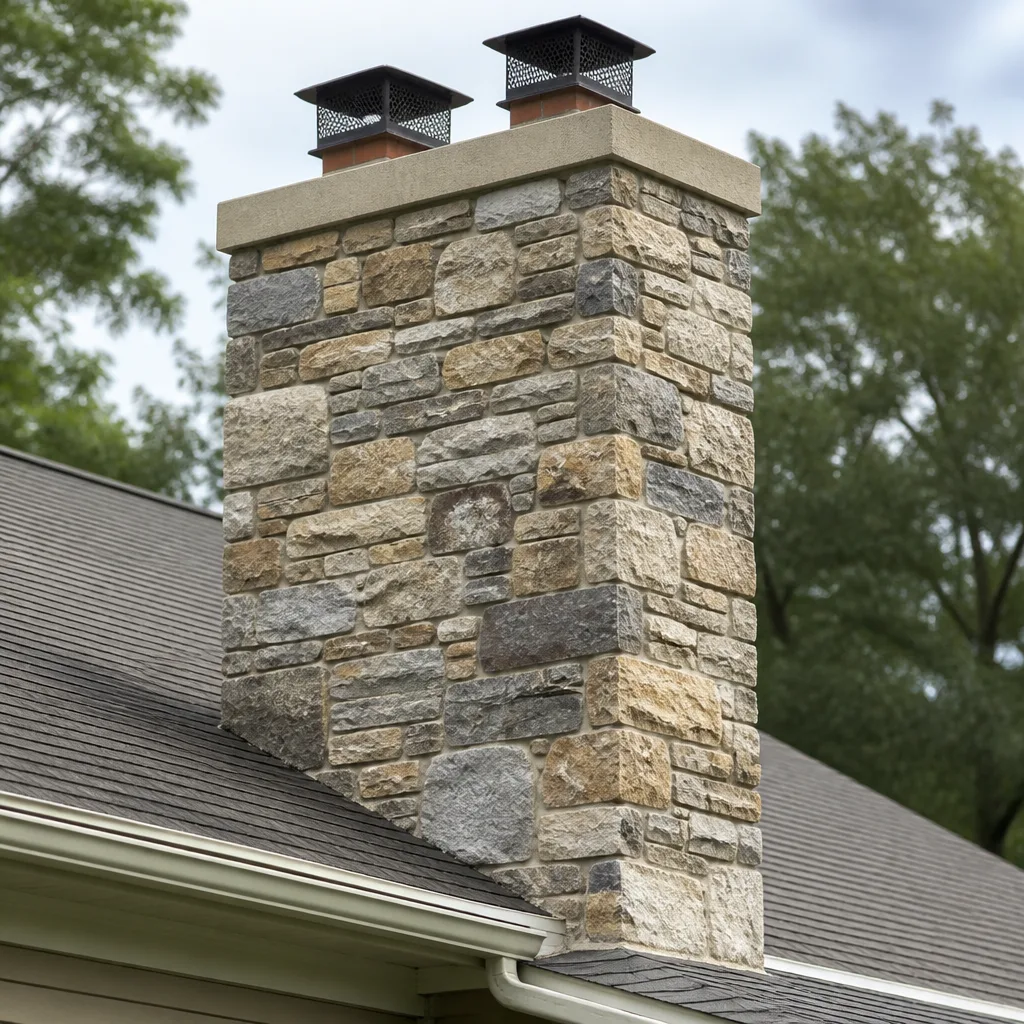 Masonry repair
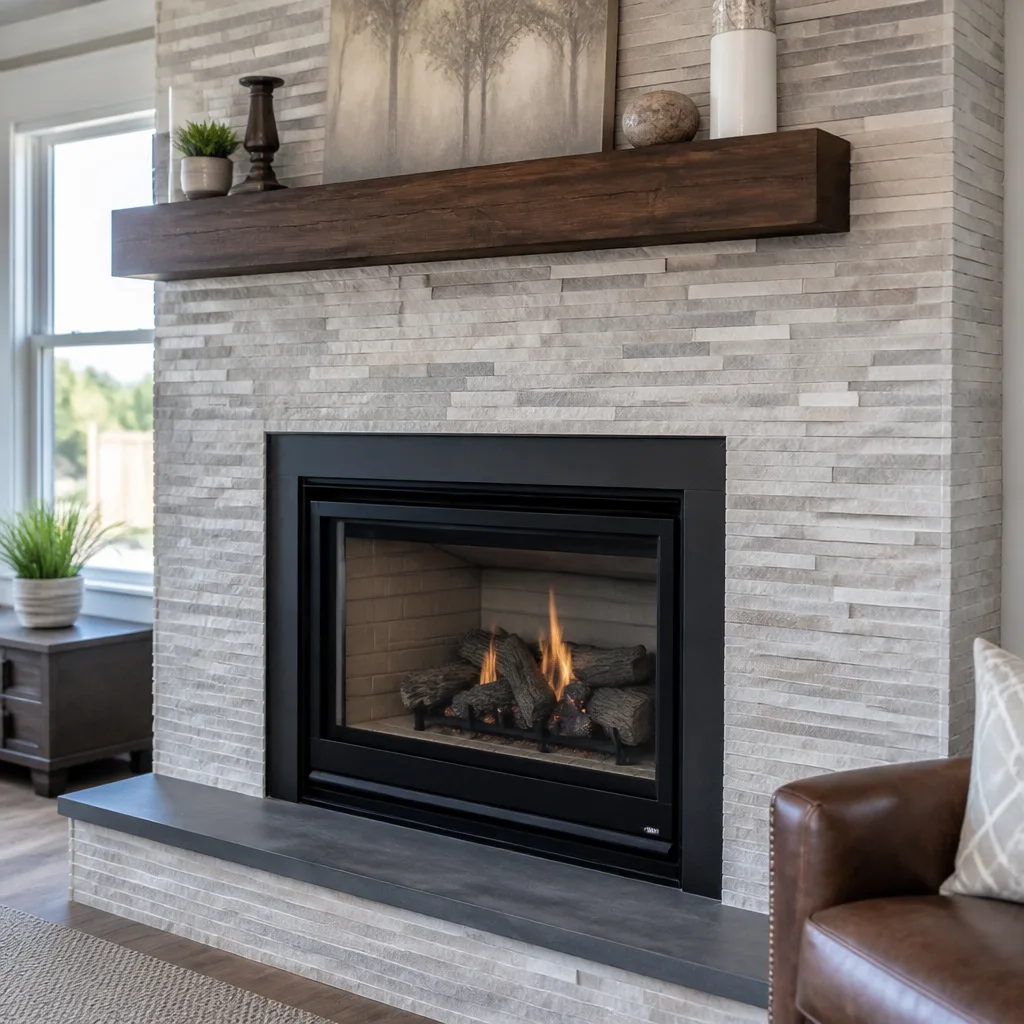 Gas fireplace service
Level 1 sweep and inspection to the NFPA 211 annual standard - flue, crown, cap, and flashing checked and photographed
Chimney sweep logs do not sweep chimneys. They loosen some creosote - which then falls where a brush and vacuum still have to collect it.
HeatShield Chimney Sweep in Atlanta: What to Know First
A HeatShield chimney sweep in Atlanta typically costs $189 – $389 depending on the flue condition, how much creosote has built up, and whether we’re doing a Level 1 or Level 2 inspection alongside the sweep. We’re an independent HeatShield service provider, which means we work on your flue the way the manufacturer intended, but we’re not beholden to any corporate repair script. Most sweeps on HeatShield-lined flues take 60 to 90 minutes, and we’ll hand you a written price before anyone picks up a brush.
This page is for Atlanta homeowners who have a HeatShield liner or HeatShield repair already in their chimney, and who want to keep it working without guessing. If you own a home in Grant Park, Decatur, Buckhead, Marietta, or anywhere else around metro Atlanta with a HeatShield system, you already know the liner is the expensive part. The sweep is what keeps it from turning into a firebox problem. Call (762) 320-6525 and a live person will answer, 24/7.
How HeatShield Products Fail – and How We Fix Them
HeatShield is a ceramic repair compound, not a liner itself. It’s applied inside an existing clay tile or metal flue to seal cracks and gaps. When it fails, it usually fails in ways that show up during a sweep, not during a casual glance up the chimney from your living room. Here’s what we actually see on Atlanta jobs:
- Flaking at the tile joints on HeatShield’s standard resurfacing application. The material is durable, but expansion and contraction from Atlanta’s freeze-thaw cycles in January and February will work on the bond points between clay tiles over time. We find this most on older Craftsman bungalow chimneys in Grant Park and Candler Park, where the original tile work dates to the 1920s or 30s. The fix is a reapplication of HeatShield’s ceramic compound at the joint, which we can do after a thorough sweep removes the creosote that’s hiding the damage.
- Pinhole gaps at the smoke shelf. This is the area just above the firebox where the chimney narrows. HeatShield’s Cerfractory Flue Sealant is rated for high heat, but we regularly see small cracks here on homes where the fireplace was over-fired, meaning someone burned a fire too hot too often. The symptom is a faint smoky smell in the room long after the fire is out. We camera-scan every HeatShield flue after sweeping, and these pinholes show up as tiny bright spots on the scan.
- Uneven coating from the original application. Not every HeatShield job was applied by a tech who took their time. On some Atlanta homes, we find thin patches where the coating wasn’t built up to the proper thickness. The creosote adheres to those rough spots first. We’ll point those areas out on the camera footage during the inspection so you’re not taking our word for it.
- Separation where the HeatShield coating meets the terra cotta crown at the top of the chimney. Atlanta’s summer humidity and fall rain will find any microscopic gap, and over a few years, water works its way down between the coating and the tile. The symptom is efflorescence, that white powdery staining on the brick face near the top of the chimney. Our fix usually involves a crown seal treatment after the HeatShield repair, which stops the water before it does more damage.
- Creosote bonding to a roughened HeatShield surface. HeatShield’s texture is intentionally slightly rough to help the compound adhere. But that same roughness catches creosote, especially in a flue that hasn’t been swept in two or more years. We use a more aggressive rotary sweep on HeatShield flues than we’d use on a smooth stainless liner, which means the sweep takes a little longer but removes far more buildup. This is one of those details an owner won’t find on the HeatShield manufacturer’s site.
Styles & brands we work with
Our HeatShield Chimney Sweep Process
Here’s what actually happens when you book a HeatShield sweep with us in Atlanta, step by step:
- 1
Call and book. A live person answers, day or night. We ask a few questions about your fireplace, whether you’ve had any recent water stains or smoky smells, and when the last sweep was.
- 2
Arrival with a tracked window. You’ll see who’s coming and when, the same way you’d track a rideshare. The tech is background-checked and uniformed.
- 3
Pre-sweep camera scan. Before any brush touches the flue, we run our inspection camera up the full length of the chimney. This shows us the condition of the HeatShield surface and where the worst creosote buildup is. You’ll see the footage.
- 4
The sweep, adjusted for HeatShield. We select our brush type and speed based on what the camera showed. HeatShield flues get a rotary brush with poly lines, never a steel brush, which could score the ceramic surface and void the manufacturer’s warranty. We prefer to keep HeatShield jobs warrantable.
- 5
Post-sweep camera scan and photo report. This is the part Cory insists on. You get before-and-after photos of your flue, so you can see exactly what was removed and what condition the HeatShield is in now. If we find damage, you see that too, with a plain-language explanation. “I’d rather show you a photo of the problem than talk around it,” as Cory puts it.
- 6
Written price for any needed repair, before work starts. If the sweep turned up a crack or a thin spot, we hand you a written quote on the spot. No prices that change once a technician is on the roof. Every repair carries our 365-Day Done Right Promise, which means a written guarantee and a free second visit if the repair fails within a year.
See the difference
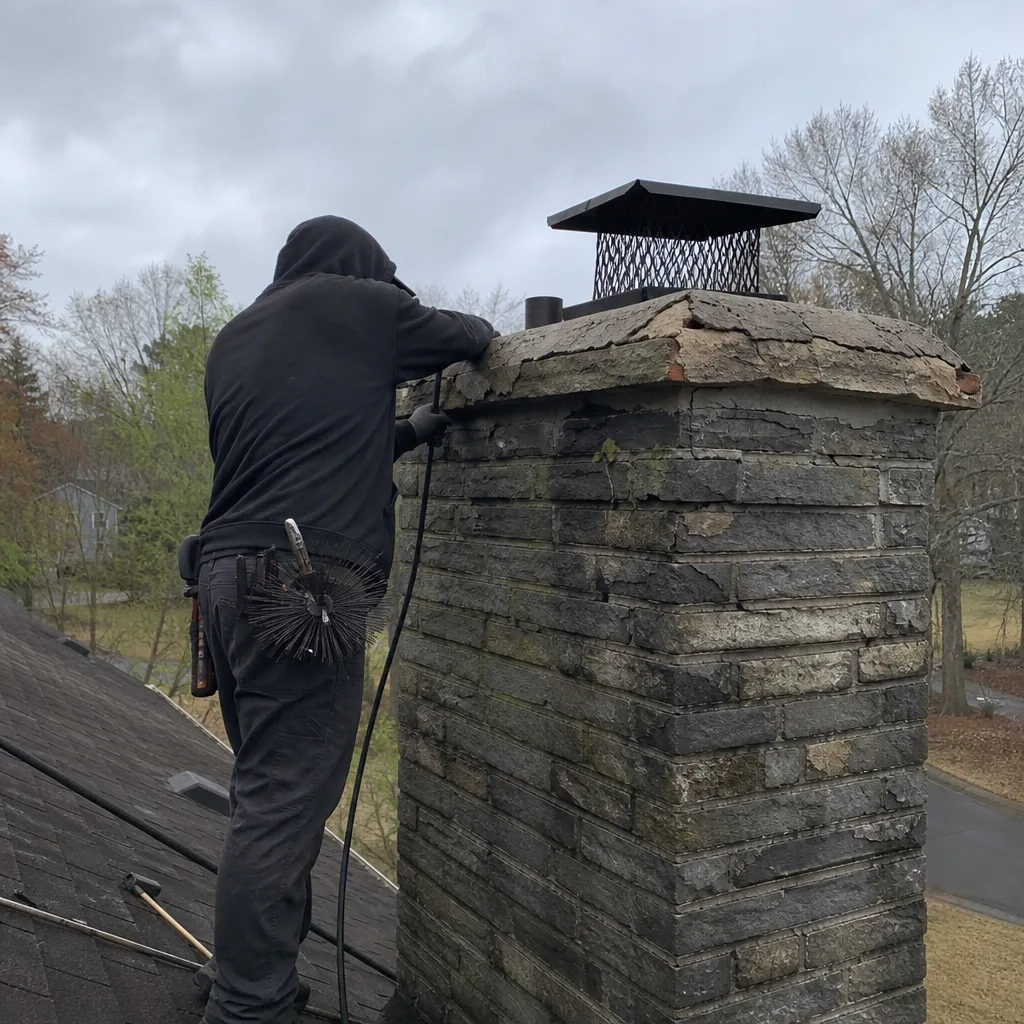 Before
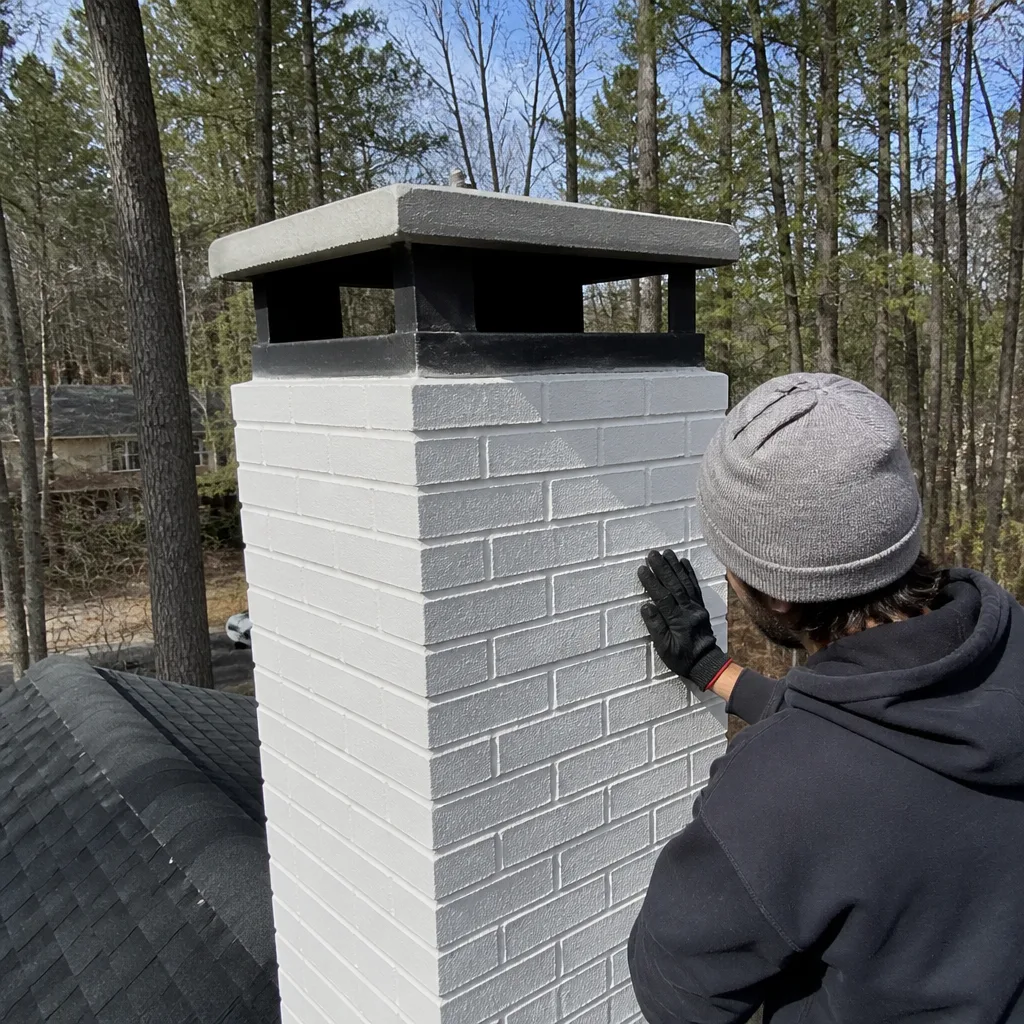 After
After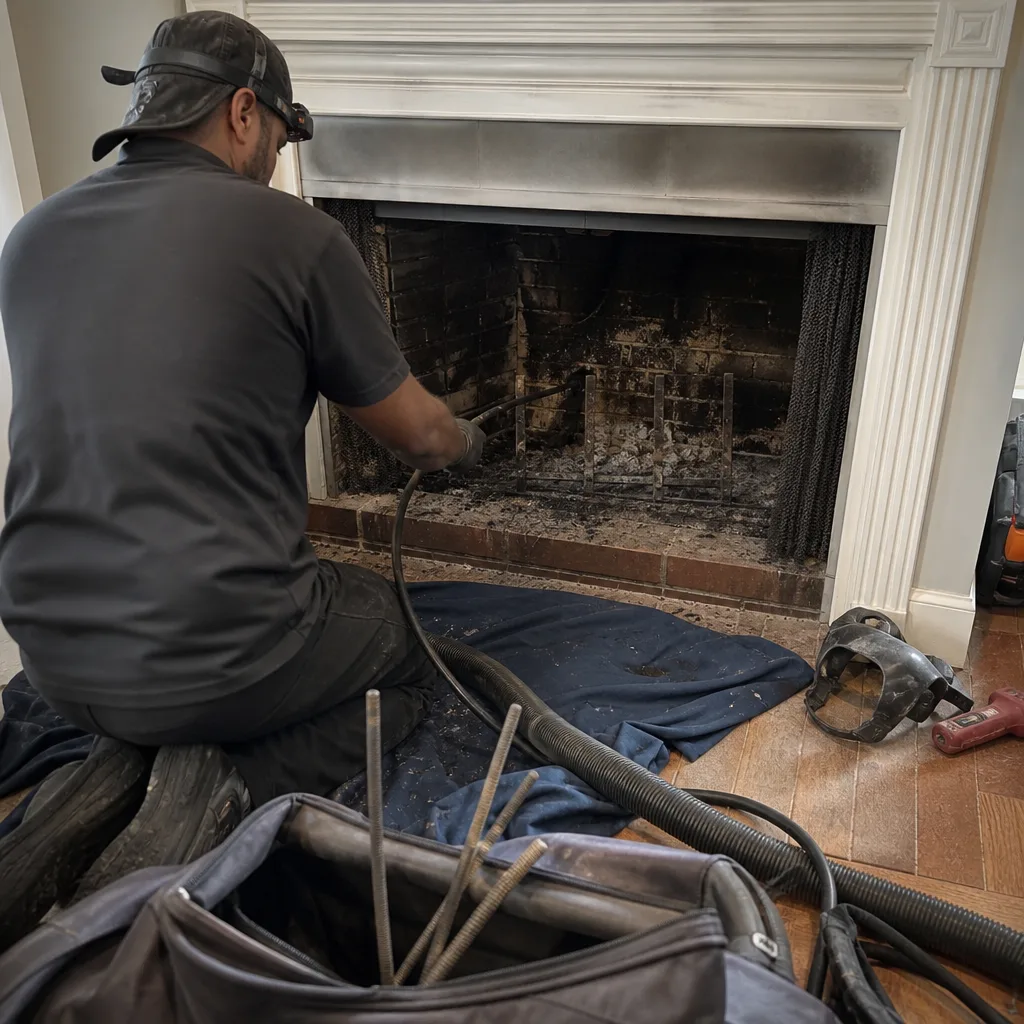 Before
 After
After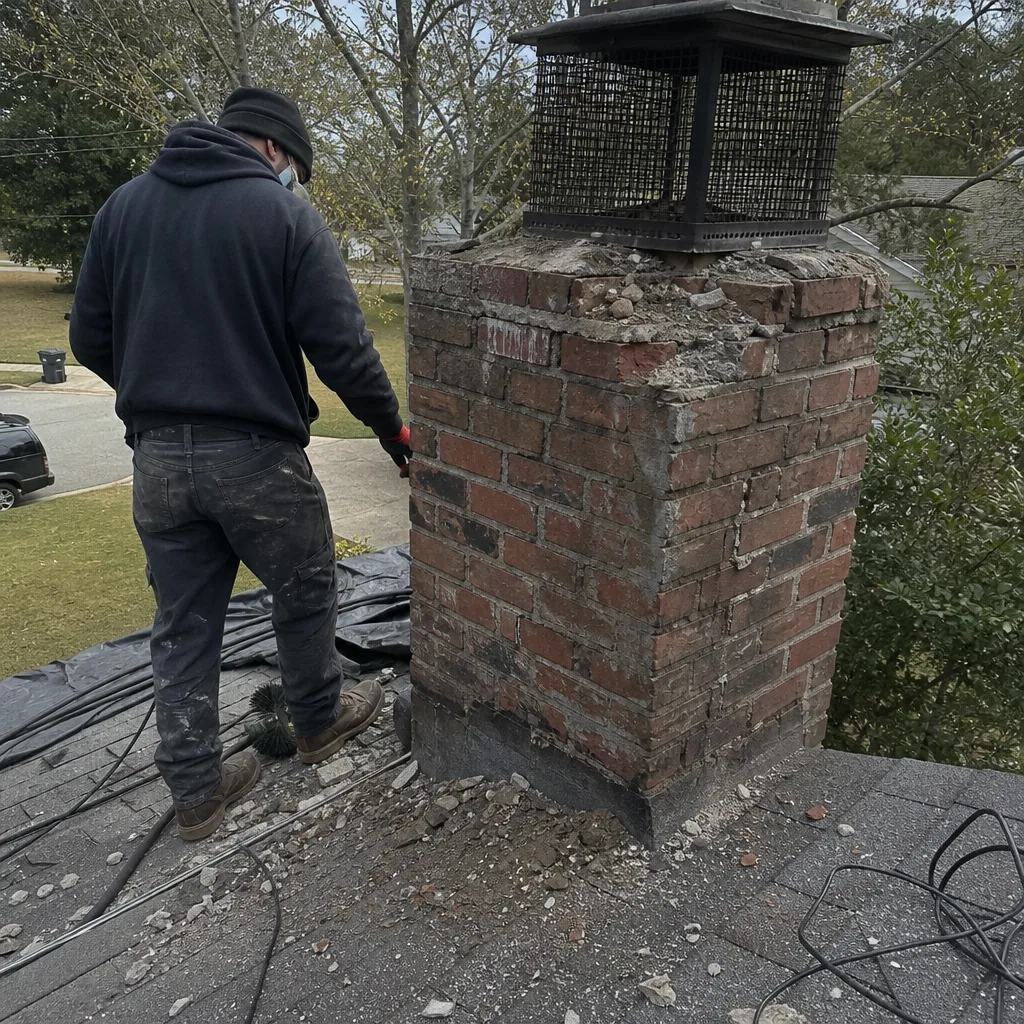 Before
 After
AfterWhat HeatShield Chimney Sweep Costs in Atlanta
Straight numbers, so you know what to expect. A standard HeatShield chimney sweep with a Level 1 inspection in metro Atlanta generally runs $189 to $249. Add a Level 2 camera inspection, which we recommend if you haven’t had one in five years or you’ve recently moved into the home, and you’re looking at $299 to $389 total. If the flue has heavy creosote buildup, meaning the kind of thick, glossy tar that needs a chemical treatment before the sweep, expect to add $75 to $125.
What moves the price most is accessibility. A two-story chimney with a steep roof pitch in the northern suburbs like Roswell or Alpharetta takes more setup time than a single-story ranch in East Atlanta. We’ll tell you the exact number before we schedule, not after we arrive. Call (762) 320-6525 and we’ll give you a precise quote over the phone, free.
Why Atlanta Homeowners Call Hadley Chimney Atlanta for HeatShield Work
We’ve been doing chimney work since 2003, and HeatShield has been one of the ceramic repair compounds we reach for most often on Atlanta flues. When HeatShield is the right material, we use it. When DuraFlex or Gelco makes more sense for your liner, we’ll tell you that too. We’re not married to one brand, which means our recommendation is based on what your chimney actually needs, not what we have sitting on the truck.
Every job comes with The Relay Visibility Guarantee: live arrival tracking, before-and-after photo documentation, and a written price before any work begins. That’s The Relay Standard, and it’s what being part of the Relay Home Co. family means on every single visit. Add in the 365-Day Done Right Promise on any repair, and the fact that a live person answers our phones 24/7, and you’ve got a chimney company that operates the way you’d expect any modern service business to. No voicemail loops. No four-hour windows. No surprises.
FAQs
No, if the sweep is done correctly. We use a poly-line rotary brush on HeatShield flues, never a steel brush, because a steel brush can score the ceramic surface and compromise the repair. The HeatShield compound is rated for high heat and mechanical cleaning, but the brush material matters. If a previous sweep was done with a steel brush, we’ll check for brush marks on our camera scan and note any warranty implications.
Once a year, minimum, if you burn wood fires regularly during the Atlanta winter. If you burn more than two cords per season or burn a lot of unseasoned wood, twice a year is appropriate. HeatShield’s slightly textured surface catches creosote more readily than a smooth stainless liner, so letting it go 18 to 24 months is asking for a thick, hard glaze that takes far longer to remove. Call (762) 320-6525 and we’ll schedule you before the fall burn season fills up.
HeatShield can repair cracks and gaps in an existing clay tile flue, but it’s not a substitute for a structural liner when the original tile is spalling or collapsing. After our sweep and camera scan, we’ll show you the footage. If the tiles are still intact and the gaps are small, HeatShield is usually the right call and costs significantly less than a full liner replacement. If the flue is structurally failing, no amount of ceramic compound will fix that, and we’ll tell you plainly before recommending a DuraFlex liner instead.
Not on a fixed schedule. HeatShield is designed as a long-term repair, but the lifespan depends on how hot your fires burn, how often the chimney is swept, and whether water is getting in from the top. We’ve seen HeatShield applications in Atlanta that are still sound after 10 years, and we’ve seen ones that need touch-up work after 3 because of chronic water intrusion. The camera scan during your annual sweep is the honest way to know whether it’s time.
Yes. The sweep doesn’t require any cure time because it’s a cleaning, not an application. If we applied new HeatShield compound during the visit, that’s a different story: the ceramic material needs 24 to 48 hours to cure before the first fire, and we’ll tell you the exact cure time on your written quote before any work is done.
Written by Cory Mitchell, Owner, Hadley Chimney Atlanta at Hadley Chimney Atlanta, serving Atlanta and nearby areas.